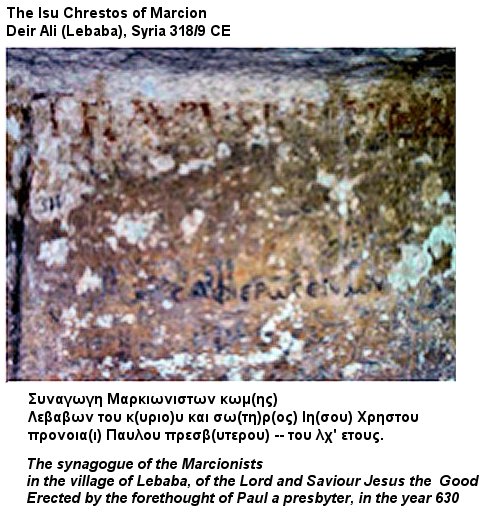
Diodorus sends greeting to Bishop Archelaus,
40. I wish you to know, most pious father, that in these days there has arrived in our parts a certain person named Manes, who gives out that he is to complete the doctrine of the New Testament. And in the statements which he has made there have been some things, indeed, which may harmonize with our faith; but there have been alsocertain affirmations of his which seem very far removed from what has come down to us by the tradition of our fathers. For he has interpreted some doctrines in a strange fashion, imposing on them certain notions of his own, which have appeared to me to be altogether foreign and opposed to the faith. On the ground of these facts I have now been induced to write this letter to you, knowing the completeness and fulness of your intelligence in doctrine, and being assured that none of these things can escape your cognizance. Accordingly, I have also indulged the confident hope that you cannot be kept back by any grudge from explaining these matters to us. As to myself, indeed, it is not possible that I shall be drawn away into any novel doctrine; nevertheless, in behalf of all the less instructed, I have been led to ask a word with your authority. For, in truth, the man shows himself to be a person of extraordinary force of character, both in speech and in action; and indeed his very aspect and attire also bear that out. But I shall here write down for your information some few points which I have been able to retain in my memoryout of all the topics which have been expounded by him: for I know that even by these few you will have an idea of the rest. You well understand, no doubt, that those who seek to set up any new dogma have the habit of very readily perverting into a conformity with their own notions any proofs they desire to take from the Scriptures. In anticipation, however, of this, the apostolic word marks out the case thus: If any one preach any other gospel unto you than that which you have received, let him be accursed. And consequently, in addition to what has been once committed to us by the apostles, a disciple of Christ ought to receive nothing new as doctrine. But not to make what I have got to say too long, I return to the subject directly in view. This man then maintained that the law of Moses, to speak shortly, does not proceed from the good God, but from the prince of evil; and that it has no kinship with the new law of Christ, but is contrary and hostile to it, the one being the direct antagonist of the other. When I heard such a sentiment propounded, I repeated to the people that sentence of the Gospel in which our Lord Jesus Christ said of Himself: I am not come to destroy the law, but to fulfil it. The man, however, averred that He did not utter this saying at all; for he held that when we find that He did abrogate that same law, we are bound to give heed, above all other considerations, to the thing which He actually did. Then he began to cite a great variety of passages from the law, and also many from the Gospel and from the Apostle Paul, which have the appearance of contradicting each other. All this he gave forth at the same time with perfect confidence, and without any hesitation or fear; so that I verily believe he has that serpent as his helper, who is ever our adversary. Well, he declared that there in the law God said, I make the rich man and the poor man; while here in the Gospel Jesus called the poorblessed, and added, that no man could be His disciple unless he gave up all that he had. Again, he maintained that there Moses took silver and gold from the Egyptians when the people fled out of Egypt; whereas Jesus delivered theprecept that we should lust after nothing belonging to our neighbour. Then he affirmed that Moses had provided in the law, that an eye should be given in penalty for an eye, and a tooth for a tooth; but that our Lord bade us offerthe other cheek also to him who smote the one. He told us, too, that there Moses commanded the man to be punished and stoned who did any work on the Sabbath, and who failed to continue in all things that were written in the law, as in fact was done to that person who, yet being ignorant, had gathered a bundle of sticks on the Sabbath-day; whereas Jesus cured a cripple on the Sabbath, and ordered him then also to take up his bed. And further, He did not restrain His disciples from plucking the ears of corn and rubbing them with their hands on the Sabbath-day, which yet was a thing which it was unlawful to do on the Sabbaths. And why should I mention other instances? For with many different assertions of a similar nature these dogmas of his were propounded with the utmost energy and the most fervid zeal. Thus, too, on the authority of an apostle, he endeavoured to establish the position that the law of Moses is the law of death, and that the law of Jesus, on the contrary, is the law of life. For he based that assertion on the passage which runs thus: In which also may God make us able ministers of the New Testament; not of the letter, but of the spirit: for the letter kills, but the spirit gives life. But if the ministration of death, engraven in letters on the stones, was made in glory, so that the children of Israel could not steadfastly behold the face of Moses for the glory of his countenance; which glory was to be done away; how shall not theministration of the Spirit be rather glorious? For if the ministration of condemnation be glory, much more does theministration of righteousness exceed in glory. For even that which was made glorious had no glory in this respect, by reason of the glory that excels. For if that which shall be done away is glorious, much more that which remains is glorious. And this passage, as you are also well aware, occurs in the second Epistle to the Corinthians. Besides, he added to this another passage out of the first epistle, on which he based his affirmation that the disciples of the Old Testament were earthly and natural; and in accordance with this, that flesh and blood could not possess the kingdom of God. He also maintained that Paul himself spoke in his own proper person when he said: If I build again the things which I destroyed, I make myself a transgressor. Further, he averred that the same apostle made this statement most obviously on the subject of the resurrection of the flesh. when he also said that he is not a Jewwho is one outwardly, neither is that circumcision which is outward in the flesh, and that according to the letter the law has in it no advantage. And again he adduced the statement, that Abraham has glory, but not before God; and that by the law there comes only the knowledge of sin. And many other things did he introduce, with the view of detracting from the honour of the law, on the ground that the law itself is sin; by which statements the simpler people were somewhat influenced, as he continued to bring them forward; and in accordance with all this, he also made use of the affirmation, that the law and the prophets were until John. He declared, however, that John preached the true kingdom of heaven; for verily he held, that by the cutting off of his head it was signified that all who went before him, and who had precedence over him, were to be cut off, and that what was to come after him was alone to be maintained. With reference to all these things, therefore, O most pious Archelaus, send us back a short reply in writing: for I have heard that you have studied such matters in no ordinary degree; and that capacity which you possess is God's gift, inasmuch as God bestows these gifts upon those who are worthy of them, and who are His friends, and who show themselves allied to Him in community of purpose and life. For it is our part to prepare ourselves, and to approach the gracious and liberal mind, and forthwith we receive from it the most bountiful gifts. Accordingly, since the learning which I possess for the discussion of themes like these does not meet the requirements of my desire and purpose, for I confess myself to he an unlearned man, I have sent to you, as I have already said more than once, in the hope of obtaining from your hand the amplest solution to this question. May it be well with you, incomparable and honourable father!
Tuesday, August 26, 2008
All references to 'Marcion's Antitheses' in Tertullian
Against Marcion 1:1. To prove next that this is a fact, I shall take up the rest from my opponents themselves. The separation of Law and Gospel is the primary and principal exploit of Marcion. His disciples cannot deny this, which stands at the head of their document, that document by which they are inducted, into and confirmed in this heresy. For such are Marcion's Antitheses, or Contrary Oppositions, which are designed to show the conflict and disagreement of the Gospel and the Law, so that from the diversity of principles between those two documents they may argue further for a diversity of gods. Therefore, as it is precisely this separation of Law and Gospel which has suggested a god of the Gospel, other than and in opposition to the God of the Law, it is evident that before that separation was made, god was still unknown who has just come into notice in consequence of the argument for separation: and so he was not revealed by Christ, who came before the separation, but was invented by Marcion, who set up the separation in opposition to that peace between Gospel and Law which previously, from the appearance of Christ until the impudence of Marcion, had been kept unimpaired and unshaken by virtue of that reasoning which refused to contemplate any other god of the Law and the Gospel than that Creator against whom after so long a time, by a man of Pontus, separation has been let loose.
1:20. This short and sharp argument calls for justification on our part against the clatter and clamour of the opposite party. They allege that in separating the Law and the Gospel Marcion did not so much invent a new rule as refurbish a rule previously debased. So then Christ, our most patient Lord (Jesus), has through all these years borne with a perversion of the preaching about himself, until, if you please, Marcion should come to his rescue.
1:29. Now if my plea that the Creator combines goodness with judgement had called for a more elaborate demolition of Marcion's Antitheses, I should have gone on to overthrow them one by one, on the principle that the instances cited of both aspects are, as I have already proved, jointly in keeping with (a sound
idea of) God. Both aspects, the goodness and the judgement, combine to produce a complete and worthy conception of a divinity to which nothing is impossible: and so I am for the time being content to have rebutted in summary fashion those antitheses which, by criticism of the moral value of the Creator's works,
his laws, and his miracles, indicate anxiety to establish a division, making Christ a stranger to the Creator—as it were the supremely good a stranger to the judge, the kind to the cruel, the bringer of salvation a stranger to the author of destruction. Instead of dividing, those antitheses do rather combine into unity the two whom they place in such oppositions as, when combined together, give a complete conception of God. Take away Marcion's title, take away the intention and purpose of his work, and this book will provide neither more nor less than a description of one and the same God, in his supreme goodness and in his judgement— for these two conceptions are conjoined in God and in him alone. In fact Marcion's very anxiety, by means of the instances cited, to set Christ in opposition to the Creator, does rather envisage
their unity. For the one and only real and objective divinity showed itself, in these very instances and these very deductions from them, to be both kind and stern: for his purpose was to give evidence of his kindness, particularly in those against whom he had previously shown severity. The change which time brought
about is nothing to be wondered at: God subsequently became more gentle, in proportion as things had become subdued, having been at first more strict when they were unsubdued. So Marcion's antitheses make it easier to explain how the Creator's mode of action was by Christ rather refashioned than repudiated, re-
stored rather than rejected: especially so when you make your good god exempt from every bitterness of feeling, and, in that case, from hostility to the Creator. If that is the case how can the antitheses prove he has been in opposition to one or another aspect of the Creator's character? To sum up: I shall by means of these antitheses recognize in Christ my own jealous God. He did in the beginning by his own right, by a hostility which was rational and therefore good, provide beforehand for the maturity and fuller ripeness of the things which were his. His antitheses are in conformity with his own world: for it is composed and regulated by elements contrary to each other, yet in perfect proportion. Therefore, most thoughtless Marcion, you ought rather to have shown that there is one god of light and another of darkness: after
that you would have found it easier to persuade us that there is one god of kindness and another of severity. In any case, the antithesis, or opposition, will belong to that God in whose world it is to be found.
4.1 Besides that, to work up credence for it he has contrived a sort of dowry, a work entitled
Antitheses because of its juxtaposition of opposites, a work strained into making such a division between the Law and the Gospel as thereby to make two separate gods, opposite to each other, one belonging to one instrument (or, as it is more usual to say, testament), one to the other, and thus lend its patronage to faith in another gospel, that according to the Antitheses. Now I might have demolished those antitheses by a specially directed hand-to-hand attack, taking each of the statements of the man of Pontus one by one, except that it was much more convenient to refute them both in and along with that gospel which they serve: although it is perfectly easy to take action against them by counter-claim,1 even accepting them as admissible, accounting them valid, and alleging that they support my argument, that so they may be put to shame for the blindness of their author, having now become my antitheses against Marcion. So then I do admit that there was a different course followed in the old dispensation under the Creator, from that in the new dispensation under Christ.
…
Why need you explain a difference of facts as an opposition of authorities? Why need you distort against the Creator those antitheses in the evidences, which you can recognize also in his own thoughts and affections? I will smite, he says, and I will heal:k I will slay, he says, and also make alive, by establishing evil things and making peace:l because of which it is your custom even to censure him on account of fickleness and inconstancy, in forbidding what he commands and commanding what he forbids. Why then have you not also thought out some antitheses for the essential attributes of a Creator always at variance with himself? Not even among your men of Pontus, if I mistake not, have you been able to realize that the world is constructed out of the diversities of substances in mutual hostility. And so you ought first to have laid it down that there was one god of light and another of darkness: then you could have affirmed
that there was one god of the law and another of the gospel. For all that, judgement is already given, and that by manifest proofs, that he whose works and ways are consistently antithetic, has
also his mysteries consistently of that same pattern.
2. You have there my short and sharp answer to the Antitheses. I pass on next to show how his gospel—certainly not Judaic but Pontic—is in places adulterated: and this shall form the basis of my order of approach.
…
What now, if the Marcionites are going to deny that his faith at first was with us—even against the evidence of his own letter? What if they refuse to acknowledge that letter? Certainly Marcion's
own Antitheses not only admit this, but even make a show of it. Proof taken from them is good enough for me. If that gospel which among us is ascribed to Luke—we shall see whether it is Marcion—if that is the same that Marcion by his Antitheses accuses of having been falsified by the upholders of Judaism with a view to its being so combined in one body with the law and the prophets that they might also pretend that Christ had that origin, evidently he could only have brought accusation
against something he had found there already.
…
6. I now advance a step further, while I call to account, as I have promised, Marcion's gospel in his own version of it, with the design, even so, of proving it adulterated. Certainly the whole of the work he has done, including the prefixing of his Antitheses, he directs to the one purpose of setting up opposition between the Old Testament and the New, and thereby putting his Christ in separation from the Creator, as belonging to another god, and having no connection with the law and the prophets.
…
But see,, Christ loves the little ones, and teaches that all who ever wish to be the greater, need to be as they; whereas the Creator sent bears against some boys, to avenge Elisha the prophet for mockery he
had suffered from them. A fairly reckless antithesis, when it sets together such diverse things, little children and boys, an age as yet innocent, and an age now capable of judgement, which knew how to mock, not to say, blaspheme.
…
24. [Luke 10: 1-20.] He chooses other seventy apostles also, over above the twelve: for to what purpose twelve, after that number of wells in Elim, without adding seventy, after that number of palm-trees?a Antitheses for the most part are produced by diversity of purposes, not of authorities, though he who has not kept in view the diversity of purposes has easily been led to take it for diversity of authorities.
…
So also our Lord told them into whatsoever house they entered, to speak peace to it. He follows the same precedent: for this too was the order Elisha gave, that when he came into the Shunamite's house, he was to
say to her, Peace to thy husband, peace to thy son.d These shall be the antitheses we prefer, such as bring Christ into line, not such as make him separate.
1:20. This short and sharp argument calls for justification on our part against the clatter and clamour of the opposite party. They allege that in separating the Law and the Gospel Marcion did not so much invent a new rule
1:29. Now if my plea that the Creator combines goodness with judgement had called for a more elaborate demolition of Marcion's Antitheses, I should have gone on to overthrow them one by one, on the principle that the instances cited of both aspects are, as I have already proved, jointly in keeping with (a sound
idea of) God. Both aspects, the goodness and the judgement, combine to produce a complete and worthy conception of a divinity to which nothing is impossible: and so I am for the time being content to have rebutted in summary fashion those antitheses which, by criticism of the moral value of the Creator's works,
his laws, and his miracles, indicate anxiety to establish a division, making Christ a stranger to the Creator—as it were the supremely good a stranger to the judge, the kind to the cruel, the bringer of salvation a stranger to the author of destruction. Instead of dividing, those antitheses do rather combine into unity the two whom they place in such oppositions as, when combined together, give a complete conception of God. Take away Marcion's title, take away the intention and purpose of his work, and this book will provide neither more nor less than a description of one and the same God, in his supreme goodness and in his judgement— for these two conceptions are conjoined in God and in him alone. In fact Marcion's very anxiety, by means of the instances cited, to set Christ in opposition to the Creator, does rather envisage
their unity. For the one and only real and objective divinity showed itself, in these very instances and these very deductions from them, to be both kind and stern: for his purpose was to give evidence of his kindness, particularly in those against whom he had previously shown severity. The change which time brought
about is nothing to be wondered at: God subsequently became more gentle, in proportion as things had become subdued, having been at first more strict when they were unsubdued. So Marcion's antitheses make it easier to explain how the Creator's mode of action was by Christ rather refashioned than repudiated, re-
stored rather than rejected: especially so when you make your good god exempt from every bitterness of feeling, and, in that case, from hostility to the Creator. If that is the case how can the antitheses prove he has been in opposition to one or another aspect of the Creator's character? To sum up: I shall by means of these antitheses recognize in Christ my own jealous God. He did in the beginning by his own right, by a hostility which was rational and therefore good, provide beforehand for the maturity and fuller ripeness of the things which were his. His antitheses are in conformity with his own world: for it is composed and regulated by elements contrary to each other, yet in perfect proportion. Therefore, most thoughtless Marcion, you ought rather to have shown that there is one god of light and another of darkness: after
that you would have found it easier to persuade us that there is one god of kindness and another of severity. In any case, the antithesis, or opposition, will belong to that God in whose world it is to be found.
4.1 Besides that, to work up credence for it he has contrived a sort of dowry, a work entitled
Antitheses because of its juxtaposition of opposites, a work strained into making such a division between the Law and the Gospel as thereby to make two separate gods, opposite to each other, one belonging to one instrument (or, as it is more usual to say, testament), one to the other, and thus lend its patronage to faith in another gospel, that according to the Antitheses. Now I might have demolished those antitheses by a specially directed hand-to-hand attack, taking each of the statements of the man of Pontus one by one, except that it was much more convenient to refute them both in and along with that gospel which they serve: although it is perfectly easy to take action against them by counter-claim,1 even accepting them as admissible, accounting them valid, and alleging that they support my argument, that so they may be put to shame for the blindness of their author, having now become my antitheses against Marcion. So then I do admit that there was a different course followed in the old dispensation under the Creator, from that in the new dispensation under Christ.
…
Why need you explain a difference of facts as an opposition of authorities? Why need you distort against the Creator those antitheses in the evidences, which you can recognize also in his own thoughts and affections? I will smite, he says, and I will heal:k I will slay, he says, and also make alive, by establishing evil things and making peace:l because of which it is your custom even to censure him on account of fickleness and inconstancy, in forbidding what he commands and commanding what he forbids. Why then have you not also thought out some antitheses for the essential attributes of a Creator always at variance with himself? Not even among your men of Pontus, if I mistake not, have you been able to realize that the world is constructed out of the diversities of substances in mutual hostility. And so you ought first to have laid it down that there was one god of light and another of darkness: then you could have affirmed
that there was one god of the law and another of the gospel. For all that, judgement is already given, and that by manifest proofs, that he whose works and ways are consistently antithetic, has
also his mysteries
2. You have there my short and sharp answer to the Antitheses. I pass on next to show how his gospel—certainly not Judaic but Pontic—is in places adulterated: and this shall form the basis of my order of approach.
…
What now, if the Marcionites are going to deny that his faith at first was with us—even against the evidence of his own letter? What if they refuse to acknowledge that letter? Certainly Marcion's
own Antitheses not only admit this, but even make a show of it. Proof taken from them is good enough for me. If that gospel which among us is ascribed to Luke—we shall see
against something he had found there already.
…
6. I now advance a step further, while I call to account, as I have promised, Marcion's gospel in his own version of it, with the design, even so, of proving it adulterated. Certainly the whole of the work he has done, including the prefixing of his Antitheses, he directs to the one purpose of setting up opposition between the Old Testament and the New, and thereby putting his Christ in separation from the Creator, as belonging to another god, and having no connection with the law and the prophets.
…
But see,
had suffered from them. A fairly reckless antithesis, when it sets together such diverse things, little children and boys, an age as yet innocent, and an age now capable of judgement, which knew how to mock, not to say, blaspheme.
…
24. [Luke 10: 1-20.] He chooses other seventy apostles also, over above the twelve: for to what purpose twelve, after that number of wells in Elim, without adding seventy, after that number of palm-trees?a Antitheses for the most part are produced by diversity of purposes, not of authorities, though he who has not kept in view the diversity of purposes has easily been led to take it for diversity of authorities.
…
So also our Lord told them into whatsoever house they entered, to speak peace to it. He follows the same precedent: for this too was the order Elisha gave, that when he came into the Shunamite's house, he was to
say to her, Peace to thy husband, peace to thy son.d These shall be the antitheses we prefer, such as bring Christ into line

Sunday, August 24, 2008
The so-called 'Antitheses' of Marcion
 A sample of what appears in the Real Messiah order it here
The 'antitheses of Marcion' might well have originally been a reference to the Pauline epistles themselves. I have noticed that a number of scholars speak of the letters themselves as containing a series of antitheses, Galatians and 1 Corinthians most notably. When Tertullian speaks of 'Marcion's antitheses' it almost inevitably follows a discussion of his composing his own gospel. In other words, Marcion's 'expunged gospel' and his 'antitheses' seem to murkily reflect the underlying structure of his canon.
I am particularly struck by this reference in Against Marcion iv, 6:
I now advance a step further, while I call to account, as I have promised, Marcion's gospel in his own version of it, with the design, even so, of proving it adulterated. Certainly the whole of the work he has done, including the prefixing of his Ant itheses, he directs to the one purpose of setting up opposition between the Old Testament and the New, and thereby putting his Christ in separation from the Creator, as belonging to another god, and having no connection with the law and the prophets.
The Marcionite canon apparently had a 'Gospel of Christ' (or some such title) followed by our letter to the Galatians. The Marcionites understood that the same author wrote both texts so Galatians now (originally from the Aramaic 'revelation'?) is understood to explain the gospel as the messianic new Law of Israel. Is it too much now to think that Marcion's gospel and Marcion's antitheses represent the original structure of the Marcionite canon where Catholics forced people to view Marcion as only interpreter of someone named 'Paul' rather than the Apostle himself? I think the latter.
Tuesday, August 19, 2008
Another proof that 'Paul' was identified as 'Marcion' among the Marcionites
A sample of what appears in the Real Messiah order it here3. Eznik of Kolb 363
But Paul they say was snatched into the third heaven and words unutterable which we proclaim here. Now here Paul says “that which is not fitting for men to speak.” (2 Cor 12:4) Thus that Marcion if he were someone of the race of man, for him too the words would be unspeakable. In fact he is a man, and worse than all men, having forsaken the truth of the Spirit still he sits patching together fables. He has been emboldened to such an extent by means of a Satanic nature that he culls so as to subtract from the messages of the Holy Spirit choosing to accept only part of the Gospel and to abandon part; so likewise choosing to deny the Apostolic Letters and all of the Old Testament, as if it were given by a foolish one and not a good one. And the Apostle says, “Unutterable are the words that he heard,” and Marcion says “I heard (them).” Thus is it fitting to listen to the Apostle who reckoned those words to be unutterable, or to Marcion, who has scattered and drags the words across a field?
Another proof that 'Paul' wasn't named 'Paul' among the Marcionites
A sample of what appears in the Real Messiah order it here2. Irenaeus of Lyons Against Heresies 3:14 – 15
..there are also many other particulars to be found mentioned by Luke alone, which are made use of by both Marcion and Valentinus. And besides all these, [he records] what [Christ] said to His disciples in the way, after the resurrection, and how they recognised Him in the breaking of bread. It follows then, as of course, that these men must either receive the rest of his narrative, or else reject these parts also.
For no persons of common sense can permit them to receive some things recounted by Luke as being true, and to set others aside, as if he had not known the truth.
And if indeed Marcion's followers reject these, they will then possess no Gospel; for, curtailing that according to Luke, as I have said already, they boast in having the Gospel [in what remains]. But the followers of Valentinus must give up their utterly vain talk; for they have taken from that [Gospel] many occasions for their own speculations, to put an evil interpretation upon what he has well said. If, on the other hand, they feel compelled to receive the remaining portions also, then, by studying the perfect Gospel, and the doctrine of the apostles, they will find it necessary to repent, that they may be saved from the danger [to which they are exposed].
But again, we allege the same against those who do not recognise the apostle Paul (Eadem autem dicimus iterum et his, qui Paulum apostolum non cognoscunt) as they should either reject the other words of the Gospel which we have come to know through Luke alone, and not make use of them (quoniam aut reliquis verbis Evangelii, quae per solum Lucam in nostram venerunt agnitionem, renuntiare debent, et non uti eis) or else, if they do receive all these, they must necessarily admit also that testimony concerning Paul, when he (Luke) tells us that the Lord spoke at first to him from heaven: "Saul, Saul, why persecutest thou Me? I am Jesus Christ, whom thou persecutest; " and then to Ananias, saying regarding him: "Go thy way; for he is a chosen vessel unto Me, to bear My name among the Gentiles, and kings, and the children of Israel. For I will show him, from this time, how great things he must suffer for My name's sake."
Those, therefore, who do not accept of him, who was chosen by God for this purpose, (Qui igitur non recipiunt eum qui sit electus a Deo ad hoc) that he might boldly bear His name, as being sent to the forementioned nations, do despise the election of God, and separate themselves from the company of the apostles (ut fiducialiter portet nomen ejus, quod sit missus ad quas praediximus gentes, electionem Domini contemnunt, et seipsos segregant ab apostolorum conventu) . For neither can they contend that Paul was no apostle (Neque enim contendere possunt Paulim non esse apostolum), when he was chosen for this purpose (quando in hoc sit electus); nor can they prove Luke guilty of falsehood, when he proclaims the truth to us with all diligence. It may be, indeed, that it was with this view that God set forth very many Gospel truths, through Luke's instrumentality, which all should esteem it necessary to use, in order that all persons, following his subsequent testimony, which treats upon the acts and the doctrine of the apostles, and holding the unadulterated rule of truth, may be saved.
His testimony, therefore, is true, and the doctrine of the apostles is open and stedfast, holding nothing in reserve; nor did they teach one set of doctrines in private, and another in public. For this is the subterfuge of false persons, evil seducers, and hypocrites, as they act who are from Valentinus. These men discourse to the multitude about those who belong to the Church, whom they do themselves term "vulgar," and "ecclesiastic." By these words they entrap the more simple, and entice them, imitating our phraseology, that these [dupes] may listen to them the oftener; and then these are asked(9) regarding us, how it is, that when they hold doctrines similar to ours, we, without cause, keep ourselves aloof from their company; and [how it is, that] when they say the same things, and hold the same doctrine, we call them heretics? When they have thus, by means of questions, overthrown the faith of any, and rendered them uncontradicting hearers of their own, they describe to them in private …
The most explicit proof that the Marcionites identified 'Marcion' as the name of 'Paul'
A sample of what appears in the Real Messiah order it hereProof that the Marcionites identified ‘Marcion’ as their Apostle
in the place of our Irenaean invention of ‘St. Paul’
1.Tertullian Against Marcion Book 5:1
(Evans 1972 translation unless otherwise noted)
For too long scholars have simply assumed that when Tertullian attacks the Marcionite understanding of the ‘Apostle’ that they accepted him under the name of ‘Paul.’ Once you become aware that at least some of the reports regarding the Marcionites understood that they identified ‘Marcion’ as their apostle it will become obvious to the reader that Tertullian is actually telling us the same thing at the beginning of his last book against Marcion:
I desire to hear from Marcion the origin of his apostle. I am a sort of new disciple, having had instruction from no other teacher. For the moment my only belief is that nothing ought to be believed without good reason, and that that is believed without good reason which is believed without knowledge of its origin and I must with the best of reasons approach this inquiry with uneasiness when I find one affirmed to be an apostle, of whom in the list of the apostles in the gospel I find no trace. So when I am told that he was subsequently promoted by our Lord, by now at rest in heaven, I find some lack of foresight in the fact that Christ did not know beforehand that he would have need of him but after setting in order the office of apostleship and sending them out upon their duties, considered it necessary, on an impulse [ex incursu] and not by deliberation, to add another, by compulsion so to speak and not by design.
So then, shipmaster out of Pontus, supposing you have never accepted into your craft any smuggled or illicit merchandise, have never appropriated or adulterated any cargo, and in the things of God are even more careful and trustworthy, will you please tell us under what bill of lading you accepted Paul as apostle who had stamped him with that mark of distinction, who commended him to you, and who put him in your charge? Only so may you with confidence disembark him: only so can he avoid being proved to belong to him who has put in evidence all the documents that attest his apostleship. He himself claims to be an apostle, and that not from men nor through any man, but through Jesus Christ. Clearly any man can make claims for himself: but his claim is confirmed by another person's attestation. One person writes the document, another signs it, a third attests the signature, and a fourth enters it in the records. No man is for himself both claimant and witness.
Besides this, you have found it written that many will come and say, ‘I am Christ.’ If there is one that makes a false claim to be Christ, much more can there be one who professes that he is an apostle of Christ. Thus far my converse has been in the guise of a disciple and an inquirer: from now on I propose to shatter your confidence, for you have no means of proving its validity, and to shame your presumption, since you make claims but reject the means of establishing them. Let Christ, let the apostle, belong to your other god: yet you have no proof of it except from the Creator's archives.
Even Genesis long ago promised Paul to me. Among those figures and prophetical blessings over his sons, when Jacob had got to Benjamin he said, Benjamin is a ravening wolf: until morning he will still devour, and in the evening will distribute food.c He foresaw that Paul would arise of the tribe of Benjamin, a ravening wolf devouring until the morning, that is, one who in his early life would harass the Lord's flock as a persecutor of the churches, and then at evening would distribute food, that is, in declining age would feed Christ's sheep as the doctor of the gentiles. Also the harshness at first of Saul's pursuit of David, and afterwards his repentance and contentment on receiving good for evil, had nothing else in view except Paul in Saul according to tribal descent, and Jesus in David by the Virgin's descent from him.
Should you, however, disapprove of these types, the Acts of the Apostles, at all events, have handed down to me this career of Paul, which you must not refuse to accept. From them I prove that the persecutor became an apostle, not from men, nor by a man: from them I am led even to believe him: by their means I dislodge you from your claim to him, and have no fear of what you say. Therefore you deny the Apostle Paul. [emphasis mine] I do not blaspheme him whom I defend. If I deny, it is to force you to prove. If I deny, it is to enforce my claim that he is mine. Otherwise, if you have your eye on our belief, accept the evidence on which it depends. If you challenge us to adopt yours, tell us the facts on which it is founded. Either prove that the things you believe really are so: or else, if you have no proof, how can you believe? Or who are you, to believe in despite of him from whom alone there is proof of what you believe? So then accept the apostle on my evidence, as as you do Christ: he is my apostle, as also Christ is mine.
I desire to hear from Marcion the origin of his apostle (Et ideo ex opusculi ordine ad hanc materiam devolutus apostoli quoque originem a Marcione desidero)
• Evans translation: I desire to hear from Marcion the origin of Paul the apostle.
• Holmes translation: I require to know of Marcion the origin of his apostles
I am a sort of new disciple, having had instruction from no other teacher (novus aliqui discipulus nec ullius alterius auditor)
For the moment my only belief is that nothing ought to be believed without good reason, and that that is believed without good reason which is believed without knowledge of its origin (qui nihil interim credam nisi nihil temere credendum, temere porro credi quodcunque sine originis agnitione creditor)
and I must with the best of reasons approach this inquiry with uneasiness when I find one affirmed to be an apostle, of whom in the list of the apostles in the gospel I find no trace (quique dignissime ad sollicitudinem redigam istam inquisitionem, cum is mihi affirmatur apostolus quem in albo apostolorum apud evangelium non deprehendo)
So when I am told that he was subsequently promoted by our Lord, by now at rest
in heaven, I find some lack of foresight in the fact that Christ did not know beforehand that he would have need of him (Denique audiens postea eum a domino allectum, iam in caelis quiescente, quasi inprovidentiam existimo si non ante scivit illum sibi necessarium Christus),
but after setting in order the office of apostleship and sending them out upon their duties, considered it necessary, on an impulse [ex incursu] and not by deliberation, to add another, by compulsion so to speak and not by design (sed iam ordinato officio apostolatus et in sua opera dimisso, ex incursu, non ex prospectu, adiciendum existimavit, necessitate, ut ita dixerim, non voluntate)
So then, shipmaster out of Pontus, supposing you have never accepted into your craft any smuggled or illicit merchandise, have never appropriated or adulterated any cargo, and in the things of God are even more careful and trustworthy, will you please tell us under what bill of lading you accepted Paul as apostle (Quamobrem, Pontice nauclere, si nunquam furtivas merces vel illicitas in acatos tuas recepisti, si nullum omnino onus avertisti vel adulterasti, cautior utique et fidelior in dei rebus, edas velim nobis, quo symbolo susceperis apostolum Paulum)
who had stamped him with that mark of distinction, who commended him to you, and who put him in your charge? Only so may you with confidence disembark him: only so can he avoid being proved to belong to him who has put in evidence all the documents that attest his apostleship (quis illum tituli charactere percusserit, quis transmiserit tibi, quis imposuerit, ut possis eum constanter exponere, ne illius probetur qui omnia apostolatus eius instrumenta protulerit)
He himself claims to be an apostle, and that not from men nor through any man, but through Jesus Christ (Ipse se, inquit, apostolum est professus, et quidem non ab hominibus nec per hominem, sed per Iesum Christum)
• Evans: He himself, says Marcion, claims to be an apostle, and that not from men nor through any man, but through Jesus Christ.
• Holmes: He professes himself to be "an apostle"----to use his own, words----"not of men, nor by man, but by Jesus Christ."
Clearly any man can make claims for himself: but his claim is confirmed by another person's attestation (Plane profiteri potest semetipsum quis, verum professio eius alterius auctoritate conficitur)
One person writes the document, another signs it, a third attests the signature,
and a fourth enters it in the records (Alius scribit, alius subscribit, alius obsignat, alius actis refert)
No man is for himself both claimant and witness (Nemo sibi et professor et testis est)
Besides this, you have found it written that many will come and say, I am Christ (Praeter haec utique legisti multos venturos qui dicant, Ego sum Christus)
• Marcion is the subject cf Tert Against Marcion IV:39 “So then those people will come, saying I am Christ. You,
If there is one that makes a false claim to be Christ, much more can there be one who professes that he is an apostle of Christ (Si est qui se Christum mentiatur, quanto magis qui se apostolum praedicet Christi)
Thus far my converse has been in the guise of a disciple and an inquirer: from now on I propose to shatter your confidence, for you have no means of proving its validity, and to shame your presumption, since you make claims but reject the means of establishing them (Adhuc ego in persona discipuli et inquisitoris conversor, ut iam hinc et fidem tuam obtundam, qui unde eam probes non habes, et impudentiam suffundam, qui vindicas, et unde possis vindicare non recipis)
Let Christ, let the apostle, belong to your other god: yet you have no proof of it except from the Creator's archives (Sit Christus, sit apostolus, ut alterius, dum non probantur nisi de instrumento creatoris)
Even Genesis long ago promised Paul to me. Among those figures and prophetical bless-
ings over his sons, when Jacob had got to Benjamin he said, Benjamin is a ravening wolf: until morning he will still devour, and in the evening will distribute food.c He foresaw that Paul would arise of the tribe of Benjamin, a ravening wolf devouring until the morning, that is, one who in his early life would harass the Lord's flock as a persecutor of the churches, and then at evening would distribute food, that is, in declining age would feed Christ's sheep as the doctor of the gentiles. Also the harshness at first of Saul's pursuit of David, and afterwards his repentance and contentment on receiving good for evil, had nothing else in view except Paul in Saul according to tribal descent, and Jesus in David by the Virgin's descent from him.
Should you, however, disapprove of these types, the Acts of the Apostles, at all events, have handed down to me this career of Paul, which you must not refuse to accept (Haec figurarum sacramenta si tibi displicent, certe Acta Apostolorum hunc mihi ordinem Pauli tradiderunt, a te quoque non negandum)
• Evans: If these figurative mysteries do not please you, certainly the Acts of the Apostles have handed down to me this history of Paul, nor can you deny it
From them I prove that the persecutor became an apostle, not from men, nor by a man: from them I am led even to believe him: by their means I dislodge you from your claim to him, and have no fear of what you say (Inde apostolum ostendo persecutorem, non ab hominibus neque per hominem; inde et ipsi credere inducor; inde te a defensione eius expello, nec timeo dicentem)
You therefore deny the Apostle Paul (Tu ergo negas apostolum Paulum)
• Evans: And do you then deny that Paul is an apostle?
• Holmes: Then you deny the Apostle Paul.
I do not blaspheme him whom I defend (Non blasphemo quem tueor)
• Evans: I speak no evil against him whom I retain for myself
• Holmes: I do not calumniate him whom I defend - Holmes’ note “An insinuation that Marcion's defence of Paul was, in fact, a calumny of the apostle.” We would turn this around - an insinuation that Marcion's defence of his apostle was, in fact, a calumny of the Catholic apostle ‘Paul.’
If I deny, it is to force you to prove (Nego, ut te probare compellam)
If I deny, it is to enforce my claim that he is mine (Nego, ut meum esse convincam)
Otherwise, if you have your eye on our belief, accept the evidence on which it depends (Aut si ad nostram fidem spectas, recipe quae eam faciunt)
If you challenge us to adopt yours, tell us the facts on which it is founded (Si ad tuam provocas, ede quae eam praestruunt)
Either prove that the things you believe really are so: or else, if you have no proof, how can you believe? (Aut proba esse quae credis; aut si non probas, quomodo credis?)
Or who are you, to believe in despite of him from whom alone there is proof of what you believe? (Aut qualis es adversus eum credens a quo solo probatur esse quod credis?)
So then accept the apostle on my evidence, as as you do Christ: he is my apostle, as also Christ is mine (Habe nunc et apostolum de meo sicut et Christum, tam meum apostolum quam et Christum)
Latin text
Et ideo ex opusculi ordine ad hanc materiam devolutus apostoli quoque originem a Marcione desidero, novus aliqui discipulus nec ullius alterius auditor, qui nihil interim credam nisi nihil temere credendum, temere porro credi quodcunque sine originis agnitione creditur, quique dignissime ad sollicitudinem redigam istam inquisitionem, cum is mihi affirmatur apostolus quem in albo apostolorum apud evangelium non deprehendo. [2] Denique audiens postea eum a domino allectum, iam in caelis quiescente, quasi inprovidentiam existimo si non ante scivit illum sibi necessarium Christus, sed iam ordinato officio apostolatus et in sua opera dimisso, ex incursu, non ex prospectu, adiciendum existimavit, necessitate, ut ita dixerim, non voluntate. Quamobrem, Pontice nauclere, si nunquam furtivas merces vel illicitas in acatos tuas recepisti, si nullum omnino onus avertisti vel adulterasti,cautior utique et fidelior in dei rebus, edas velim nobis, quo symbolo susceperis apostolum Paulum, quis illum tituli charactere percusserit, quis transmiserit tibi, quis imposuerit, ut possis eum constanter exponere, ne illius probetur qui omnia apostolatus eius instrumenta protulerit. [3] Ipse se, inquit, apostolum est pro- fessus, et quidem non ab hominibus nec per hominem, sed per Iesum Christum. Plane profiteri potest semetipsum quis, verum professio eius alterius auctoritate conficitur. Alius scribit, alius subscribit, alius obsignat, alius actis refert. Nemo sibi et professor et testis est. Praeter haec utique legisti multos venturos qui dicant, Ego sum Christus. [4] Si est qui se Christum mentiatur, quanto magis qui se apostolum praedicet Christi? Adhuc ego in persona discipuli et inquisitoris conversor, ut iam hinc et fidem tuam obtundam, qui unde eam probes non habes, et impudentiam suffundam, qui vindicas, et unde possis vindicare non recipis. Sit Christus, sit apostolus, ut alterius, dum non probantur nisi de instrumento creatoris. [5] Nam mihi Paulum etiam Genesis olim repromisit. Inter illas enim figuras et propheticas super filios suos benedictions Iacob cum ad Beniamin direxisset, Beniamin, inquit, lupus rapax ad matutinum comedet adhuc, et ad vesperam dabit escam. Ex tribu enim Beniamin oriturum Paulum providebat, lupum rapacem ad matutinum comedentem, id est prima aetate vastaturum pecora domini ut persecutorem ecclesiarum, dehinc ad vesperam escam daturum, id est devergente iam aetate oves Christi educa- turum ut doctorem nationum. [6] Nam et Saulis primo asperitas
insectationis erga David, dehinc paenitentia et satisfactio, bona pro malis recipientis, non aliud portendebat quam Paulum in Saule secundum tribus et Iesum in David secundum virginis censum. Haec figurarum sacramenta si tibi displicent, certe Acta Apostolorum hunc mihi ordinem Pauli tradiderunt, a te quoque non negandum. Inde apostolum ostendo persecutorem, non ab hominibus neque per hominem; inde et ipsi credere inducor; inde
te a defensione eius expello, nec timeo dicentem, Tu ergo negas apostolum Paulum? Non blasphemo quem tueor. Nego, ut te probare compellam. [7] Nego, ut meum esse convincam. Aut si adnostram fidem spectas, recipe quae eam faciunt. Si ad tuam provocas, ede quae eam praestruunt. Aut proba esse quae credis; aut si non probas, quomodo credis? Aut qualis es adversus eum credens a quo solo probatur esse quod credis? [8] Habe nunc etapostolum de meo sicut et Christum, tam meum apostolum quam
et Christum.
Monday, August 18, 2008
the Marcionites didn't identify 'Paul' as 'Paul'
A sample of what appears in the Real Messiah order it hereEveryone in scholarship just assumes that Paul's name was 'Paul.' After all you can count the number of academics who think that the Catholic faith is essentially a false tradition on one hand. So it is that when they run across evidence in the Church Fathers which points to the fact that the Marcionites used our 'Pauline canon' they simply take for granted that our inherited assumptions about this apostle remained consistent in this 'heretical' tradition. This assumption is very questionable for various reasons which include:
1. The Marcionite canon looked very different than ours.
2. Many letters had different titles and where understood to be addressed to very different communities in the Roman Empire (our Epistle to the Ephesians was identified as the Epistle to the Laodiceans).
3. Whole sections of text were 'missing' from the various texts in Marcionite canon.
4. The Marcionite gospel was understood to have been written by the apostle we call Paul but was not attributed to someone named 'Paul.' In other words it wasn't called 'the Gospel of Paul.' This was identification explicitly denied by the Marcionites.
5. The Marcionite claimed in fact that their gospel was written by someone called 'Marcus.'
For all of these reasons and those which will follow in this post I am quite certain that the actual name of the apostle 'Paul' among the Marcionites was 'Marcion' or indeed 'Marcus' (a nickname which is derived from Marcus). The proofs for this assertion will follow.
Sunday, August 17, 2008
Naucleros reference: Tertullian Against Marcion 5:1
A sample of what appears in the Real Messiah order it hereI desire to hear from Marcion the origin of Paul the apostle. I am a sort of new
disciple, having had instruction from no other teacher. For the moment my only belief is that nothing ought to be believed without good reason, and that that is believed without good reason which is believed without knowledge of its origin: and I must
with the best of reasons approach this inquiry with uneasiness when I find one affirmed to be an apostle, of whom in the list of the apostles in the gospel I find no trace. So when I am told that he was subsequently promoted by our Lord, by now at rest in heaven, I find some lack of foresight in the fact that Christ did not know beforehand that he would have need of him, but after setting in order the office of apostleship and sending them out upon their duties, considered it necessary, on an impulse and not by deliberation, to add another, by compulsion so to speak and not by design. So then, shipmaster out of Pontus, supposing you have never accepted into your craft any smuggled or illicit merchandise, have never appropriated or adulterated any cargo, and in the things of God are even more careful and trustworthy, will you please tell us under what bill of lading you accepted Paul as apostle, who had stamped him with that mark of distinction, who commended him to you, and who put him in your charge? Only so may you with confidence disembark him: only so can he avoid being proved to belong to him who has put in evidence all the documents that attest his apostleship. He himself, says Marcion, claims to be an apostle, and that not from men nor through any man, but through Jesus
Christ.a Clearly any man can make claims for himself: but his claim is confirmed by another person's attestation. One person writes the document, another signs it, a third attests the signature, and a fourth enters it in the records. No man is for himself both claimant and witness. Besides this, you have found it written that
many will come and say, I am Christ.b If there is one that makes a false claim to be Christ, much more can there be one who professes that he is an apostle of Christ.
Denique audiens postea eum a domino allectum, iam in caelis quiescente, quasi inprovidentiam existimo si non ante scivit illum sibi necessarium Christus, sed iam ordinato officio apostolatus et in sua opera dimisso, ex incursu, non ex prospectu, adiciendum existimavit, necessitate, ut ita dixerim, non voluntate. Quamobrem,
Pontice nauclere, si nunquam furtivas merces vel illicitas in acatos tuas recepisti, si nullum omnino onus avertisti vel adulterasti, cautior utique et fidelior in dei rebus, edas velim nobis, quo symbolo susceperis apostolum Paulum, quis illum tituli charactere percusserit, quis transmiserit tibi, quis imposuerit, ut possis eum
constanter exponere, ne illius probetur qui omnia apostolatus eius instrumenta protulerit. Ipse se, inquit, apostolum est professus, et quidem non ab hominibus nec per hominem, sed per Iesum Christum. Plane profiteri potest semetipsum quis, verum
professio eius alterius auctoritate conficitur. Alius scribit, alius subscribit, alius obsignat, alius actis refert. Nemo sibi et professor et testis est. Praeter haec utique legisti multos venturos qui dicant, Ego sum Christus.
Naucleros reference: Tertullian Against Marcion 4:9
A sample of what appears in the Real Messiah order it hereThereupon they left their boats and followed him, with understanding of one who had begun to do in fact what he had said in words. It is quite another thing if he made a pretence of choosing them from the Association of Shipmasters, because he was sometime going to have as his apostle Marcion the naucleros.
Aliud est si affectavit de naviculariorum collegio adlegere, habiturus apostolum quandoque nauclerum Marcionem. Praestruximus quidem adversus Antitheses nihil proficere proposito Marcionis quam putat diversitatem legis et evangelii, ut
et hanc a creatore dispositam, denique praedicatam in repromissione novae legis et novi sermonis et novi testamenti.
Naucleros reference: Tertullian Against Marcion 3:6
A sample of what appears in the Real Messiah order it hereSo then, since heretical madness was claiming that that Christ [i.e. Jesus] had come who had never been previously mentioned, it followed that it had to contend that that Christ was not yet come who had from all time been foretold: and so it was compelled to form an alliance with Jewish error, and from it to build up an argument for itself, on the pretext that the Jews, assured that he who has come was an alien, not
only rejected him as a stranger but even put him to death as an opponent, although they would beyond doubt have recognized him and have treated him with all religious devotion if he had been their own. It can have been no Rhodian law [Rhodian maritime law was in high repute] but a Pontic
one, which assured this shipmaster that the Jews were incapable of making a mistake respecting their Christ; although, even if nothing of this sort were found to have been spoken in prophecies against them, human nature alone and by itself, wide open to deception, might have persuaded him that the Jews could have made a mistake, being men, and that it would be wrong to use as a precedent the judgement of persons who had likely enough been mistaken
Scilicet nauclero illi non quidem Rhodia lex, sed Pontica, caverat errare Iudaeos in Christum suum non licere, quando, et si nihil tale praedicatum in illos inveniretur, vel sola utique humana conditio deceptui obnoxia persuasisset Iudaeos errare potuisse, qua homines, nec statim praeiudicium sumendum de sententia eorum quos credibile fuerat errasse.
Naucleros reference: Tertullian Against Marcion 1:18
A sample of what appears in the Real Messiah order it hereNos Marcionem nauclerum novimus, non regem nec imperatorem.
Marcion we know for a ship-master, not a king or an emperor.
Naucleros reference: Tertullian Prescription Against Heretics 30
A sample of what appears in the Real Messiah order it hereWhere was Marcion then, that shipmaster of Pontus, the zealous student of Stoicism? Where was Valentinus then, the disciple of Platonism?
Peter Holmes (1868) on Marcion as naukleros
A sample of what appears in the Real Messiah order it hereMarcion is frequently called “Ponticus Nauclerus,” probably less on account of his own connection with a seafaring life, than that of his countrymen, who were great sailors. Comp. book. i. 18. (sub fin.) and book iii. 6. [pp. 284, 325.]
Why Marcion was identified as the 'naukleros' in the late second century
A sample of what appears in the Real Messiah order it hereIf the reader accepts my understanding that the term naukleros derived from Plato the context must have been as follows. The various 'heretics' - Valentinus, Basilides - i.e. those who Clement identifies as having come after Marcion were all vying for control of Marcion's 'ship' as it were and send it in a new direction. The underlying of the contemporary period was - who gets control of Marcion's 'ship' - i.e. the Church - and what direction should they/it take in the new age.
Marcion wasn't a 'shipowner'
A sample of what appears in the Real Messiah order it hereMarcion wasn't a 'shipowner.' The Church Fathers only misunderstood (or more likely 'misrepresented') the meaning of this term. Naukleros was a well known Platonic term related to the ideal republic which undoubtedly originally shed light on Marcion's role in his realization of this community in term of the nascent Christian Church.
http://books.google.com/books?id=OSzb2ehhOvYC&pg=PA190&dq=ship+plato&lr=&sig=ACfU3U2hfdnNLY9h02cqAg91rb75kbmSxQ
Almost all of Clement of Alexandria''s references to Marcion connected him to Plato (especially in book three of the Stromata) The idea is present in other writers too. The term 'heresy' is obviously connected to philosophy. If only more theologians studied philosophy no one would have ever literally believed that Marcion was 'of Pontos' or an actual 'naukleros.'
Friday, August 15, 2008
Moses' 'Song of the Sea' as the context for Marcion of 'Pontos'?
A sample of what appears in the Real Messiah order it hereSeveral of the commentators that I read, such as Rashi and Ramban, point to
other examples of the future being used in the past, such as um. 21:17, Josh
10:12, 1 Kings 7:8 and 1 Kings 11:7. They understand it as meaning that
Moses decided to sing, and then sang. Ibn-Ezra says: "it is customary for
the narrator to put himself in the place of the character - to look at
things from his prospective".
Rashi does quote the Talmud (Sanhedrin 91b) as bringing this as proof of the
future resurrection of the dead, but he takes this to be a secondary
midrash, not the literal meaning of the verse. Hezkuni quotes Ramban (not in
his commentary on Exodus) as understanding "then Moses and the Children of
Israel WILL SING" as meaning that the Song of the Sea is to be sung every
day for all generations - which certainly reflects Jewish practice since
antiquity - the Song is recited as part of the daily prayers.
Tuesday, August 12, 2008
Quite possibly the worst Marcion article ever written
A sample of what appears in the Real Messiah order it herehttp://www.shoaheducation.com/marcion.html
Monday, August 11, 2008
Marcionites were the dominant form of Christianity in the East
For those who doubt Walter Bauer's pioneering work on the Marcionite influence in Osrhoene (the semi-independent kingdom sandwiched between the Roman and Persian Empire in antiquity here is some recent scholarship:
http://books.google.com/books?id=hmNPz9teHqUC&pg=PA52&dq=mar+aba+marcionites&sig=ACfU3U08fwObj2oxtJnRjjWnWgHmzmbxcQ
http://books.google.com/books?id=hmNPz9teHqUC&pg=PA52&dq=mar+aba+marcionites&sig=ACfU3U08fwObj2oxtJnRjjWnWgHmzmbxcQ
Sunday, August 10, 2008
another thoughtless article on Marcion
A sample of what appears in the Real Messiah order it herehttp://www.organiser.org/dynamic/modules.php?name=Content&pa=showpage&pid=247&page=17
Was it 'Marcion of Pontus' or 'Marcion of Pontos'?
Everyone thinks that the heretic was from the ancient Roman province of Pontus but I noticed something about the description of Marcion in Tertullian that I don't think anyone else has picked up on. Yes, everyone knows that he was called 'Marcion of Pontus.' The assumption is that he lived in the reg ion near the Black Sea of the same name. But look carefully at Tertullian's references and you actually notice that he is not thinking 'Pontus' but 'Pontos' the ancient Greek sea god of the same name. I know that some would argue that the Black Sea was simply called 'the Pontos' but I don't think that's it. I also know that in the introduction to Against Marcion there is a long section about Pontus being Marcion's inspiration owing to its 'warlike nature.' But I think there is something deeper being referenced here. Notice the accompanying idea of 'the spirit' too:
* You are stuck, Marcion, in the midst of the swell of your own Pontus
* In what year of the elder Antoninus the pestilential breeze (or 'doglike spirit') of Marcion's salvation, whose opinion this was, breathed out from his own Pontus
* whether Christ said or did not say, I am not come to destroy the law but to fulfil it, to no purpose has Pontus raged and stormed to discount that saying.
* Marcion, who set up the separation in o pposition to that peace between Gospel and Law ... by a man of Pontus, [the] separation has been let loose.
* So then, shipmaster out of Pontus ... will you please tell us under what bill of lading you accepted Paul as apostle, who had stamped him with that mark of distinction, who commended him to you, and who put him in your charge?
I can't for the life of me think why Marcion would be described as 'the Sea' and a 'shipmaster' yet I think I have discovered something here which might prove useful. The idea that keeps resurfacing is that of a 'spirit' which hovers over the waters. Any ideas? I really don't know. Is there something messianic about the sea I am missing? Does it have something to do with "And Moses stretched out his hand over the sea; and the LORD caused the sea to go back by a strong east wind all that night, and made the sea dry land, and the waters were divided." (Exodus 14:21)
Any ideas would be nice.
* You are stuck, Marcion, in the midst of the swell of your own Pontus
* In what year of the elder Antoninus the pestilential breeze (or 'doglike spirit') of Marcion's salvation, whose opinion this was, breathed out from his own Pontus
* whether Christ said or did not say, I am not come to destroy the law but to fulfil it, to no purpose has Pontus raged and stormed to discount that saying.
* Marcion, who set up the separation in o pposition to that peace between Gospel and Law ... by a man of Pontus, [the] separation has been let loose.
* So then, shipmaster out of Pontus ... will you please tell us under what bill of lading you accepted Paul as apostle, who had stamped him with that mark of distinction, who commended him to you, and who put him in your charge?
I can't for the life of me think why Marcion would be described as 'the Sea' and a 'shipmaster' yet I think I have discovered something here which might prove useful. The idea that keeps resurfacing is that of a 'spirit' which hovers over the waters. Any ideas? I really don't know. Is there something messianic about the sea I am missing? Does it have something to do with "And Moses stretched out his hand over the sea; and the LORD caused the sea to go back by a strong east wind all that night, and made the sea dry land, and the waters were divided." (Exodus 14:21)
Any ideas would be nice.
Saturday, August 9, 2008
What Daniel Says About the Messiah in the Prophesy of Seventy Weeks
There are two Hebrew terms which mean 'disappear'
אינו He is not there.
ואין לו He disappears, he has disappeared.
I put both down for comparison. My point was that the distinction can be made in Hebrew, and Daniel has the second expression, not the first.
More fully:
The first expression is used of Enoch. “He walked with the angels (ha-Elohim). And he was not (he was not there any more); for God (Elohim) took him (had taken him)”. In Biblical Hebrew ואיננו (ve-enénnu) is the equivalent of ואינו (ve-enó).
The distinction is like this. The first means he she or it does not exist or does not exist any more. Of a person, it could mean he has died, but only if something is added. In the case of Enoch it means he was transported (to Heaven, not to Australia). If said of an empire, it would mean it no longer exists. The second means he is no longer present, he has vanished, he is off the scene. It does not mean he has died. His whereabouts might be well known, but he is not HERE or ACTING IN THIS CONTEXT.
The verb yikkaret does not mean he will die. I know everyone says it does, but it does not. If the context allows AND DEMANDS IT, it can mean he will be killed, as the Peshitta translates it. But the meaning without preconceptions is that he will stop acting in his function. THIS VERB IS NOT NORMALLY USED OF PEOPLE. It is used of dynasties, for example. Its use in relation to a person is not normal. It is JARRING. The meaning can only be that he stops acting as Anointed Leader. The sentence says (over-translating) “The OFFICE of Anointed Leader will terminate. He will disappear from the scene”.
A bit more. There is one common use of the Biblical Hebrew narrative future of KRT in the feminine passive (ve-nichreta ונכרתה) in reference to a person. Someone is sure to raise this as an objection, so here is the answer. In several places in the Torah, it says that if a soul (nefesh, feminine) does some defined thing or does not do some defined thing, that soul “will be cut off” from its (her) people. Rabbinic exegesis on the superficial level says this means death before the age of fifty. (This is why in John it is objected by someone that Jesus is not yet fifty. He has not ye proven his genuineness). If you look more carefully, what is meant is that death before that age can be a sign of this having happened, but not everyone in this category dies before fifty and not everyone that dies before fifty is in this category. The Rabbinic Hebrew noun is karet. Look this up in Jastrow. The meaning of karet is separation of the individual soul from its group identification. Note carefully that it does not in itself mean death. It means the end of adhesion of the individual soul to the group, and the ending of its share in the salvation of the group. The most salient offence [sic] causing karet is not to keep the Sabbath, but there are others.
Otherwise, KRT refers to the end of a dynasty.
Oversimplifying, ve-enó means he no longer exists or is no longer on this earth or at least no-one knows if he is still on this earth. Like when Rumsfeld said they knew exactly what had become of Bin Laden. Their reliable intelligence informed that he was alive in Afghanistan, or otherwise was dead in Afghanistan or was alive in some other country. I’m not making this up. On the other hand, ve-en lo means he vanishes rather than disappears. His whereabouts might be still be well known and he might still be active. So Daniel says (paraphrasing): (a) “The office of Anointed Leader will be terminated (like the termination of a dynasty). There is no longer any office of Anointed Leader”; OR (b) “The individual Anointed Leader will be separated off (from “the Jews” in the sense the expression has in the NT). He won’t be there doing the job (though he will be alive and well as king, and he MIGHT EVEN STILL BE ANOINTED LEADER, but “the Jews” have no share in it)”. I will see what the Yosippon has as the wording in Agrippa’s speech.
If the final editing of Daniel was before the time of Agrippa, then the first meaning was intended. Agrippa interpreted the words in the second meaning. This is important. We don’t have to say the final editing of Daniel was in the time of Agrippa. This gets rid of a difficulty.
You must look up the root KRT in a full dictionary of Biblical Hebrew, one big enough to give the full range of meanings with examples. You don’t need the recent one published by Brill’s. (Who else?). The Hebrew and English Lexicon known as BDB or Brown-Driver-Briggs of about 1910 is now available in reprint very cheaply. You need it.
אינו He is not there.
ואין לו He disappears, he has disappeared.
I put both down for comparison. My point was that the distinction can be made in Hebrew, and Daniel has the second expression, not the first.
More fully:
The first expression is used of Enoch. “He walked with the angels (ha-Elohim). And he was not (he was not there any more); for God (Elohim) took him (had taken him)”. In Biblical Hebrew ואיננו (ve-enénnu) is the equivalent of ואינו (ve-enó).
The distinction is like this. The first means he she or it does not exist or does not exist any more. Of a person, it could mean he has died, but only if something is added. In the case of Enoch it means he was transported (to Heaven, not to Australia). If said of an empire, it would mean it no longer exists. The second means he is no longer present, he has vanished, he is off the scene. It does not mean he has died. His whereabouts might be well known, but he is not HERE or ACTING IN THIS CONTEXT.
The verb yikkaret does not mean he will die. I know everyone says it does, but it does not. If the context allows AND DEMANDS IT, it can mean he will be killed, as the Peshitta translates it. But the meaning without preconceptions is that he will stop acting in his function. THIS VERB IS NOT NORMALLY USED OF PEOPLE. It is used of dynasties, for example. Its use in relation to a person is not normal. It is JARRING. The meaning can only be that he stops acting as Anointed Leader. The sentence says (over-translating) “The OFFICE of Anointed Leader will terminate. He will disappear from the scene”.
A bit more. There is one common use of the Biblical Hebrew narrative future of KRT in the feminine passive (ve-nichreta ונכרתה) in reference to a person. Someone is sure to raise this as an objection, so here is the answer. In several places in the Torah, it says that if a soul (nefesh, feminine) does some defined thing or does not do some defined thing, that soul “will be cut off” from its (her) people. Rabbinic exegesis on the superficial level says this means death before the age of fifty. (This is why in John it is objected by someone that Jesus is not yet fifty. He has not ye proven his genuineness). If you look more carefully, what is meant is that death before that age can be a sign of this having happened, but not everyone in this category dies before fifty and not everyone that dies before fifty is in this category. The Rabbinic Hebrew noun is karet. Look this up in Jastrow. The meaning of karet is separation of the individual soul from its group identification. Note carefully that it does not in itself mean death. It means the end of adhesion of the individual soul to the group, and the ending of its share in the salvation of the group. The most salient offence [sic] causing karet is not to keep the Sabbath, but there are others.
Otherwise, KRT refers to the end of a dynasty.
Oversimplifying, ve-enó means he no longer exists or is no longer on this earth or at least no-one knows if he is still on this earth. Like when Rumsfeld said they knew exactly what had become of Bin Laden. Their reliable intelligence informed that he was alive in Afghanistan, or otherwise was dead in Afghanistan or was alive in some other country. I’m not making this up. On the other hand, ve-en lo means he vanishes rather than disappears. His whereabouts might be still be well known and he might still be active. So Daniel says (paraphrasing): (a) “The office of Anointed Leader will be terminated (like the termination of a dynasty). There is no longer any office of Anointed Leader”; OR (b) “The individual Anointed Leader will be separated off (from “the Jews” in the sense the expression has in the NT). He won’t be there doing the job (though he will be alive and well as king, and he MIGHT EVEN STILL BE ANOINTED LEADER, but “the Jews” have no share in it)”. I will see what the Yosippon has as the wording in Agrippa’s speech.
If the final editing of Daniel was before the time of Agrippa, then the first meaning was intended. Agrippa interpreted the words in the second meaning. This is important. We don’t have to say the final editing of Daniel was in the time of Agrippa. This gets rid of a difficulty.
You must look up the root KRT in a full dictionary of Biblical Hebrew, one big enough to give the full range of meanings with examples. You don’t need the recent one published by Brill’s. (Who else?). The Hebrew and English Lexicon known as BDB or Brown-Driver-Briggs of about 1910 is now available in reprint very cheaply. You need it.
Friday, August 8, 2008
The Writings of Josephus are Corrupt
I have always thought that the writings of Josephus have corrupted. As such I wonder whether Ananus (the repentant high priest who Josephus says realized that peace with Rome was better than war after the rebellion started) is one of those people who cite Agrippa's speech later in the narrative?
In any event I found what I think is a Marcionite theological understand of the war identifying the War as a consequence of the Jews 'choosing Barabbas' (i.e. Agrippa?) over Jesus. It replaces Ananus' speech in favor of surrender to the Romans found in other manuscript traditions:
What remedy is being searched for, when the proposer of the remedy is not reconciled? What were you thinking would happen, when with your own hands you put your salvation on the cross, with your own hands you extinguished your life, with your own voices you banished your supporter, with your own attacks you killed your helper, except that you also put your hands against yourself? You have what you sought, you have snatched away from yourself the patron of peace, you sought for the arbiter of life to be killed, for Barabbas to be released to you … Thus salvation departed from you, peace went away, calm left off, rebellion was given to you destruction was given. Recognize you that Barabbas is alive today, Jesus is dead … now faith withers and piety is buried and the emulation of all virtue has gone away. It is not a wonder if the people, who have withdrawn from god and follow a wicked spirit of contradiction, are divided among themselves, for how were they able to hold their peace who rejected the peace of god? Christ is the peace of god who made both one. Deservedly therefore from one people many have been made against themselves, because divided they were unwilling to follow Jesus uniting them in fellowship, but joined together they followed the dividing spirit of madness. You paid therefore, Jerusalem, the price of your faithlessness, when you yourself with your own hands destroyed your defenses, when with your own swords you dug out your entrails, so that the enemy felt pity, that he was lenient that you might rage. Indeed he saw that god was fighting against you and was engaged on behalf of the Romans, and you yourself were bringing in a voluntary betrayal … A military camp in the temple, warfare on the threshold, death on the altars, themselves to see those things about to happen which they had not believed the prophets announcing … For at that time gentiles came into the heirship of god, who would snatch away all things … What else could befall them, who were not accepting divine precepts? They mocked the announcements of the prophets, they spurned every command of heaven, They did not believe the things about to be, which that they should take place they themselves hastened. For there was an ancient and repeated saying that the city of Jerusalem would then be ruined and the sacred things destroyed. when the strife of war attacked the law and domestic hands should contaminate the temple of god. Not even this did they understand; indeed how many times was the house of god destroyed, how many times was there rebellion, how often blockade, how often war! Never was that city destroyed, unless when truly they fixed the temple of god to a cross with domestic hands. And about that temple, let them hear: break up this temple and in three days I will rouse it again. And indeed what was it other than sacrilege, when they extended irreverent hands against the source of salvation, when they stoned him, when they scourged him, when they seized him, when they killed him? Then truly the divine fire consumed their sacred things. For when they were burned by the Babylonians they were afterwards renewed, destroyed by Pompey they were restored again, but they were thoroughly burned, when Jesus came, broken up by the heat of the divine spirit they vanished. It was necessary with a certain abundant lamenting for us to recite certain funeral rites of our ancestral rituals, and as it were to follow a certain funeral procession and to loosen the funeral rites with the customs of our ancestors.
In any event I found what I think is a Marcionite theological understand of the war identifying the War as a consequence of the Jews 'choosing Barabbas' (i.e. Agrippa?) over Jesus. It replaces Ananus' speech in favor of surrender to the Romans found in other manuscript traditions:
What remedy is being searched for, when the proposer of the remedy is not reconciled? What were you thinking would happen, when with your own hands you put your salvation on the cross, with your own hands you extinguished your life, with your own voices you banished your supporter, with your own attacks you killed your helper, except that you also put your hands against yourself? You have what you sought, you have snatched away from yourself the patron of peace, you sought for the arbiter of life to be killed, for Barabbas to be released to you … Thus salvation departed from you, peace went away, calm left off, rebellion was given to you destruction was given. Recognize you that Barabbas is alive today, Jesus is dead … now faith withers and piety is buried and the emulation of all virtue has gone away. It is not a wonder if the people, who have withdrawn from god and follow a wicked spirit of contradiction, are divided among themselves, for how were they able to hold their peace who rejected the peace of god? Christ is the peace of god who made both one. Deservedly therefore from one people many have been made against themselves, because divided they were unwilling to follow Jesus uniting them in fellowship, but joined together they followed the dividing spirit of madness. You paid therefore, Jerusalem, the price of your faithlessness, when you yourself with your own hands destroyed your defenses, when with your own swords you dug out your entrails, so that the enemy felt pity, that he was lenient that you might rage. Indeed he saw that god was fighting against you and was engaged on behalf of the Romans, and you yourself were bringing in a voluntary betrayal … A military camp in the temple, warfare on the threshold, death on the altars, themselves to see those things about to happen which they had not believed the prophets announcing … For at that time gentiles came into the heirship of god, who would snatch away all things … What else could befall them, who were not accepting divine precepts? They mocked the announcements of the prophets, they spurned every command of heaven, They did not believe the things about to be, which that they should take place they themselves hastened. For there was an ancient and repeated saying that the city of Jerusalem would then be ruined and the sacred things destroyed. when the strife of war attacked the law and domestic hands should contaminate the temple of god. Not even this did they understand; indeed how many times was the house of god destroyed, how many times was there rebellion, how often blockade, how often war! Never was that city destroyed, unless when truly they fixed the temple of god to a cross with domestic hands. And about that temple, let them hear: break up this temple and in three days I will rouse it again. And indeed what was it other than sacrilege, when they extended irreverent hands against the source of salvation, when they stoned him, when they scourged him, when they seized him, when they killed him? Then truly the divine fire consumed their sacred things. For when they were burned by the Babylonians they were afterwards renewed, destroyed by Pompey they were restored again, but they were thoroughly burned, when Jesus came, broken up by the heat of the divine spirit they vanished. It was necessary with a certain abundant lamenting for us to recite certain funeral rites of our ancestral rituals, and as it were to follow a certain funeral procession and to loosen the funeral rites with the customs of our ancestors.
Thursday, August 7, 2008
What Does Gospel Mean?
What does 'gospel' mean? Here is a follow up to my last post with a more complete translation. Notice the words added in capitals. Seventy-two is a multiple of twelve.
The Samaritan Arabic commentary on the Torah, on Leviticus XXV:9. Slightly condensed and slightly re-arranged translation. “The High Priest and the King acting together are to send heralds out on the Day of Atonement to go into all countries over the next six months blowing the shofar in every land and region [not just Canaan] with the announcement [bashâ’ir, plural of bashîrah] of the information of the approach of the Jubilee Year and the release of captives SO THAT IT REACHES THE WHOLE NATION”. The Arabic bashîrah = the Hebrew bassorah. The person doing it is the mubashshir = Hebrew mevasser, or the bashîr. Notice carefully that the bashîrah is not the information, but the announcement of it. This is the connotation of the Greek euangelion. Notice that the meaning only becomes clear and sharp in the context of the SAMARITAN halachah. Please put this in the book somewhere in my name.
As said, the Samaritans never use the expression “Land of Israel”. It is always Canaan in a religious context and Palestine in a geographical context, whether writing in Hebrew or Aramaic or Arabic
The Samaritan Arabic commentary on the Torah, on Leviticus XXV:9. Slightly condensed and slightly re-arranged translation. “The High Priest and the King acting together are to send heralds out on the Day of Atonement to go into all countries over the next six months blowing the shofar in every land and region [not just Canaan] with the announcement [bashâ’ir, plural of bashîrah] of the information of the approach of the Jubilee Year and the release of captives SO THAT IT REACHES THE WHOLE NATION”. The Arabic bashîrah = the Hebrew bassorah. The person doing it is the mubashshir = Hebrew mevasser, or the bashîr. Notice carefully that the bashîrah is not the information, but the announcement of it. This is the connotation of the Greek euangelion. Notice that the meaning only becomes clear and sharp in the context of the SAMARITAN halachah. Please put this in the book somewhere in my name.
As said, the Samaritans never use the expression “Land of Israel”. It is always Canaan in a religious context and Palestine in a geographical context, whether writing in Hebrew or Aramaic or Arabic
What Does the Word Gospel Mean?
What does the word gospel mean? People use the term all the time yet they don't know what the word gospel really means because they haven't looked at the Samaritan origins of the term. The following developed through a personal correspondence with Professor Rory Boid of Monash University.
The Samaritan Arabic commentary on the Torah, on Leviticus XXV:9. Slightly condensed translation. “The High Priest and the King acting together are to send heralds out on the Day of Atonement to go into all countries over the next six months blowing the shofar in every land and region [not just Canaan] with the announcement [bashâ’ir, plural of bashîrah] of the information of the approach of the Jubilee Year and the release of captives”. The Arabic bashîrah = the Hebrew bassorah. The person doing it is the mubashshir = Hebrew mevasser, or the bashîr. Notice carefully that the bashîrah is not the information, but the announcement of it. This is the connotation of the Greek euangelion. Notice that the meaning only becomes clear and sharp in the context of the SAMARITAN halachah. Please put this in the book somewhere in my name.
As said, the Samaritans never use the expression “Land of Israel”. It is always Canaan in a religious context and Palestine in a geographical context, whether writing in Hebrew or Aramaic or Arabic
The Samaritan Arabic commentary on the Torah, on Leviticus XXV:9. Slightly condensed translation. “The High Priest and the King acting together are to send heralds out on the Day of Atonement to go into all countries over the next six months blowing the shofar in every land and region [not just Canaan] with the announcement [bashâ’ir, plural of bashîrah] of the information of the approach of the Jubilee Year and the release of captives”. The Arabic bashîrah = the Hebrew bassorah. The person doing it is the mubashshir = Hebrew mevasser, or the bashîr. Notice carefully that the bashîrah is not the information, but the announcement of it. This is the connotation of the Greek euangelion. Notice that the meaning only becomes clear and sharp in the context of the SAMARITAN halachah. Please put this in the book somewhere in my name.
As said, the Samaritans never use the expression “Land of Israel”. It is always Canaan in a religious context and Palestine in a geographical context, whether writing in Hebrew or Aramaic or Arabic