I pulled this off the internet:
thou shalt take silver and gold, and make crowns, and thou shalt put [them] upon the head of Jesus the son of Josedec the high priest;
and thou shalt say to him, Thus saith the Lord Almighty; Behold the man whose name is The Branch; and he shall spring up from his stem, and build the house of the Lord. And he shall receive power, and shall sit and rule upon his throne; and there shall be a priest on his right hand, and a peaceable counsel shall be between [them] both. And the crown shall be to them that wait patiently, and to the useful men of the captivity, and to them that have known it, and for the favour of the son of Sophonias, and for a psalm in the house of the Lord. And they [that are] far from them shall come and build in the house of the Lord, and ye shall know that the Lord Almighty has sent me to you: and [this] shall come to pass, if ye will diligently hearken to the voice of the Lord your God.
There is nothing in the Hebrew or Greek corresponding to “from his stem”. That is on top of there being nothing in either the Hebrew or Greek about a branch. The Greek says THE Priest. Although the Hebrew word has no article, it still means THE Priest (meaning the High Priest) in this sentence. It is impossible to explain why this is without giving a lesson on syntax in poetry in Hebrew.
The Hebrew says “He [Tsemach, the Risen Sun] will become monarch and will sit and rule on his throne. The Priest [the High Priest] will be on his throne [on his own throne; meaning there will be a valid High Priest working with the King called Tsemach].
It does not say “receive power” in either the Hebrew or Greek. The Hebrew [yissa] from nasa Nun-sin-alef means “take on, assume”. It is active in sense. The Greek agrees. [hod] means the state of being the monarch. The Greek agrees. The Queen is called Hod ha-Malka “Her Majesty the Queen” or Hod Malchutah “Her Majesty”.
Although the Greek is different in detail, the meaning is exactly the same as the Hebrew. What is meant by saying the Alexandrian text makes a difference? It does correctly translate Tsemach, which is useful. The sentence in Hebrew and Greek is “There will be a man called the Risen Sun, who will dawn from down below [from out of the underworld]”.
Note however that the newly risen sun is not as bright or hot as the sun at midday. The term has been chosen carefully.
As there are clearly two figures in the passage from Zechariah, and Tsemach is NOT the High Priest, I don’t see how the words “the ninth vision” could refer to the enthronement of one person as High Priest. The natural meaning is that Tsemach will take on the monarchy, and will have the cooperation of the High Priest.
This is definitely the context of 'the ninth vision' on the backrest of the Throne of St. Mark


The Mystery I've Solved

50 cm Seat /147 cm Tall Throne


Ancient Witness to the Size of the Throne

The Relative Size of the Alexandrian Throne of St Mark

Ancient Confirmation of Mark's "Smallness"

Marcion and the Episcopal Throne

Where was Marcion's Throne?

Burning of Arian Books After Nicaea

Drawing on vellum. From MS CLXV, Biblioteca Capitolare, Vercelli, a compendium of canon law produced in Northern Italy ca. 825


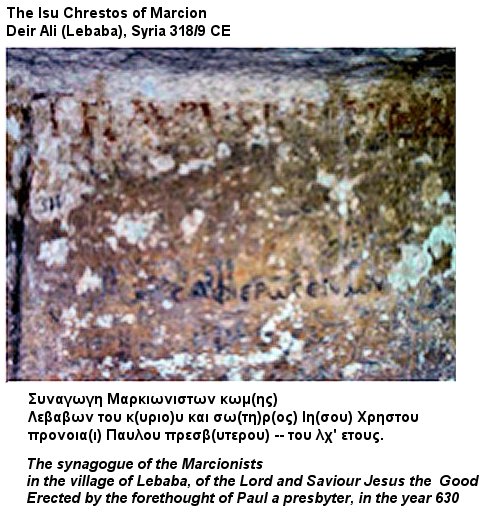
A Fourth Century CE Marcionite Synagogue in Syria

Adversus Marcionem 1.19 and Antoninus Pius's Alexandrian "Zodiac Coins" of 144/145 CE


First Argument for the Alexandrian Origins of Marcion

Second Argument for the Alexandrian Origins of Marcion

Third Argument for the Alexandrian Origins of Marcion

Fourth Argument for the Alexandrian Origins of Marcion

Fifth Argument for the Alexandrian Origins of Marcion

Conclusion

Bonus

First Piece of Evidence

Second Piece of Evidence


Third Piece of Evidence

Preliminary Conclusion

Overriding Point

Bottom Line


In Summa:

Last Word
