Of course it is true that nesher means specifically an eagle in mediaeval and modern Hebrew. That is irrelevant. The bird called nesher in the OT is the giant vulture, Gyps fulvus. This is the biggest bird in Palestine-Syria. Jastrow is misleading in saying nesher means eagle. It does not mean eagle in Rabbinic texts when speaking of the list in the Torah, though it does mean eagle otherwise. The description in the Talmud at Ḥullin 61a does not fit an eagle. (See the Tosafot. This was picked up by Rabbenu Tam). Also, what is said of it in the OT does not fit an eagle, as the same authors observed. For instance, in Ezechiel XVII:3 it is given as the bird with the longest wingspan. [I take the references from the Leksikon Mikra’i, Dvir, Tel Aviv, 1965. The article builds on the work of Bodenheimer and others]. Now, as to what the word nesher meant in the first c., that is not at an easy question. The evidence is conflicting. It seems the word changed its meaning in Hebrew and Aramaic. The question is at what time. In Leviticus XI:13 the LXX translates nesher as aetos, an eagle. As there is no mention in the usual ancient commentators of any different translation by Theodotion Symmachus or Aquila, it can be assumed they did the same. Aquila does translate nesher as aetos elsewhere. The Targums translate as nishra. This might be thought to mean eagle. Yet the Palestinian Targum sets out the characteristics of birds not to be eaten in the form of a rule just before the list, and what is given as the rule does not fit an eagle. In fact, it is precisely the characteristic that led the authors of the Gemara and the Tosafot to conclude that nesher couldn’t mean eagle. Either the editors had gone to sleep, or nishra did not mean eagle in Aramaic at the time of translation. On the other hand, this word is correctly translated nasr (a vulture) by both Saadya and the Samaritan Arabic. It could be objected that the Arabic word has both a specific and a general meaning, and might mean eagle here. Yet note that Sa’adya translates the next word, peres, as ‘uqâb, which means eagle. This raises the difficulty of the Greek translations, which unequivocally render nesher as eagle. The only answer that fits all the evidence is that in the OT the eagle, Aquila chrysaetus, is called ‘ayiṭ [‘ayin-yod-ṭet] and the nesher is the tawny vulture, Gyps fulvus. [Elkana Bialik in the Leksikon Mikra’i] In post-Biblical usage, nesher in Hebrew means eagle. Its meaning in Aramaic seems to have developed the same way.
The incompatibility of what is said of the nesher in the OT with it being an eagle was picked up by Nachmanides, among others.


The Mystery I've Solved

50 cm Seat /147 cm Tall Throne


Ancient Witness to the Size of the Throne

The Relative Size of the Alexandrian Throne of St Mark

Ancient Confirmation of Mark's "Smallness"

Marcion and the Episcopal Throne

Where was Marcion's Throne?

Burning of Arian Books After Nicaea

Drawing on vellum. From MS CLXV, Biblioteca Capitolare, Vercelli, a compendium of canon law produced in Northern Italy ca. 825


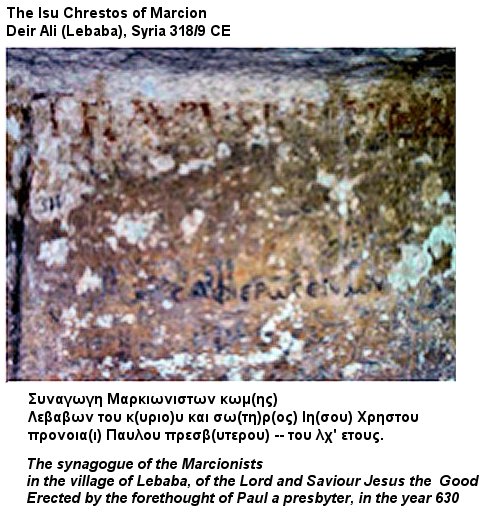
A Fourth Century CE Marcionite Synagogue in Syria

Adversus Marcionem 1.19 and Antoninus Pius's Alexandrian "Zodiac Coins" of 144/145 CE


First Argument for the Alexandrian Origins of Marcion

Second Argument for the Alexandrian Origins of Marcion

Third Argument for the Alexandrian Origins of Marcion

Fourth Argument for the Alexandrian Origins of Marcion

Fifth Argument for the Alexandrian Origins of Marcion

Conclusion

Bonus

First Piece of Evidence

Second Piece of Evidence


Third Piece of Evidence

Preliminary Conclusion

Overriding Point

Bottom Line


In Summa:

Last Word
