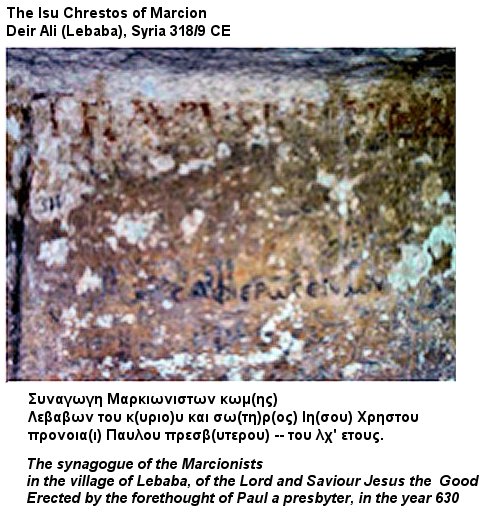
Let's continue with Trobisch's amazing work. After going through all the surviving manuscript evidence (which I won't cite here) Trobisch develops some important conclusions which I think best explain the origin of the canon:
With the exception of five documents, all of the evaluated manuscripts of the first seven centuries may be interpreted as copies of the same (original) edition P46 and D 06 (Letters of Paul), W 032 (Gospels), and D 05 (Gospels, Praxapostolos) may be understood as a deliberate redaction rearrangement of the same material.
... I would like to illustrate this point with an analysis of Theodor Zahn's argument. According to Zahn, an anonymous anti-Montanist writer at the end of the second century asserted that any additions to or deletions from the Holy Scripture were intolerable. Zahn then turns to Tertullian, a Montanist, who only a few years later repeated exactly the same sentence about such additions and deletions during a discussion with a theological opponent. For Zahn there is little doubt that both authors refer to the final verses of Revelations. Zahn then ironically remarks that one could conclude that these men had perused an examplar of the New Testament, one that began with the Gospel According to Matthew and ended with the Revelations of John - an examplar, that is, that looked very much like modern printed editions. As far as Zahn is concerned, such a conclusion would be a foolish error. His verdict strongly influenced most twentieth-century studies on the New Testament canon.
... [after arguments against Zahn's view] From this perspective, the same documented debates that are usually evaluated to demonstrate a gradual growth process of the canon serve instead as proof that the Canonical Edition of the Christian Bible was finished, published and widely used.
It is not Theodor Zahn's fault that he did not appropriately evaluate the manuscript evidence. The Codex Sinaiticus had just been discovered when Zahn published his work, and a reliable transcript of the Codex Vaticanus was not yet available. The high value of both witnesses for the reconstruction of the original text was not yet established among scholars. The impressive number of papyri accessible to us today had not yet been discovered. Zahn certainly is not to be blamed. Today, however, New Testament research has to deal with and evaluate the rich new manuscript evidence.
More often than not, the history of the Christian Bible was treated as the history of a doctrine and not the history of a publication. Researchers focused on the canon, not on the Canonical Edition.[p. 35 - 37]
So I hope my readers understand what Trobisch is saying. Someone in the late second century established a 'final edition' of the canon and the basic form of this collection stayed relatively stable over time.
Of course Trobisch recognizes that there are critics of his position - most notably Martin Hengel. Here is what Trobisch writes a little later after demonstrating that the titles of the various gospels, letters and works of the surviving New Testament canon were assigned by a final editor living in the second century (you'll have to buy the book to read that argument):
The uniform structure of the titles (of the various texts in the canon) points beyond the individual writing to an overall editorial concept and was not imposed by the authors of the individual writings. The titles (of the various texts) are redactional. In most cases the genre designations, the alleged authorship, and the structure of the titles cannot be derived from the text with certainty. This strongly suggests that the present form of the titles was not created by independently working editors but that they are the result of a single, specific redaction.
Martin Hengel strongly rejects the idea that the uniformity of the Gospel titles, which he readily agrees existed toward the end of the second century, might be explained as the result of a centralized redaction promoted by the influence and power of the church. And many historians will wholeheartedly agree with Hengel. The Christian church of the second century had not yet developed the structures that would later be used to promote and enforce the specific practices that would later be used to promote and enforce specific practices and creeds. There was no central personality who could have exercised so much power.[p. 41]
I STRONGLY disagree of course and Trobisch has read SOME of the arguments I developed three years ago to identify Irenaeus as that 'central personality.' I think my regular readers have seen the proofs which connect Irenaeus, Marcia and Eclectus to Commodus' inner circle. I would contend that traditional scholarship is too afraid of the stigma of promoting 'conspiracy theories' to ever admit that Irenaeus is EXACTLY the kind of figure Trobisch is describing.
My new book coming out in the fall of 2011 will do exactly this, I promise ...
Sunday, February 28, 2010
Some Random Notes From My Re-Reading of David Trobisch's First Edition of the New Testament
I haven't read Trobisch's book in some years. I saw it just sitting on my shelf and I thought to myself, why not read it again? Let me tell you folks, it's brilliance can't be understated. Not only is this book easy to read (my mother could finish it end to end) his observations are ALWAYS right on the money.
Where I have a tendency to go overboard and reach for conclusions which might or might not be true, Trobisch does the exact opposite. He devotes a single sentence to an idea that I might have circled around for two days (or two weeks) and in that one sentence a thousand possibilities are left open for the reader to consider.
Y'all have to buy this book. Really and truly.
In any event, I would just like to go through the hundred pages of the book (yes that's all) and cite some stuff which might be old news to some but I think doesn't get mentioned enough in relation to the whole Secret Mark 'debate.'
In the section which goes over surviving editions of the New Testament Trobisch reminds his readers that John is not always the last of the four gospels:
The Codex Washingtonianus W 032 (fifth century) arranges the Gospels in the order Matthew, John, Luke and Mark. A new quire was used for each Gospel. The sequence therefore is based soley on the continuous pagination of the quires, which was added by the original scribe and served as a guide for the bookbinder
... The famous Greek-Latin Codex Bezae Cantabrigiensis D 05 (fifth century) displays the same arrangement of the Gospels: Matthew, John, Luke, and Mark ... At some point in the history of the exemplar, the sixty-six pages between Mark and Acts were torn out and are now lost. [p. 30]
Trobisch puts forward the suggestion that the sequence resulted from 'the editorial intent to have the apostles' Gospels precede the Gospels of the apostles' students.' This makes sense and I believe that Tertullian makes reference to the kind of grouping Trobisch describes but interesting John appears first rather than Matthew "In short, from among the apostles the faith is introduced to us by John and by Matthew, while from among apostolic men Luke and Mark give it renewal" [Tertullian AM iv.2]
The other possibility that could explain the peculiar grouping is found in Clement's To Theodore where the Gospel according to Mark is identified as the 'gospel of perfection':
Mark came over to Alexandria, bringing both his own notes and those of Peter, from which he transferred to his former book the things suitable to whatever makes for progress toward knowledge. Thus he composed a more spiritual Gospel for the use of those who were being perfected.
If Clement's letter is genuine how could 'another gospel' or even two gospels have been allowed to come after the 'perfect gospel'? Indeed Islam describes itself as the 'perfect religion' with the idea that nothing could come after it.
Irenaeus interesting makes reference to a heretical belief associated with a 'perfect gospel' which came after 'other less perfect' gospels were already written. The context of Irenaeus' statement makes it absolutely certain that Mark is the 'perfect gospel' in question:
We have learned from none others the plan of our salvation, than from those through whom the Gospel has come down to us, which they did at one time proclaim in public, and, at a later period, by the will of God, handed down to us in the Scriptures, to be the ground and pillar of our faith. For it is unlawful to assert that they preached before they possessed "perfect knowledge," as some do even venture to say, boasting themselves as improvers of the apostles. For, after our Lord rose from the dead, [the apostles] were invested with power from on high when the Holy Spirit came down [upon them], were filled from all [His gifts], and had perfect knowledge: they departed to the ends of the earth, preaching the glad tidings of the good things [sent] from God to us, and proclaiming the peace of heaven to men, who indeed do all equally and individually possess the Gospel of God. Matthew also issued a written Gospel among the Hebrews in their own dialect, while Peter and Paul were preaching at Rome, and laying the foundations of the Church. After their departure, Mark, the disciple and interpreter of Peter, did also hand down to us in writing what had been preached by Peter. Luke also, the companion of Paul, recorded in a book the Gospel preached by him. Afterwards, John, the disciple of the Lord, who also had leaned upon His breast, did himself publish a Gospel during his residence at Ephesus in Asia.
This whole section of material could be interpreted as a response to the ideas of To Theodore or an Alexandrian tradition which supported it. The line "they did at one time proclaim in public, and, at a later period, by the will of God, handed down to us in the Scriptures" could be read to dispute the idea that Mark not only wrote his gospel AFTER other less perfect gospels were already completed but moreover that "he yet did not divulge the things not to be uttered, nor did he write down the hierophantic teaching of the Lord [in previous gospels], but to the stories already written he added yet others and, moreover, brought in certain sayings of which he knew the interpretation would, as a mystagogue, lead the hearers into the innermost sanctuary of that truth hidden by seven veils."
The same thing could also be said for the line in Irenaeus "for it is unlawful to assert that they preached before they possessed "perfect knowledge," as some do even venture to say, boasting themselves as improvers of the apostles." We will come upon Trobisch's theories about the purpose of the 'final edition' shortly. I just wanted to start my readership off with a provocative post. Maybe Mark appears last is because it was associated with a community which thought that Mark - rather than John - was thought to be the 'final seal' of the gospels even the 'gospel of perfection' ...
Where I have a tendency to go overboard and reach for conclusions which might or might not be true, Trobisch does the exact opposite. He devotes a single sentence to an idea that I might have circled around for two days (or two weeks) and in that one sentence a thousand possibilities are left open for the reader to consider.
Y'all have to buy this book. Really and truly.
In any event, I would just like to go through the hundred pages of the book (yes that's all) and cite some stuff which might be old news to some but I think doesn't get mentioned enough in relation to the whole Secret Mark 'debate.'
In the section which goes over surviving editions of the New Testament Trobisch reminds his readers that John is not always the last of the four gospels:
The Codex Washingtonianus W 032 (fifth century) arranges the Gospels in the order Matthew, John, Luke and Mark. A new quire was used for each Gospel. The sequence therefore is based soley on the continuous pagination of the quires, which was added by the original scribe and served as a guide for the bookbinder
... The famous Greek-Latin Codex Bezae Cantabrigiensis D 05 (fifth century) displays the same arrangement of the Gospels: Matthew, John, Luke, and Mark ... At some point in the history of the exemplar, the sixty-six pages between Mark and Acts were torn out and are now lost. [p. 30]
Trobisch puts forward the suggestion that the sequence resulted from 'the editorial intent to have the apostles' Gospels precede the Gospels of the apostles' students.' This makes sense and I believe that Tertullian makes reference to the kind of grouping Trobisch describes but interesting John appears first rather than Matthew "In short, from among the apostles the faith is introduced to us by John and by Matthew, while from among apostolic men Luke and Mark give it renewal" [Tertullian AM iv.2]
The other possibility that could explain the peculiar grouping is found in Clement's To Theodore where the Gospel according to Mark is identified as the 'gospel of perfection':
Mark came over to Alexandria, bringing both his own notes and those of Peter, from which he transferred to his former book the things suitable to whatever makes for progress toward knowledge. Thus he composed a more spiritual Gospel for the use of those who were being perfected.
If Clement's letter is genuine how could 'another gospel' or even two gospels have been allowed to come after the 'perfect gospel'? Indeed Islam describes itself as the 'perfect religion' with the idea that nothing could come after it.
Irenaeus interesting makes reference to a heretical belief associated with a 'perfect gospel' which came after 'other less perfect' gospels were already written. The context of Irenaeus' statement makes it absolutely certain that Mark is the 'perfect gospel' in question:
We have learned from none others the plan of our salvation, than from those through whom the Gospel has come down to us, which they did at one time proclaim in public, and, at a later period, by the will of God, handed down to us in the Scriptures, to be the ground and pillar of our faith. For it is unlawful to assert that they preached before they possessed "perfect knowledge," as some do even venture to say, boasting themselves as improvers of the apostles. For, after our Lord rose from the dead, [the apostles] were invested with power from on high when the Holy Spirit came down [upon them], were filled from all [His gifts], and had perfect knowledge: they departed to the ends of the earth, preaching the glad tidings of the good things [sent] from God to us, and proclaiming the peace of heaven to men, who indeed do all equally and individually possess the Gospel of God. Matthew also issued a written Gospel among the Hebrews in their own dialect, while Peter and Paul were preaching at Rome, and laying the foundations of the Church. After their departure, Mark, the disciple and interpreter of Peter, did also hand down to us in writing what had been preached by Peter. Luke also, the companion of Paul, recorded in a book the Gospel preached by him. Afterwards, John, the disciple of the Lord, who also had leaned upon His breast, did himself publish a Gospel during his residence at Ephesus in Asia.
This whole section of material could be interpreted as a response to the ideas of To Theodore or an Alexandrian tradition which supported it. The line "they did at one time proclaim in public, and, at a later period, by the will of God, handed down to us in the Scriptures" could be read to dispute the idea that Mark not only wrote his gospel AFTER other less perfect gospels were already completed but moreover that "he yet did not divulge the things not to be uttered, nor did he write down the hierophantic teaching of the Lord [in previous gospels], but to the stories already written he added yet others and, moreover, brought in certain sayings of which he knew the interpretation would, as a mystagogue, lead the hearers into the innermost sanctuary of that truth hidden by seven veils."
The same thing could also be said for the line in Irenaeus "for it is unlawful to assert that they preached before they possessed "perfect knowledge," as some do even venture to say, boasting themselves as improvers of the apostles." We will come upon Trobisch's theories about the purpose of the 'final edition' shortly. I just wanted to start my readership off with a provocative post. Maybe Mark appears last is because it was associated with a community which thought that Mark - rather than John - was thought to be the 'final seal' of the gospels even the 'gospel of perfection' ...


Using Irenaeus to Prove David Trobisch's Understanding of the Development of the Canon [Part One]
Here are all of Irenaeus' References to 'Gospel' in The Detection and Refutation of False Gnosis. I want to show that Trobisch's arguments are perfectly reflected in Irenaeus. In a previous age the world was filled with communities gathered around single, long gospels (Evangelium). Now in the present age the four gospels are taken collectively to be one gospel.
1. AH i.7.4 "They [the Valentinians] maintain that he [the Demiurge] is the centurion mentioned in the Gospel, (in Evangelio) who addressed the Saviour in these words: "For I also am one having soldiers and servants under my authority; and whatsoever I command they do." (Matt. viii. 9; Luke vii. 8) Notice it is not 'the Gospel according to Matthew or Luke' but 'the Gospel.'
2. AH i.8.4 "They say, too, that Simeon, “who took Christ into his arms, and gave thanks to God, and said, Lord, now lettest Thou Thy servant depart in peace, according to Thy word,” (Luke ii. 28) was a type of the Demiurge, who, on the arrival of the Saviour, learned his own change of place, and gave thanks to Bythus. They also assert that by Anna, who is spoken of in the Gospel (in Evangelio; Luke ii. 36) as a prophetess, and who, after living seven years with her husband, passed all the rest of her life in widowhood until she saw the Saviour, and recognised Him, and spoke of Him to all, was most plainly indicated Achamoth, who, having for a little while looked upon the Saviour with His associates, and dwelling all the rest of the time in the intermediate place, waited for Him till He should come again, and restore her to her proper consort. Her name, too, was indicated by the Saviour, when He said, “Yet wisdom is justified by her children.” (Luke vii.35) All the references in the section are from Luke and yet Irenaeus identifies that he is citing from 'the Gospel' rather than a particular gospel.
3. AH i.20.2 "Some passages, also, which occur in the Gospel, (in Evangelio) receive from them a colouring of the same kind, such as the answer which He gave His mother when He was twelve years of age ..." What makes the list of sayings that follows so interesting is that it clearly does not come from one text or even from the received text of our canon, which begs the question - what type of 'gospel' were the Marcosians using? The answer has to be that instead of a gospel of four they must have had a single, long gospel. It is worth noting that the English translations typically translate this passage in the plural 'the gospels' even though this is not what is written.
4. AH i.26.2 "Those who are called Ebionites agree that the world was made by God; but their opinions with respect to the Lord are similar to those of Cerinthus and Carpocrates. They use the Gospel according to Matthew only, (Mattheaum Evangelio) and repudiate the Apostle Paul ..." Notice again the heretics who use one gospel are always identified as using a 'Gospel according to ..." instead of 'according to ...' which is the title of each of the four texts of the fourfold gospel. Compare Epiphanius' statement "In the Gospel that is in general use among them which is called "according to Matthew", which however is not whole and complete but forged and mutilated - they call it the Hebrews Gospel .." and again "and that he came and declared, as their Gospel, which is called Gospel according to Matthew, or Gospel According to the Hebrews?"
5. AH i.27.2 "Besides this, he mutilates the Gospel which is according to Luke (Lukam Evangelium), removing all that is written respecting the generation of the Lord, and setting aside a great deal of the teaching of the Lord, in which the Lord is recorded as most dearly confessing that the Maker of this universe is His Father. He likewise persuaded his disciples that he himself was more worthy of credit than are those apostles who have handed down the Gospel (Evangelium) to us, furnishing them not with the Gospel (Evangelium), but merely a fragment of it." I think the use of EVANGELIUM here reflects again the Marcionite terminology. There heretics used a text called 'the Evangelium' which Irenaeus attributes to Luke and as a consequence of the fact that they only have one of the four text which make up the true gospel, they are furnished not with the Evangelium, but a mere fragment of it.'
6. AH ii.20.4 "For that Judas the traitor is the twelfth in order, is agreed upon by all, there being twelve apostles mentioned by name in the Gospel (Evangelio)."
7. AH ii.22.3 "But it is greatly to be wondered at, how it has come to pass that, while affirming that they [the heretics] have found out the mysteries of God, they have not examined the gospels (in Evangeliis) to ascertain how often after His baptism the Lord went up, at the time of the passover, to Jerusalem ..." The reference here is again TO ALL THE HERETICS and GOSPELS in the broadest sense. Even within the Catholic canon there is only one 'gospel' - the Gospel of John - which mentions this visit to Jerusalem. Irenaeus is demonstrated not to call the individual texts of the one gospel as 'gospels' in their own right.
8. AH ii.22.3 "Their [i.e. the heretic's] explanation, therefore, both of the year and of the twelfth month has been proved false, and they ought to reject either their explanation or the Evangelium; otherwise, How is it possible that the Lord preached for one year only?" Again Evangelium is here used to refer to the gospel used by the heretics. Irenaeus is reflecting their terminology.
9. AH ii.22.5 "Now, that the first stage of early life embraces thirty years,(1) and that this extends onwards to the fortieth year, every one will admit; but from the fortieth and fiftieth year a man begins to decline towards old age, which our Lord possessed while He still fulfilled the office of a Teacher, even as the Evangelium and all the elders testify; those who were conversant in Asia with John, the disciple of the Lord, [affirming] that John conveyed to them that information." This is a statement directed at Florinus and others who knew that Polycarp used a text he identified as 'the Evangelium' like the Marcionites (hence their dispute).
10. AH ii.26.4 " Or again, if any one should, because of this expression which occurs in the Gospel (in evangelio), "Are not two sparrows sold for a farthing? and not one of them falls to the ground without the will of your Father," take occasion to reckon up the number of sparrows caught daily" [Mat x.29]
11. AH ii.27.2 "According to this course of procedure, therefore, man would always be inquiring but never finding, because he has rejected the very method of discovery. And when the Bridegroom comes, he who has his lamp untrimmed, and not burning with the brightness of a steady light, is classed among those who obscure the interpretations of the parables, forsaking Him who by His plain announcements freely imparts gifts to all who come to Him, and is excluded from His marriage-chamber. Since, therefore, the entire Scriptures, the prophets, and the Gospels (Evangelia), can be clearly, unambiguously, and harmoniously understood by all, although all do not believe them; and since they proclaim that one only God, to the exclusion of all others, formed all things by His word, whether visible or invisible, heavenly or earthly, in the water or under the earth, as I have shown from the very words of Scripture" Once again 'gospels' is used in the broadest sense. Irenaeus is attacking previous efforts to interpret 'the gospels' by means of knowledge or as Irenaeus clarifies "not that he meant to inveigh against a true knowledge of God, for in that case he would have accused himself; but, because he knew that some, puffed up by the pretence of knowledge, fall away from the love of God, and imagine that they themselves are perfect, for this reason that they set forth an imperfect Creator, with the view of putting an end to the pride which they feel on account of knowledge of this kind."
11. AH iii.pref. "For the Lord of all gave to His apostles the power of the Gospel (Evangelii), through whom also we have known the truth."
12. AH.iii.1.1 "WE have learned from none others the plan of our salvation, than from those through whom the Gospel (Evangelium) has come down to us, which they did at one time proclaim in public."
13. AH iii.1.1 " For, after our Lord rose from the dead, [the apostles] were invested with power from on high when the Holy Spirit came down [upon them], were filled from all [His gifts], and had perfect knowledge: they departed to the ends of the earth, preaching the glad tidings of the good things [sent] from God to us, and proclaiming the peace of heaven to men, who indeed do all equally and individually possess the Gospel of God (Evangelium Dei)."
14. AH iii.1.2 "Matthew also issued a written Gospel (Evangelii) among the Hebrews in their own dialect, while Peter and Paul were preaching at Rome, and laying the foundations of the Church. After their departure, Mark, the disciple and interpreter of Peter, did also hand down to us in writing what had been preached by Peter. Luke also, the companion of Paul, recorded in a book the Evangelium preached by him. Afterwards, John, the disciple of the Lord, who also had leaned upon His breast, did himself publish a Gospel (Evangelium) during his residence at Ephesus in Asia." Notice that only the text put forward by Mark is NOT explicitly identified as an Evangelium. This is VERY significant. I suspect it reflects an allusion to the debate at the heart of To Theodore, but I won't stress the point.
I will continue this later but Trobisch's point would be that yes Irenaeus is still saying that four evangelists wrote four gospels. Irenaeus couldn't have denied this. But lurking here in Book Three Chapter One is the heretical idea that some of the gospels where written before the evangelists had 'perfect knowledge.'
For it is unlawful to assert that they preached before they possessed "perfect knowledge," as some do even venture to say, boasting themselves as improvers of the apostles. [ibid]
I take this to be a reference again to the chronology proposed by Clement and moreover the placement of John as the 'final seal' of the gospels is also part of an effort to diminish the value of the Mark.
Just think about what Clement is saying about Mark first writing a gospel for Peter and then a gospel 'according to perfection' (loose quote) on his own in Alexandria. I have always thought that the existing canon was developed AGAINST the Markan tradition and to subtly uphold the authority of Polycarp (i.e. 'John') even though many in the age KNEW that he was a fraud.
More after the hockey game (sorry, I am Canadian) ...
1. AH i.7.4 "They [the Valentinians] maintain that he [the Demiurge] is the centurion mentioned in the Gospel, (in Evangelio) who addressed the Saviour in these words: "For I also am one having soldiers and servants under my authority; and whatsoever I command they do." (Matt. viii. 9; Luke vii. 8) Notice it is not 'the Gospel according to Matthew or Luke' but 'the Gospel.'
2. AH i.8.4 "They say, too, that Simeon, “who took Christ into his arms, and gave thanks to God, and said, Lord, now lettest Thou Thy servant depart in peace, according to Thy word,” (Luke ii. 28) was a type of the Demiurge, who, on the arrival of the Saviour, learned his own change of place, and gave thanks to Bythus. They also assert that by Anna, who is spoken of in the Gospel (in Evangelio; Luke ii. 36) as a prophetess, and who, after living seven years with her husband, passed all the rest of her life in widowhood until she saw the Saviour, and recognised Him, and spoke of Him to all, was most plainly indicated Achamoth, who, having for a little while looked upon the Saviour with His associates, and dwelling all the rest of the time in the intermediate place, waited for Him till He should come again, and restore her to her proper consort. Her name, too, was indicated by the Saviour, when He said, “Yet wisdom is justified by her children.” (Luke vii.35) All the references in the section are from Luke and yet Irenaeus identifies that he is citing from 'the Gospel' rather than a particular gospel.
3. AH i.20.2 "Some passages, also, which occur in the Gospel, (in Evangelio) receive from them a colouring of the same kind, such as the answer which He gave His mother when He was twelve years of age ..." What makes the list of sayings that follows so interesting is that it clearly does not come from one text or even from the received text of our canon, which begs the question - what type of 'gospel' were the Marcosians using? The answer has to be that instead of a gospel of four they must have had a single, long gospel. It is worth noting that the English translations typically translate this passage in the plural 'the gospels' even though this is not what is written.
4. AH i.26.2 "Those who are called Ebionites agree that the world was made by God; but their opinions with respect to the Lord are similar to those of Cerinthus and Carpocrates. They use the Gospel according to Matthew only, (Mattheaum Evangelio) and repudiate the Apostle Paul ..." Notice again the heretics who use one gospel are always identified as using a 'Gospel according to ..." instead of 'according to ...' which is the title of each of the four texts of the fourfold gospel. Compare Epiphanius' statement "In the Gospel that is in general use among them which is called "according to Matthew", which however is not whole and complete but forged and mutilated - they call it the Hebrews Gospel .." and again "and that he came and declared, as their Gospel, which is called Gospel according to Matthew, or Gospel According to the Hebrews?"
5. AH i.27.2 "Besides this, he mutilates the Gospel which is according to Luke (Lukam Evangelium), removing all that is written respecting the generation of the Lord, and setting aside a great deal of the teaching of the Lord, in which the Lord is recorded as most dearly confessing that the Maker of this universe is His Father. He likewise persuaded his disciples that he himself was more worthy of credit than are those apostles who have handed down the Gospel (Evangelium) to us, furnishing them not with the Gospel (Evangelium), but merely a fragment of it." I think the use of EVANGELIUM here reflects again the Marcionite terminology. There heretics used a text called 'the Evangelium' which Irenaeus attributes to Luke and as a consequence of the fact that they only have one of the four text which make up the true gospel, they are furnished not with the Evangelium, but a mere fragment of it.'
6. AH ii.20.4 "For that Judas the traitor is the twelfth in order, is agreed upon by all, there being twelve apostles mentioned by name in the Gospel (Evangelio)."
7. AH ii.22.3 "But it is greatly to be wondered at, how it has come to pass that, while affirming that they [the heretics] have found out the mysteries of God, they have not examined the gospels (in Evangeliis) to ascertain how often after His baptism the Lord went up, at the time of the passover, to Jerusalem ..." The reference here is again TO ALL THE HERETICS and GOSPELS in the broadest sense. Even within the Catholic canon there is only one 'gospel' - the Gospel of John - which mentions this visit to Jerusalem. Irenaeus is demonstrated not to call the individual texts of the one gospel as 'gospels' in their own right.
8. AH ii.22.3 "Their [i.e. the heretic's] explanation, therefore, both of the year and of the twelfth month has been proved false, and they ought to reject either their explanation or the Evangelium; otherwise, How is it possible that the Lord preached for one year only?" Again Evangelium is here used to refer to the gospel used by the heretics. Irenaeus is reflecting their terminology.
9. AH ii.22.5 "Now, that the first stage of early life embraces thirty years,(1) and that this extends onwards to the fortieth year, every one will admit; but from the fortieth and fiftieth year a man begins to decline towards old age, which our Lord possessed while He still fulfilled the office of a Teacher, even as the Evangelium and all the elders testify; those who were conversant in Asia with John, the disciple of the Lord, [affirming] that John conveyed to them that information." This is a statement directed at Florinus and others who knew that Polycarp used a text he identified as 'the Evangelium' like the Marcionites (hence their dispute).
10. AH ii.26.4 " Or again, if any one should, because of this expression which occurs in the Gospel (in evangelio), "Are not two sparrows sold for a farthing? and not one of them falls to the ground without the will of your Father," take occasion to reckon up the number of sparrows caught daily" [Mat x.29]
11. AH ii.27.2 "According to this course of procedure, therefore, man would always be inquiring but never finding, because he has rejected the very method of discovery. And when the Bridegroom comes, he who has his lamp untrimmed, and not burning with the brightness of a steady light, is classed among those who obscure the interpretations of the parables, forsaking Him who by His plain announcements freely imparts gifts to all who come to Him, and is excluded from His marriage-chamber. Since, therefore, the entire Scriptures, the prophets, and the Gospels (Evangelia), can be clearly, unambiguously, and harmoniously understood by all, although all do not believe them; and since they proclaim that one only God, to the exclusion of all others, formed all things by His word, whether visible or invisible, heavenly or earthly, in the water or under the earth, as I have shown from the very words of Scripture" Once again 'gospels' is used in the broadest sense. Irenaeus is attacking previous efforts to interpret 'the gospels' by means of knowledge or as Irenaeus clarifies "not that he meant to inveigh against a true knowledge of God, for in that case he would have accused himself; but, because he knew that some, puffed up by the pretence of knowledge, fall away from the love of God, and imagine that they themselves are perfect, for this reason that they set forth an imperfect Creator, with the view of putting an end to the pride which they feel on account of knowledge of this kind."
11. AH iii.pref. "For the Lord of all gave to His apostles the power of the Gospel (Evangelii), through whom also we have known the truth."
12. AH.iii.1.1 "WE have learned from none others the plan of our salvation, than from those through whom the Gospel (Evangelium) has come down to us, which they did at one time proclaim in public."
13. AH iii.1.1 " For, after our Lord rose from the dead, [the apostles] were invested with power from on high when the Holy Spirit came down [upon them], were filled from all [His gifts], and had perfect knowledge: they departed to the ends of the earth, preaching the glad tidings of the good things [sent] from God to us, and proclaiming the peace of heaven to men, who indeed do all equally and individually possess the Gospel of God (Evangelium Dei)."
14. AH iii.1.2 "Matthew also issued a written Gospel (Evangelii) among the Hebrews in their own dialect, while Peter and Paul were preaching at Rome, and laying the foundations of the Church. After their departure, Mark, the disciple and interpreter of Peter, did also hand down to us in writing what had been preached by Peter. Luke also, the companion of Paul, recorded in a book the Evangelium preached by him. Afterwards, John, the disciple of the Lord, who also had leaned upon His breast, did himself publish a Gospel (Evangelium) during his residence at Ephesus in Asia." Notice that only the text put forward by Mark is NOT explicitly identified as an Evangelium. This is VERY significant. I suspect it reflects an allusion to the debate at the heart of To Theodore, but I won't stress the point.
I will continue this later but Trobisch's point would be that yes Irenaeus is still saying that four evangelists wrote four gospels. Irenaeus couldn't have denied this. But lurking here in Book Three Chapter One is the heretical idea that some of the gospels where written before the evangelists had 'perfect knowledge.'
For it is unlawful to assert that they preached before they possessed "perfect knowledge," as some do even venture to say, boasting themselves as improvers of the apostles. [ibid]
I take this to be a reference again to the chronology proposed by Clement and moreover the placement of John as the 'final seal' of the gospels is also part of an effort to diminish the value of the Mark.
Just think about what Clement is saying about Mark first writing a gospel for Peter and then a gospel 'according to perfection' (loose quote) on his own in Alexandria. I have always thought that the existing canon was developed AGAINST the Markan tradition and to subtly uphold the authority of Polycarp (i.e. 'John') even though many in the age KNEW that he was a fraud.
More after the hockey game (sorry, I am Canadian) ...
Saturday, February 27, 2010
The Starting Point of My Theory for the Origin of the Gospels is Firmly Rooted in David Trobisch's Research [Part One]

Of course the things I blog about - the Diatessaron, 'Secret Mark,' the Marcionite gospel, Imperial conspiracies - all seem the furthest thing from Trobisch's erudite writings. Yet this is what is so amazing about Trobisch's theories. You know they are true because they help explain things even HE doesn't spend a lot of time considering.
Indeed I think most scholars just make stuff up in their heads by recycling ideas that have won a 'popularity contest' in academia. Things that sound nice but ultimately are not based on real independent research. Trobisch has spent the time to actually re-examine the physical evidence associated with the earliest manuscripts. That's what make his theories actually work so well. They are based on physical truths, not just presumed 'metaphysical ones.'
In any event, another man I greatly admire - Roger Viklund - asked me to spell out my theory about the development of the canonical gospels from earlier texts like Secret/Mystic Mark. Roger has demonstrated that he can sum up HIS model for the origins of the gospel in a simple graphic (see left image). I started wondering if I could do the same.
Let me start what I think is wrong with most theories about the origins of the gospel - too many scholars allow themselves to just swim in the artificial fishbowl of the four-fold canon. Yes it's 'safe' inside here but Trobisch's research smashes the appearance of 'reliability' of these texts.
Trobisch has definitively demonstrated something which I think only a handful of scholars have the mental capacity to appreciate. Charlie Hedrick 'gets' the brilliance of Trobisch. So do a lot of other brilliant scholars I have met. Yet there are so many bloggers and lay people who have never bothered to read this exceptionally smart man's works that I would like to begin presenting my theory about the origins of the gospel by actually spending some time on Trobisch's theory which, as I have already mentioned is the basis to my own ideas.
The centerpiece to Trobisch's system is that the texts of 'MATTHEW,' 'MARK,' 'LUKE' AND 'JOHN' were never meant to be gospels in their own right. This is a massively important concept that I don't think people who haven't read Trobisch's work can appreciate its underlying profundity.
Trobisch's 'great revelation' - the one that earns him a place in heaven or 'the stratosphere' just mentioned is that all the MSS of the fourfold gospel make it plainly evident that they were intended to be used as a 'set.' What is represented here is not 'four gospels.' This is a cardinal error of scholars trying to reconstruct the history of the canon. Rather it is 'a gospel in four.'
I can't emphasize how critical this is and how all attempts to simply take the four texts as 'four gospels' necessarily goes beyond what was originally intended by the final editor of the canon.
Scholars can say whatever they want of course. In many ways the field of academic research is open to any idea that manages to get published. However when we say 'four gospels' we are necessarily creating a new opinion, a new understanding of the canon which is not what was intended by the believers in the canon.
What happens is that scholars forget that it is a 'gospel in four' and when they speak of 'four gospels' that such an opinion is 'self-evident' and doesn't require explanation. No, my friends, Trobisch's work makes clear that the 'final edition' of the canon was introduced in an environment where 'gospel' was ALWAYS used in the singular.
It can also be inferred from Trobisch's evidence that the final editor of the final canon must have had a role in 'straightening' the texts to make them agree with one another. In other words, whatever existed BEFORE the date of the completion of the 'final edition' it is impossible to believe that THESE four gospels retained their original form. This is an entirely separate issue from whether or not a 'Matthew,' 'Mark,' 'Luke' or 'John' actually existed before 180 CE. I personally don't believe that 'Luke' is older than this date.
Yet when you stand in front of this precipice - AND THIS A MASSIVE PRECIPICE TROBISCH HAS DISCOVERED - what we have to do is stop at the date 180 CE and say that canonical Matthew, Mark, Luke and John CAN ONLY BE ASSIGNED TO THIS DATE.
What lies before 180 CE is now entirely up for grabs. The 'set' of the New Testament canon is no different than the 'set' of Ignatian writings which the Dutch radicals have clearly demonstrated were also manufactured to be used as a 'set.' (OF COURSE I BET THERE ARE STILL PEOPLE SHAKING THEIR HEADS SAYING 'I DON'T GET WHAT THE BIG DEAL IS IF ONE PERSON SAYS 'ONE GOSPEL IN FOUR' AND 'FOUR GOSPELS IN ONE' yet these people are undoubtedly the same type of people who think that finding a clitoris is a trivial detail for sex).
So let me recapitulate what I said in a previous post for those who didn't get it the first time around.
The heading kata Markan etc. rather than Euangelion kata Markan etc. implies what I have already said it implies, but then he argues for the originality of the full form. In my opinion, the ms. evidence points the other way. After arguing for the originality of the full form, he goes on to reach the same conclusions that I reached from the short form, but without seeing the next step. What is important here is that he then says, rightly, that Euangelion kata Markan doesn’t mean the Gospel by Mark, but instead 'according to Mark.' This is not the formula for authorship of a new book, which is to put the author’s name in the genitive without a preposition. The only way this can make sense, says he, is if it is the totality of the four that is called the Gospel. His conclusion is that the group of four must have been published together. He doesn’t take what I think ought to have been the next step. For this reason, he is unable to account for the official and universal use of the Diatessaron by the Syrian Church.
Trobisch adds elsewhere that he thinks the last verse of John to be the editor’s note at the end of the totality, not the note to mark the end of John. He says, rightly in my opinion, that the verse before this is the editor’s note to the end of John. He raises the question of whether the last chapter, which is all from the hand of an editor, might be from the editor of the group of four.
This is the beginning point of my reconstruction of the origin of the gospels. According to my understanding this means that ALL previous attempts to reconstruct the origins of the canon are completely misguided because they assume that the FORM of the Gospel of Mark as we now have it was relatively firm throughout the ages.
I have uncovered evidence in fact from Irenaeus himself that the 'according to Mark' in his day (I am in fact going to make a point of REFUSING to call the canonical texts 'the Gospel of ....' from now on for the sake of clarity) was at least 'somewhat longer' than our present edition of the text.
This is critical in my mind for why I have come to embrace 'the Gospel according to Mark' (notice Clement's emphasis throughout To Theodore and Quis Dives Salvetur) referenced in the Mar Saba document. The idea fits perfectly with the IMPLICATIONS of Trobisch's research. I think ALL of the canonical texts went back to 'longer FULL gospels' which were truncated to 'fit' within the canonical 'set.'
I would go so far as to argue that Irenaeus already points to the fact that 'according to Matthew' goes back to a longer text when he declares "Matthew also issued a written Gospel among the Hebrews in their own dialect, while Peter and Paul were preaching at Rome, and laying the foundations of the Church." [Irenaeus AH iii.1.1] I don't think there is a reasonable scholar alive today WHO DOESN'T THINK that Irenaeus is referencing the idea that 'according to Matthew' goes back to the 'Gospel according to the Hebrews' mentioned in countless later Fathers.
I am not going to make the mistake of accepting what Irenaeus says uncritically. I believe there was some kind of text or texts which the Church Fathers identified by this name. Whether they were all the same text or whether this text REALLY became 'according to Matthew' isn't the point.
What we should notice instead is that Irenaeus has already opened the door to the idea of a longer Matthew. The first clue in this regard is that after noting that the Ebionites use 'according to Matthew' in some sense he says that 'they get it' wrong. "For the Ebionites, who use Matthew's Gospel only, are confuted out of this very same, making false suppositions with regard to the Lord." What Irenaeus REALLY means clearly is that they use the Gospel according to the Hebrews - the text which MUST BE REGARDED AS A 'LONGER MATTHEW' OR AT LEAST 'DIFFERENT MATTHEW' - and that their errors are LATER refuted in SHORTER Matthew.
Just look at what Irenaeus says about only one 'Ebionite error' which CANNOT POSSIBLY HAVE ORIGINATED if the Ebionites used 'according to Matthew' (i.e. our canonical text):
God, then, was made man, and the Lord did Himself save us, giving us the token of the Virgin. But not as some allege, among those now presuming to expound the Scripture, [thus:] "Behold, a young woman shall conceive, and bring forth a son," as Theodotion the Ephesian has interpreted, and Aquila of Pontus, both Jewish proselytes. The Ebionites, following these, assert that He was begotten by Joseph; thus destroying, as far as in them lies, such a marvellous dispensation of God, and setting aside the testimony of the prophets which proceeded from God. For truly this prediction was uttered before the removal of the people to Babylon; that is, anterior to the supremacy acquired by the Medes and Persians. [Irenaeus AH iii.21.1]
Folks, this isn't rocket science. There is no way that the Ebionites could have 'thought' that Mary WASN'T a virgin if their gospel had Matthew 1:18. Our 'according to Matthew' is - at least according to Irenaeus Gospel according to the Hebrews with the addition of Matthew 1:18. There are countless changes which can easily be documented from the text known to 'Ebionites' to the 'according to Matthew' we are now familiar with, many of which support the idea that 'the Gospel according to the Hebrews' was actually longer.
Now let's turn to Irenaeus' treatment of a longer 'according to Mark' but before we do let's not that just as Irenaeus only identifies our canonical text as 'Matthew' or 'according to Matthew' and only with the inclusion of the word 'gospel' - i.e. 'a written Gospel among the Hebrews' - when referencing THE HERETICAL TEXT, he only identifies canonical Mark as 'according to Mark' and the one time a variant 'heretical' text Mark is cited it is referenced in the full form i.e. 'the Gospel by Mark.' As we see:
Those, again, who separate Jesus from Christ, alleging that Christ remained impassible, but that it was Jesus who suffered, preferring the Gospel by Mark, if they read it with a love of truth, may have their errors rectified. [ibid iii.11.7]
I think this is absolutely significant given Trobisch's observations. The heretics used not only a single 'Gospel by Mark' but more importantly a single, LONGER 'Gospel by Mark' (this story of Christ separating from Jesus and watching him crucified is no longer in 'according to Mark'). I will end this brief introduction with EVERY citation of the canonical 'according to ...' gospel's in Irenaeus and I will prove that he never references the 'orthodox' versions as 'individual gospels.' For Irenaeus they are always parts of a set which is the gospel.
Not only does this support the idea that the heretics GENERALLY 'preferred' single gospels but moreover ANY EARLY EXPRESSION of phrases which sounded like 'the Gospel according to' a particular individual were likely signs of heresy or deviation from the original 'orthodox formula.'
Consider then how important it is then that Clement of Alexandria not only references a longer 'according to Mark' but specifies on more than one occasion that it is a 'Gospel according to Mark':
Now of the things they keep saying about the divinely inspired Gospel according to Mark, some are altogether falsifications, and others, even if they do contain some true elements, nevertheless are not reported truly. For the true things, being mixed with inventions, are falsified, so that, as the saying goes, even the salt loses its savor.
and again:
To them [the Carpocratians], therefore, as I said above, one must never give way; nor, when they put forward their falsifications, should one concede that it is the mystic gospel by Mark, but should even deny it on oath. For 'not all true things are to be said to all men' (2:10 - 13).
I am only trying to sketch the paradigm I begin with when I start to reconstruct the gospel, but I should only like to say that I have developed a lengthy argument that proves that Polycarp used a longer gospel of John again that was eventually shortened by his 'disciple' Irenaeus in order to establish the fourfold canon.
I should also say that I see Irenaeus' formula in the same book which begins with Matthew and ends with John as a CHRONOLOGICAL revelation of fourfold gospel. First came 'according to Matthew,' then 'according to Mark,' then 'according to Luke' and then 'according to John' (the revelation of which can be associated with Polycarp) AND THEN THE ASSEMBLY OF THE NEW TESTAMENT CANON BY IRENAEUS (remember he can provide no witnesses for any 'elders' who ever acknowledged the gospel should be in four).
I think it is implicit also that this chronology implies that 'John' - the revelation of Polycarp - is the final 'seal' which closed the heavenly revelation. This would have been very important in the contemporary given the controversies in Rome and undoubtedly - simmering beneath the surface - in contemporary Alexandria regarding the authenticity of John.
As I see it, the fourfold gospel was designed principally to answer objections about the authenticity of the Johannine revelation of Polycarp. Remember I believe the Acts of the Apostles was originally introduced as a revelation of John. I have explained this already in an unpublished monograph. The skeptical reader need only remember that Revelations was taken to have been written by the same author as the Gospel of John. As such, 'Johannine texts' don't have to be ACTUALLY written by the same historical authors to be considered Johannine literary compositions.
The important thing for Irenaeus was to answer the objections about the authenticity of Polycarp's claims of a Johannine canon. This was secured by placing John as the 'seal of the evangelists.' Indeed as Trobisch notes, it is highly probable that the final words of John represent a conclusion to the set as a whole and were written by Irenaeus himself.
So ends my brief sketch of what I think ARE NOT the original forms of the gospel. The fact that other scholars limit themselves to what they (wrongly) identify as 'four gospels' is no concern of mine. As noted earlier, our canon was designed from the outset as a gospel in four. Indeed if the reader walks away with only one idea from this blog it is that just because Irenaeus limited himself to a gospel of four that each one of these texts necessarily 'corresponds' with a like named historical precursor.
I think for instance that 'Mark' and 'John' go back to one and the same historical person.
If I was to develop a graphic to explain my theory of the origin of the gospel, I'd have a sea of question marks with names like 'the Marcionite gospel,' 'the Gospel according to the Hebrews,' the Gospel of the Mixed (i.e. the so-called 'Diatessaron') and the like floating within the sea of question marks.
Then I would have Polycarp's creation of the original Gospel of John from these shadowy references to lost gospels.
Then I would have a single line with the name 'Irenaeus.'

Then I would have a series of arrows coming from the gospel names in the sea of question marks and the sea of question marks itself (because there are undoubtedly more gospels than we know have any information about). I would also have one thinner arrow going from Polycarp's Gospel of John to each one of the three synoptic gospels (to illustrate that a shadow from this text was cast over even the three synoptics EVEN BY VIRTUE OF WHAT MATERIAL WAS EXCLUDED FROM THEIR CONTENTS) and then a heavy line going from Polycarp's 'Gospel of John' to Irenaeus' 'according to John.'
Maybe I should just take the time tomorrow to make up the graphic myself ...
UPDATE - As always I contacted the LIVING expert whose opinion is cited here - i.e. David Trobisch - and asked him to sign off on my short hand sketch of his theory. He sent back an email and told me that he loved my blog and added 'I feel understood.' As such - for all the lazies who haven't actually READ Trobisch's The First Edition of the New Testament, you can trust that what I am saying is Trobisch's opinion IS Trobisch's opinion ...
Friday, February 26, 2010
I Will Have to Modify My Theory About the 'Gospel of the Circumcision'
My attempts to get from the 'Gospel of the Circumcision' to the 'Gospel of the Mixed' won't work. I had not recognised that the mem MUST be a prefix and the ṭet must be the third root-letter. Aside from that, the Hebrew root has HE and the Syriac one has ḤET. This makes the connection impossible. Everything I said about the Carpocratian gospel being a 'mixed gospel' and the Diatessaron being identified by the Syriac speaking tradition as 'the Gospel of the Mixed' still stands. I just can't go from their to the concept of the Gospel of the Circumcision.
At least you know that I (a) check and recheck my work and (b) admit when I am wrong about something.
At least you know that I (a) check and recheck my work and (b) admit when I am wrong about something.
Getting Back to the Original Gospel Controversy

My assumptions are quite simple - by the end of the second century the Imperial government was actively attempting to reshape Christianity into something 'manageable.' In my mind there is no difference then than there is now. When George Bush and other world leaders make reference to 'good' and 'bad' forms of Islam they are in effect encouraging the spread of the forms of the religion which are more favorable to American and Western interests. To think that the Imperial government in Rome almost two thousand years ago DID NOT engage in the same policies is idiotic but this idiocy penetrates every level of the existing scholarship on early Christianity.
I happen to know that the Orthodox Patriarch in Jerusalem is actively trying to track down the Mar Saba letter. My guess is that the document will not be found but - I think that Agamemnon Tselikas' efforts to determine the authenticity of the document (see last month's Biblical Archaelology Review) will eventually prove that the letter is genuine.
At that point I think the debate about the Mar Saba letter will shift and alliances which now exist will break apart. There will still be a majority of scholars who will want to interpret the letter as if it was written in a religious environment pretty much like our own - i.e. four canonical gospels and 'Secret Mark' being a longer version of our canonical gospel of Mark.
Right now of course I am in the minority when I emphasize that Clement of Alexandria never references our canonical Gospel of Mark. He mentions three gospels - (a) the Alexandrian Gospel of Mark (which may or may not have been 'secret' or 'hidden'), (b) an 'account of the doings of the Lord' which Clement claims Mark wrote to capture the essence of the kerygma Petrou and (c) a falsely 'mixed' gospel associated with the Carpocratians which they claim is the gospel written by Mark.
It is only owing to our inherited prejudices that we think that (b) is the canonical gospel of Mark and that when Clement cites from what appears to be chapter ten of our Mark to demonstrate where the Alexandrian text seems to have 'additional material.'
You see there are two kinds of people. There are the kind of people who go in a large group to a foreign city, stay at a Holiday Inn, eat at McDonalds every night, go on tourist junkets to 'see the sites' and then come home and tell everyone 'what it is like' to be in this foreign country.
The other kind of person GOES ALONE, meets and makes friends with locals and completely immerses himself in the local culture.
The standard religious scholar is like the former person. He can only think in terms of our existing canon because - well - he is an unsophisticated boor.
The point however is that when we try and make sense of Clement's reference to the three aforementioned gospels, the real question which has to be asked EVEN IF IT CAN'T BE ANSWERED DEFINITIVELY is when was the Letter to Theodore written. In my opinion, the earlier the authorship of the letter is assigned the less likely it is that our canonical gospel of Mark is being referenced in the text and - moreover - the greater the likelihood that the 'mixed' gospel is, in fact 'the Gospel of the Mixed' i.e. the Syriac 'ܐܘܢܓܠܝܘܢ ܕܡܚܠܛܐ' (Ewangeliyôn Damhalltê) which - as I have just noted has the connotation of 'the gospel of the circumcision' in Jewish Aramaic (as opposed to Syriac).
My guess (and I will spend next week going through the proofs behind this 'educated guess') is that Polycarp employed a Diatessaron. Polycarp is 'Carpocrates' by way of the gematria for 'the seven churches of Asia Minor' (Rev. ). As I noted in a previous post Carpocrates = 897 = 'the seven church which are in Asia.'
In any event, if Polycarp did indeed use a text which resembled Ephraim's Diatessaron as I suggest, my basic theory would be that Clement wrote To Theodore before the creation of the four-faced gospel and when the Diatessaron associated with John was the official gospel of the Polycarpian Church - or if you will the Maphryono Church which is the current name of the Syrian Orthodox tradition (literally "one who bears fruit" or "Polycarp" to use the Greek equivalent).
To get a crash course on my interpretation of Polycarp please read this article at Hermann Detering's site.
The basic point of the article is that the Maphryono Church, the one headed by Polycarp, was a sect of the Markan tradition of Alexandria. In the same way, that the Alexandrian sources tell us that a certain 'Carpocrates' copied and 'mixed' a gospel based on the Gospel of Mark held by the Alexandrian Church, Polycarp can be demonstrated to have visited Alexandria and went to Rome bringing with him a Gospel of John - which I believe got him into controversy with the prominent elder Gaius.
It is difficult of course to spell out exactly what happened in this gospel controversy of the late second century as we have so little independent sources left for us to employ. Nevertheless I believe that the Alexandrian community knew from its ancient canon that it followed a pattern of controversies which existed in the Church from the very beginning (cf. the Letter to the Galatians, 2 Corinthians etc.).
I suspect that in some manner the Alexandrian community had learned to reconcile itself between the two camps that employed the Gospel of Mark and the Gospel of Peter. In the end, the Markan tradition came out on top in the struggle and the former gospel was reserved for the elite who had underwent ritual initiation which the Gospel of Peter was the gospel of the greater Church.
It is my guess that by the time Irenaeus emerged in the Commodian period, he sought - with the 'assistance' of the Imperial government - to reconcile the plurality of gospels within a fourfold canon. According to Irenaeus' claims the Gospel of the Hebrews was properly identified with the Gospel of Matthew which now held the principle position within the canon.
I think too many scholars accept Irenaeus' claims without the proper scrutiny. The Gospel of Hebrews was first. No one disputes that. Irenaeus just says that it is properly defined as 'according to Matthew.' I think the actual situation in antiquity was a lot more complicated than this.
My suspicion is that when Polycarp emerged with his original Gospel attributed to John (what else could we expect from Polycarp?) it was above all else a 'mixed' text. It added new stories - attributed by Polycarp to 'John' - which the Alexandrian tradition wrote off as 'inventions' of Polycarp himself.
There clearly was a form of the Diatessaron which DID NOT HAVE this new 'Johannine material.' This is the gospel that was in the hands of Justin and likely also his disciple Tatian. Polycarp's text was eventually misidentified as Tatain's 'heretical' gospel owing to the incompatibility of admitting that Polycarp did not use Irenaeus' four-faced gospel (which is evident from Polycarp's only surviving letter to the Philippians').
I know this is getting very complicated for many of my readers but they have to remember that we have left the comfort of the canonical Matthew, Mark, Luke and John universe. I think in the period BEFORE Irenaeus there were a plurality of canons governed by a single, long gospel. The fact that Irenaeus misleads as much as he informs.
I must confess I don't know all the answers yet. I am taking a trip with my readers in order that we can figure out the truth together. There are bits and pieces that I have sorted out, but the big picture remains up for grabs. The place to start the next phase in our investigation is sorting out Polycarp's relationship with the Diatessaron or if you will the 'ܐܘܢܓܠܝܘܢ ܕܡܚܠܛܐ' (Ewangeliyôn Damhalltê).
I am fairly certain that Clement's use of the term 'mixed' in To Theodore is reflecting an association between Polycarp's gospel according to John (also called 'Mark' hence the other part of Clement's argument) with the title 'the Gospel of the Mixed/Circumcision.'
Whether this was a historical remembrance of gospel controversies past (cf. Galatians 2:7) or a reflection that Polycarp identified the longer 'Diatessaron-like' gospel of John as the 'Gospel of the Circumcision' is difficult to say right not. I have learned so much engaging my readership over the last two months that I think that we can start sorting all of this out together over the next few weeks.
The one thing I am absolutely certain of whoever is that Clement is not saying that there were two gospels of Mark - one longer and one shorter - being used together in Alexandria and that yet another 'heretical' gospel of Mark was circulating among a sexually charged group of Christians. This is not what the Letter to Theodore actually says. It is only intellectual laziness, a lack of imagination and a profound fear of the unknown which has driven scholars to accept this otherwise untenable - but perfectly 'safe' - position.
Let's not be cowards like the rest of these babies. Let's try to make sense of Clement on his (Alexandrian) terms, once and for all.
We better hurry up, though. The proof that the Letter to Theodore is authentic is coming faster than most people realize. At least the regular readers of my blog will be prepared for that eventuality ...
Thursday, February 25, 2010
The Big Olympic Flop That is Vancouver 2010

Here is something you likely aren't hearing on TV - the organizing committee is losing two billion dollars and counting so far because of low attendance figures.
I happen to know a few people organizing some of the events and these are certainly not the number of tourists that they were expecting.
You can see it during the opening ceremonies, at the male and female figure skating finals - the camera can't hide how many THOUSANDS of empty seats there really are.
Let me give you my impressions as a tourist last Wednesday to see the hockey game - the only event for most Canadians last Wednesday - the Canada versus Russia match up.
I drove up from Seattle and didn't wait in line AT ALL when I crossed the border. No cars. Nothing. The same thing occurred after the hockey game when I came back to the American border.
That has never happened as long as I have lived here.
When we were thinking of renting a hotel room before we left Wednesday morning I have to admit I was a little bit surprised to see that - even though the rooms were absolutely ridiculously expensive ($600 on average for a single bed starting price) ALMOST EVERY HOTEL HAD AVAILABILITY.
My aunt who owns a condo on Vancouver Island didn't get the kind of money she was expecting to rent it out.
In any event the bottom line is that even once we got through the border, I couldn't believe that I was able to drive THROUGH VANCOUVER without any traffic delays. I found public parking in heart of downtown within walking distance from the Olympic Flame.
The line up to get a clear photo of the Olympic rings and the Olympic torch was only twenty minutes when we were there. Yes, there were tourists downtown and the sites but they numbered in the hundreds at each site not the thousands.
The bottom line is that our cab driver was telling us that the city was very disappointed with the number of visitors. Nowhere near what they were expecting. I think there are two factors which came into play here:
1. The Severity of the World Economic Downturn - this is especially true in the United States where people from Washington, Oregon and California weren't even DRIVING UP given their relatively close proximity.
2. The fact that Vancouver and the Pacific Northwest Has No Real Population to Draw Tourists from - I looked on Wikipedia and there are only ten million people in the whole area here. Compare that with Torino which had hundreds of millions of people who could drive or take the train to see the games.
3. While Vancouver Island is Scenic the City Itself is Kind of Dull - I was born in Canada and I think a lot of things about Canada which make it a more rational place to live. But Vancouver is sort of boring (at least for a Torontonian). Toronto is like New York compared to Vancouver.
The bottom line is that I think that there were a number of factors which came into making this a financial disaster for Vancouver, the province of British Columbia and the government of Canada.
Think of what I am writing about the next time you see empty seats at an Olympic event ...
On the Gospel of 'Those of Mark' and the Number Eight
Irenaeus on the Marcosians and the number eight "Moreover, that circumcision which took place on the eighth day, represented the circumcision of the Ogdoad above. In a word, whatever they find in the Scriptures capable of being referred to the number eight, they declare to fulfil the mystery of the Ogdoad." [AH i.18.3]
The 'Gospel of the Mixed' and the 'Mixed Sacraments' of Those 'Outside' the Episcopal Order of St. Mark

Now thanks to what immediately follows the initial συγκεκραμένα reference in to Theodore, most scholars have focused on whether or not salt could be 'mixed' in antiquity (it most certainly, 'pseudo-scholars should just learn to read rabbinic sources better!). Yet the very fact that these Jewish interests in the purity of foods is referenced, it is interesting to go back to the less well documented Christian interest in reserving a 'pure sacrament' - i.e. only water no wine - for the initiated presbytery.
I believe then that there were two sacraments, one mixed and one 'pure' (i.e. water no wine) in Alexandria which would correspond to the twofold division of 'gospels' within the community - i.e. that according to Peter but allegedly written by Mark for those making the progress towards 'faith' and that pure text written by Mark and reserved for those making progress towards 'perfection.'
According to my interpretation the latter represented what was reserved for the Marcosian/Marcionite tradition (i.e. the 'pure' gospel according to Mark and a water Eucharist for sacrament), the former the gospel of Peter and 'mixed' water and wine Eucharist another Alexandrian tradition (perhaps Basilidean) which became absorbed into one Church at a later period.
In the same way that Clement DOES NOT reference directly the issue of the Gospel of Mark being the preferred text of the elite, I don't find it surprising that the water-only Eucharist might have (secretly) existed for the Alexandrian presbytery. Nevertheless I see a close parallel to what is written ABOUT TWO GOSPELS in to Theodore in what is present in the Instructor 2:2 with regards to types of Eucharists for we read:
And the blood of the Lord is twofold. For there is the blood of His flesh, by which we are redeemed from corruption; and the spiritual, that by which we are anointed. And to drink the blood of Jesus, is to become partaker of the Lord's immortality; the Spirit being the energetic principle of the Word, as blood is of flesh.
Accordingly, as wine is blended with water, so is the Spirit with man. And the one, the mixture of wine and water, nourishes to faith; while the other, the Spirit, conducts to immortality. [Instructor 2:2]
I can't believe that no one has noticed this parallel, but then again I think most scholars have about as much imagination as the average accountant.
Clement is clearly saying that wine is the 'carnal' blood of Christ but that water represents the 'spiritual' form of the sacrament. The twofold sacrament - i.e. the 'mixture' of blood and wine - was acceptable and good but that 'water-only' was superior.
The fact that the terms used by Clement in to Theodore to denote 'mixture' are inevitably used with the description of the mingling of water and wine can't be accidental. In the case of συγκεκραμένα the connection is explicitly referenced in the Liddell Scott. In the case of κραματος I have copied Andrew Criddle's discussion of the use of the word in Justin's Dialogue here:
The immediately odd thing about this is that Justin compares the use of water and bread in Mithraic initiation to the Christian Eucharist which (normally) involves bread and wine (mixed with water). Tertullian in a parallel passage in the Prescription of Heretics has “Mithra there, (in the kingdom of Satan, )... celebrates also the oblation of bread” with no mention of a parallel involving the cup.
Some scholars have paraphrased Justin’s statement about a cup of water in Mithraic initiation as really meaning a cup of wine mixed with water as in the standard early Christian Eucharist. However, water itself is important in the mythology of Mithras (Mithras shoots an arrow to bring water out of a rock) so it is more plausible to take water here as meaning simply water.
One problem is that the phrase from chapter 65 of Justin’s Apology “There is then brought to the president of the brethren bread and a cup of wine mixed with water” should be better translated as “Then bread and a cup of water and mixed wine are brought to the president of the brethren” as at ccel.org . The Greek is ἄρτος καὶ ποτήριον ὕδατος καὶ κράματος. A complication is that codex Ottobianus omits καὶ κράματος here. Harnack and others have suggested that this is the original text. (See McGowan Ascetic Eucharists) However the omission is probably due to homoteleuton, a scribe copying καὶ ποτήριον ὕδατος καὶ κράματος καὶ as καὶ ποτήριον ὕδατος καὶ.
How should we understand ‘a cup of water and mixed wine’? Justin is speaking of a Eucharist after baptism and an important parallel is found in the Apostolic Tradition attributed to Hippolytus and which preserves liturgical practice at Rome from the period shortly after Justin. The baptismal ritual in chapter 21 has, immediately after baptism, the following:
Then the deacons shall immediately bring the oblation. The bishop shall bless the bread, which is the symbol of the Body of Christ; and the bowl of mixed wine, which is the symbol of the Blood which has been shed for all who believe in him; and the milk and honey mixed together, in fulfillment of the promise made to the fathers, in which he said, “a land flowing with milk and honey,” which Christ indeed gave, his Flesh, through which those who believe are nourished like little children, by the sweetness of his Word, softening the bitter heart; and water also for an oblation, as a sign of the baptism, so that the inner person, which is psychic, may also receive the same as the body. The bishop shall give an explanation of all these things to those who are receiving. Breaking the bread, distributing a piece to each, he shall say, “The Bread of Heaven in Jesus Christ.” And the one who receives shall answer, “Amen.” The elders, and the deacons if there are not enough, shall hold the cups and stand together in good order and with reverence: first the one who holds the water, second the one who holds the milk, and third the one who holds the wine. They who partake shall taste of each three times.
Here we have a cup of water drunk, after baptism, for inner cleansing, as well as a cup of milk and honey and a cup of mixed wine. Justin’s statement ‘a cup of water and mixed wine’ should be taken to mean two cups, one of water and one of wine mixed with water, used in the special Eucharist immediately after baptism. If a cup of water was used in the baptismal Eucharist in Justin’s church then the parallel with the Mithraic use of bread and a cup of water in initiation would be apparent. However the similarity to the standard Eucharist involving bread and (mixed) wine would be much weaker.
Hence Justin’s claim that in Mithraism a cup of water was used in initiation should be taken at face value, and the parallels between this initiation ceremony in Mithraism and the Christian Eucharist appear to be based upon a special form of Eucharist used in baptism in his church, rather than upon the standard form of the Eucharist.
I will develop a number of witnesses to explain that in the Markan/Marcosian/Marcionite tradition the presbytery drank water only (because it represented 'the Spirit' unalloyed with the wine which was 'psychic'). For the moment here are all the references in Clement to the mixing of sacraments:
Instructor 1.6 - But since He said, "And the bread which I will give is My flesh," and since flesh is moistened with blood, and blood is figuratively termed wine, we are bidden to know that, as bread, crumbled into a mixture of wine and water, seizes on the wine and leaves the watery portion, so also the flesh of Christ, the bread of heaven absorbs the blood; that is, those among men who are heavenly, nourishing them up to immortality, and leaving only to destruction the lusts of the flesh.
Thus in many ways the Word is figuratively described, as meat, and flesh, and food, and bread, and blood, and milk. The Lord is all these, to give enjoyment to us who have believed on Him. Let no one then think it strange, when we say that the Lord's blood is figuratively represented as milk. For is it not figuratively represented as wine? "Who washes," it is said, "His garment in wine, His robe in the blood of the grape." In His Own Spirit He says He will deck the body of the Word; as certainly by His own Spirit He will nourish those who hunger for the Word.
And that the blood is the Word, is testified by the blood of Abel, the righteous interceding with God. For the blood would never have uttered a voice, had it not been regarded as the Word: for the righteous man of old is the type of the new righteous one; and the blood of old that interceded, intercedes in the place of the new blood. And the blood that is the Word cries to God, since it intimated that the Word was to suffer.
Further, this flesh, and the blood in it, are by a mutual sympathy moistened and increased by the milk. And the process of formation of the seed in conception ensues when it has mingled with the pure residue of the menses, which remains. For the force that is in the seed coagulating the substances of the blood, as the rennet curdles milk, effects the essential part of the formative process. For a suitable blending conduces to fruitfulness; but extremes are adverse, and tend to sterility. For when the earth itself is flooded by excessive rain, the seed is swept away, while in consequence of scarcity it is dried up; but when the sap is viscous, it retains the seed, and makes it germinate. Some also hold the hypothesis, that the seed of an animal is in substance the foam of the blood, which being by the natural heat of the male agitated and shaken out is turned into foam, and deposited in the seminal veins. For Diogenes Apollionates will have it, that hence is derived the word aphrodisia.
From all this it is therefore evident, that the essential principle of the human body is blood. The contents of the stomach, too, at first are milky, a coagulation of fluid; then the same coagulated substance is changed into blood; but when it is formed into a compact consistency in the womb, by the natural and warm spirit by which the embryo is fashioned, it becomes a living creature. Further also, the child after birth is nourished by the same blood. For the flow of milk is the product of the blood; and the source of nourishment is the milk; by which a woman is shown to have brought forth a child, and to be truly a mother, by which also she receives a potent charm of affection. Wherefore the Holy Spirit in the apostle, using the voice of the Lord, says mystically, "I have given you milk to drink." For if we have been regenerated unto Christ, He who has regenerated us nourishes us with His own milk, the Word; for it is proper that what has procreated should forthwith supply nourishment to that which has been procreated. And as the regeneration was conformably spiritual, so also was the nutriment of man spiritual. In all respects, therefore, and in all things, we are brought into union with Christ, into relationship through His blood, by which we are redeemed; and into sympathy, in consequence of the nourishment which flows from the Word; and into immortality, through His guidance:- "Among men the bringing up of children Often produces stronger impulses to love than the procreating of them."
The same blood and milk of the Lord is therefore the symbol of the Lord's passion and teaching. Wherefore each of us babes is permitted to make our boast in the Lord, while we proclaim:- "Yet of a noble sire and noble blood I boast me sprung."
And that milk is produced from blood by a change, is already clear; yet we may learn it from the flocks and herds. For these animals, in the time of the year which we call spring, when the air has more humidity, and the grass and meadows are juicy. and moist, are first filled with blood, as is shown by the distension of the veins of the swollen vessels; and from the blood the milk flows more copiously. But in summer again, the blood being burnt and dried up by the heat, prevents the change, and so they have less milk.
Further, milk has a most natural affinity for water, as assuredly the spiritual washing has for the spiritual nutriment. Those, therefore, that swallow a little cold water, in addition to the above-mentioned milk, straightway feel benefit; for the milk is prevented from souring by its combination with water, not in consequence of any antipathy between them, but in consequence of the water taking kindly to the milk while it is undergoing digestion.
And such as is the union of the Word with baptism, is the agreement of milk with water; for it receives it alone of all liquids, and admits of mixture with water, for the purpose of cleansing, as baptism for the remission of sins. And it is mixed naturally with honey also, and this for cleansing along with sweet nutriment. For the Word blended with love at once cures our passions and cleanses our sins; and the saying, "Sweeter than honey flowed the stream of speech," seems to me to have been spoken of the Word, who is honey. And prophecy oft extols Him "above honey and the honeycomb."
Furthermore, milk is mixed with sweet wine; and the mixture is beneficial, as when suffering is mixed in the cup in order to immortality. For the milk is curdled by the wine, and separated, and whatever adulteration is in it is drained off. And in the same way, the spiritual communion of faith with suffering man, drawing off as serous matter the lusts of the flesh, commits man to eternity, along with those who are divine, immortalizing him.
Further, many also use the fat of milk, called butter, for the lamp, plainly indicating by this enigma the abundant unction of the Word, since He alone it is who nourishes the infants, makes them grow, and enlightens them. Wherefore also the Scripture says respecting the Lord," He fed them with the produce of the fields; they sucked honey from the rock, and oil from the solid rock, butter of kine, and milk of sheep, with fat of lambs;" and what follows He gave them. But he that prophesies the birth of the child says: "Butter and honey shall He eat." And it occurs to me to wonder how some dare call themselves perfect and gnostics, with ideas of themselves above the apostle, inflated and boastful, when Paul even owned respecting himself, "Not that I have already attained, or am already perfect; but I follow after, if that I may apprehend that for which I am apprehended of Christ. Brethren, I count not myself to have apprehended: but this one thing I do, forgetting the things which are behind, and stretching forth to those that are before, I press toward the mark, for the prize of the high calling in Christ Jesus." And yet he reckons himself perfect, because he has been emancipated from his former life, and strives after the better life, not as perfect in knowledge, but as aspiring after perfection. Wherefore also he adds, "As many of us as are perfect, are thus minded," manifestly describing perfection as the renunciation of sin, and regeneration into the faith of the only perfect One, and forgetting our former sins.
Instructor 2.1 - For it is said, "Let the children whom Thou hast loved, O Lord, learn that it is not the products of fruits that nourish man; but it is Thy word which preserves those who believe on Thee." "For the righteous shall not live by bread." But let our diet be light and digestible, and suitable for keeping awake, unmixed with diverse varieties. Nor is this a point which is beyond the sphere of discipline. For love is a good nurse for communication; having as its rich provision sufficiency, which, presiding over diet measured in due quantity, and treating the body in a healthful way, distributes something from its resources to those near us,
Instructor 2.2 - Afterwards the sacred vine produced the prophetic cluster. This was a sign to them, when trained from wandering to their rest; representing the great cluster the Word, bruised for us. For the blood of the grape--that is, the Word--desired to be mixed with water, as His blood is mingled with salvation.
And the blood of the Lord is twofold. For there is the blood of His flesh, by which we are redeemed from corruption; and the spiritual, that by which we are anointed. And to drink the blood of Jesus, is to become partaker of the Lord's immortality; the Spirit being the energetic principle of the Word, as blood is of flesh.
Accordingly, as wine is blended with water, so is the Spirit with man. And the one, the mixture of wine and water, nourishes to faith; while the other, the Spirit, conducts to immortality.
And the mixture of both--of the water and of the Word--is called Eucharist, renowned and glorious grace; and they who by faith partake of it are sanctified both in body and soul. For the divine mixture, man, the Father's will has mystically compounded by the Spirit and the Word. For, in truth, the spirit is joined to the soul, which is inspired by it; and the flesh, by reason of which the Word became flesh, to the Word.
I therefore admire those who have adopted an austere life, and who are fond of water, the medicine of temperance, and flee as far as possible from wine, shunning it as they would the danger of fire. It is proper, therefore, that boys and girls should keep as much as possible away from this medicine. For it is not right to pour into the burning season of life the hottest of all liquids--wine--adding, as it were, fire to fire. For hence wild impulses and burning lusts and fiery habits are kindled; and young men inflamed from within become prone to the indulgence of vicious propensities; so that signs of injury appear in their body, the members of lust coming to maturity sooner than they ought. The breasts and organs of generation, inflamed with wine, expand and swell in a shameful way, already exhibiting beforehand the image of fornication; and the body compels the wound of the soul to inflame, and shameless pulsations follow abundance, inciting the man of correct behaviour to transgression; and hence the voluptuousness of youth overpasses the bounds of modesty. And we must, as far as possible, try to quench the impulses of youth by removing the Bacchic fuel of the threatened danger; and by pouring the antidote to the inflammation, so keep down the burning soul, and keep in the swelling members, and allay the agitation of lust when it is already in commotion. And in the case of grown-up people, let those with whom it agrees sometimes partake of dinner, tasting bread only, and let them abstain wholly from drink; in order that their superfluous moisture may be absorbed and drunk up by the eating of dry food. For constant spitting and wiping off perspiration, and hastening to evacuations, is the sign of excess, from the immoderate use of liquids supplied in excessive quantity to the body. And if thirst come on, let the appetite be satisfied with a little water. For it is not proper that water should be supplied in too great profusion; in order that the food may not be drowned, but ground down in order to digestion; and this takes place when the victuals are collected into a mass, and only a small portion is evacuated.
And, besides, it suits divine studies not to be heavy with wine. "For unmixed wine is far from compelling a man to be wise, much less temperate," according to the comic poet. But towards evening, about supper-time, wine may be used, when we are no longer engaged in more serious readings. Then also the air becomes colder than it is during the day; so that the failing natural warmth requires to be nourished by the introduction of heat. But even then it must only be a little wine that is to be used; for we must not go on to intemperate potations. Those who are already advanced in life may partake more cheerfully of the draught, to warm by the harmless medicine of the vine the chill of age, which the decay of time has produced. For old men's passions are not, for the most part, stirred to such agitation as to drive them to the shipwreck of drunkenness. For being moored by reason and time, as by anchors, they stand with greater ease the storm of passions which rushes down from intemperance. They also may be permitted to indulge in pleasantry at feasts. But to them also let the limit of their potations be the point up to which they keep their reason unwavering, their memory active, and their body unmoved and unshaken by wine. People in such a state are called by those who are skilful in these matters, acrothorakes. It is well, therefore, to leave off betimes, for fear of tripping.
One Artorius, in his book On Long Life (for so I remember), thinks that drink should be taken only till the food be moistened, that we may attain to a longer life. It is fitting, then, that some apply wine by way of physic, for the sake of health alone, and others for purposes of relaxation and enjoyment.
For first wine makes the man who has drunk it more benignant than before, more agreeable to his boon companions, kinder to his domestics, and more pleasant to his friends. But when intoxicated, he becomes violent instead. For wine being warm, and having sweet juices when duly mixed, dissolves the foul excrementitious matters by its warmth, and mixes the acrid and base humours with the agreeable scents.
It has therefore been well said, "A joy of the soul and heart was wine created from the beginning, when drunk in moderate sufficiency." And it is best to mix the wine with as much water as possible, and not to have recourse to it as to water, and so get enervated to drunkenness, and not pour it in as water from love of wine. For both are works of God; and so the mixture of both, of water and of wine, conduces together to health, because life consists of what is necessary and of what is useful. With water, then, which is the necessary of life, and to be used in abundance, there is also to be mixed the useful.
By an immoderate quantity of wine the tongue is impeded; the lips are relaxed; the eyes roll wildly, the sight, as it were, swimming through the quantity of moisture; and compelled to deceive, they think that everything is revolving round them, and cannot count distant objects as single. "And, in truth, methinks I see two suns," said the Theban old man in his cups. For the sight, being disturbed by the heat of the wine, frequently fancies the substance of one object to be manifold. And there is no difference between moving the eye or the object seen. For both have the same effect on the sight, which, on account of the fluctuation, cannot accurately obtain a perception of the object. And the feet are carried from beneath the man as by a flood, and hiccuping and vomiting and maudlin nonsense follow; "for every intoxicated man," according to the tragedy, - "Is conquered by anger, and empty of sense, And likes to pour forth much silly speech; And is wont to hear unwillingly, What evil words he with his will hath said."
And before tragedy, Wisdom cried, "Much wine drunk abounds in irritation and all manner of mistakes." Wherefore most people say that you ought to relax over your cups, and postpone serious business till morning. I however think that then especially ought reason to be introduced to mix in the feast, to act the part of director (paedagogue) to wine-drinking, lest conviviality imperceptibly degenerate to drunkenness. For as no sensible man ever thinks it requisite to shut his eyes before going to sleep, so neither can any one rightly wish reason to be absent from the festive board, or can well study to lull it asleep till business is begun. But the Word can never quit those who belong to Him, not even if we are asleep; for He ought to be invited even to our sleep. For perfect wisdom, which is knowledge of things divine and human, which comprehends all that relates to the oversight of the flock of men, becomes, in reference to life, art; and so, while we live, is constantly, with us, always accomplishing its own proper work, the product of which is a good life.
But the miserable wretches who expel temperance from conviviality, think excess in drinking to be the happiest life; and their life is nothing but revel, debauchery, baths, excess, urinals, idleness, drink. You may see some of them, half-drunk, staggering, with crowns round their necks like wine jars, vomiting drink on one another in the name of good fellowship; and others, full of the effects of their debauch, dirty, pale in the face, livid, and still above yesterday's bout pouring another bout to last till next morning. It is well, my friends, it is well to make our acquaintance with this picture at the greatest possible distance from it, and to frame ourselves to what is better, dreading lest we also become a like spectacle and laughing-stock to others.
It has been appropriately said, "As the furnace proverb the steel blade in the process of dipping, so wine proveth the heart of the haughty." A debauch is the immoderate use of wine, intoxication the disorder that results from such use; crapulousness (kraipalh) is the discomfort and nausea that follow a debauch; so called from the head shaking (kara pallein).
Such a life as this (if life it must be called, which is spent in idleness, in agitation about voluptuous indulgences, and in the hallucinations of debauchery) the divine Wisdom looks on with contempt, and commands her children, "Be not a wine-bibber, nor spend your money in the purchase of flesh; for every drunkard and fornicator shall come to beggary, and every sluggard shall be clothed in tatters and rags." For every one that is not awake to wisdom, but is steeped in wine, is a sluggard. "And the drunkard," he says, "shall be clothed in rags, and be ashamed of his drunkenness in the presence of onlookers." For the wounds of the sinner are the rents of the garment of the flesh, the holes made by lusts, through which the shame of the soul within is seen--namely sin, by reason of which it will not be easy to save the garment, that has been torn away all round, that has rotted away in many lusts, and has been rent asunder from salvation.
So he adds these most monitory words. "Who has woes, who has clamour, who has contentions, who has disgusting babblings, who has unavailing remorse?" You see, in all his raggedness, the lover of wine, who despises the Word Himself, and has abandoned and given himself to drunkenness. You see what threatening Scripture has pronounced against him. And to its threatening it adds again: "Whose are red eyes? Those, is it not, who tarry long at their wine, and hunt out the places where drinking goes on?" Here he shows the lover of drink to be already dead to the Word, by the mention of the bloodshot eyes,--a mark which appears on corpses, announcing to him death in the Lord. For forgetfulness of the things which tend to true life turns the scale towards destruction. With reason therefore, the Instructor, in His solicitude for our salvation, forbids us, "Drink not wine to drunkenness." Wherefore? you will ask. Because, says He, "thy mouth will then speak perverse things, and thou liest down as in the heart of the sea, and as the steersman of a ship in the midst of huge billows." Hence, too, poetry comes to our help, and says:- "Let wine which has strength equal to fire come to men.
Then will it agitate them, as the north or south wind agitates the Libyan waves."
And further:- "Wine wandering in speech shows all secrets.
Soul-deceiving wine is the ruin of those who drink it."
And so on.
You see the danger of shipwreck. The heart is drowned in much drink. The excess of drunkenness is compared to the danger of the sea, in which when the body has once been sunken like a ship, it descends to the depths of turpitude, overwhelmed in the mighty billows of wine; and the helmsman, the human mind, is tossed about on the surge of drunkenness, which swells aloft; and buried in the trough of the sea, is blinded by the darkness of the tempest, having drifted away from the haven of truth, till, dashing on the rocks beneath the sea, it perishes, driven by itself into voluptuous indulgences.
With reason, therefore, the apostle enjoins, "Be not drunk with wine, in which there is much excess;" by the term excess (aswtia) intimating the inconsistence of drunkenness with salvation (to aswston). For if He made water wine at the marriage, He did not give permission to get drunk. He gave life to the watery element of the meaning of the law, filling with His blood the doer of it who is of Adam, that is, the whole world; supplying piety with drink from the vine of truth, the mixture of the old law and of the new word, in order to the fulfilment of the predestined time. The Scripture, accordingly, has named wine the symbol of the sacred blood; but reproving the base tippling with the dregs of wine, it says: "Intemperate is wine, and insolent is drunkenness." It is agreeable, therefore, to right reason, to drink on account of the cold of winter, till the numbness is dispelled from those who are subject to feel it; and on other occasions as a medicine for the intestines. For, as we are to use food to satisfy hunger, so also are we to use drink to satisfy thirst, taking the most careful precautions against a slip: "for the introduction of wine is perilous." And thus shall our soul be pure, and dry, and luminous; and the soul itself is wisest and best when dry. And thus, too, is it fit for contemplation, and is not humid with the exhalations, that rise from wine, forming a mass like a cloud. We must not therefore trouble ourselves to procure Chian wine if it is absent, or Ariousian when it is not at hand. For thirst is a sensation of want, and craves means suitable for supplying the want, and not sumptuous liquor. Importations of wines from beyond seas are for an appetite enfeebled by excess, where the soul even before drunkenness is insane in its desires. For there are the fragrant Thasian wine, and the pleasant-breathing Lesbian, and a sweet Cretan wine, and sweet Syracusan wine, and Mendusian, an Egyptian wine, and the insular Naxian, the "highly perfumed and flavoured," another wine of the land of Italy. These are many names. For the temperate drinker, one wine suffices, the product of the cultivation of the one God. For why should not the wine of their own country satisfy men's desires, unless they were to import water also, like the foolish Persian kings? The Choaspes, a river of India so called, was that from which the best water for drinking--the Choaspian--was got. As wine, when taken, makes people lovers of it, so does water too. The Holy Spirit, uttering His voice by Amos, pronounces the rich to be wretched on account of their luxury: "Those that drink strained wine, and recline on an ivory couch," he says; and what else similar he adds by way of reproach.
Especial regard is to be paid to decency (as the myth represents Athene, whoever she was, out of regard to it, giving up the pleasure of the flute because of the unseemliness of the sight): so that we are to drink without contortions of the face, not greedily grasping the cup, nor before drinking making the eyes roll with unseemly motion; nor from intemperance are we to drain the cup at a draught; nor besprinkle the chin, nor splash the garments while gulping down all the liquor at once,--our face all but filling the bowl, and drowned in it. For the gurgling occasioned by the drink rushing with violence, and by its being drawn in with a great deal of breath, as if it were being poured into an earthenware vessel, while the throat makes a noise through the rapidity of ingurgitation, is a shameful and unseemly spectacle of intemperance. In addition to this, eagerness in drinking is a practice injurious to the partaker. Do not haste to mischief, my friend. Your drink is not being taken from you. It is given you, and waits you. Be not eager to burst, by draining it down with gaping throat. Your thirst is satiated, even if you drink slower, observing decorum, by taking the beverage in small portions, in an orderly way. For that which intemperance greedily seizes, is not taken away by taking time.
"Be not mighty," he says, "at wine; for wine has overcome many." The Scythians, the Celts, the Iberians, and the Thracians, all of them war like races, are greatly addicted to intoxication, and think that it is an honourable, happy pursuit to engage in. But we, the people of peace, feasting for lawful enjoyment, not to wantonness, drink sober cups of friendship, that our friendships may be shown in a way truly appropriate to the name.
In what manner do you think the Lord drank when He became man for our sakes? As shamelessly as we? Was it not with decorum and propriety? Was it not deliberately? For rest assured, He Himself also partook of wine; for He, too, was man. And He blessed the wine, saying, "Take, drink: this is my blood"--the blood of the vine. He figuratively calls the Word "shed for many, for the remission of sins"--the holy stream of gladness. And that he who drinks ought to observe moderation, He clearly showed by what He taught at feasts. For He did not teach affected by wine. And that it was wine which was the thing blessed, He showed again, when He said to His disciples, "I will not drink of the fruit of this vine, till I drink it with you in the kingdom of my Father." But that it was wine which was drunk by the Lord, He tells us again, when He spake concerning Himself, reproaching the Jews for their hardness of heart: "For the Son of man," He says, "came, and they say, Behold a glutton and a wine-bibber, a friend of publicans." Let this be held fast by us against those that are called Encratites.
But women, making a profession, forsooth, of aiming at the graceful, that their lips may not be rent apart by stretching them on broad drinking cups, and so widening the mouth, drinking in an unseemly way out of alabastra quite too narrow: in the mouth, throw back their heads and bare their necks indecently, as I think; and distending the throat in swallowing, gulp down the liquor as if to make bare all they can to their boon companions; and drawing hiccups like men, or rather like slaves, revel in luxurious riot. For nothing disgraceful is proper for man, who is endowed with reason; much less for woman to whom it brings modesty even to reflect of what nature she is.
"An intoxicated woman is great wrath," it is said, as if a drunken woman were the wrath of God. Why? "Because she will not conceal her shame." For a woman is quickly drawn down to licentiousness, if she only set her choice on pleasures. And we have not prohibited drinking from alabastra; but we forbid studying to drink from them alone, as arrogant; counselling women to use with indifference what comes in the way, and cutting up by the roots the dangerous appetites that are in them. Let the rush of air, then, which regurgitates so as to produce hiccup, be emitted silently.
But by no manner of means are women to be allotted to uncover and exhibit any part of their person, lest both fall,--the men by being excited to look, they by drawing on themselves the eyes of the men.
But always must we conduct ourselves as in the Lord's presence, lest He say to us, as the apostle in indignation said to the Corinthians, "When ye come together, this is not to eat the Lord's supper."
To me, the star called by the mathematicians Acephalus (headless), which is numbered before the wandering star, his head resting on his breast, seems to be a type of the gluttonous, the voluptuous, and those that are prone to drunkenness. For in such the faculty of reasoning is not situated in the head, but among the intestinal appetites, enslaved to lust and anger. For just as Elpenor broke his neck through intoxication, so the brain, dizzied by drunkenness, falls down from above, with a great fall to the liver and the heart, that is, to voluptuousness and anger: as the sons of the poets say Hephaestus was hurled by Zeus from heaven to earth. "The trouble of sleeplessness, and bile, and cholic, are with an insatiable man," it is said.
Wherefore also Noah's intoxication was recorded in writing, that, with the clear and written description of his transgression before us, we might guard with all our might against drunkenness. For which cause they who covered the shame of his drunkenness are blessed by the Lord. The Scripture accordingly, giving a most comprehensive compend, has expressed all in one word: "To an instructed man sufficiency is wine, and he will rest in his bed."
Instructor 2.3 - And so the use of cups made of silver and gold, and of tohers inlaid with precious stones, is out of place, being only a deception of the vision. For if you pour any warm liquid into them, the vessels becoming hot, to touch them is painful. On the other hand, if you pour in what is cold, the material changes its quality, injuring the mixture, and the rich potion is hurtful. Away, then, with Thericleian cups and
Antigonides, and Canthari, and goblets, and Lepastae, and the endless shapes of drinking vessels, and wine-coolers, and wine-pourers also. For, on the whole, gold and silver, both publicly and privately, are an invidious possession when they exceed what is necessary, seldom to be acquired, difficult to keep, and not adapted for use.
Stromata 1:1- The Stromata will contain the truth mixed up in the dogmas of philosophy, or rather covered over and hidden, as the edible part of the nut in the shell. For, in my opinion, it is fitting that the seeds of truth be kept for the husbandmen of faith, and no others. I am not oblivious of what is babbled by some, who in their ignorance are frightened at every noise, and say that we ought to occupy ourselves with what is most necessary, and which contains the faith; and that we should pass over what is beyond and superfluous, which wears out and detains us to no purpose, in things which conduce nothing to the great end. Others think that philosophy was introduced into life by an evil influence, for the ruin of men, by an evil inventor. But I shall show, throughout the whole of these Stromata, that evil has an evil nature, and can never turn out the producer of aught that is good; indicating that philosophy is in a sense a work of Divine Providence.
Stromata 1.8- But the true dialectic, being philosophy mixed with truth, by examining things, and testing forces and powers, gradually ascends in relation to the most excellent essence of all, and essays to go beyond to the God of the universe, professing not the knowledge of mortal affairs, but the science of things divine and heavenly; in accordance with which follows a suitable course of practice with respect to words and deeds, even in human affairs. Rightly, therefore, the Scripture, in its desire to make us such dialecticians, exhorts us: "Be ye skilful money-changers" rejecting some things, but retaining what is good. For this true dialectic is the science which analyses the objects of thought, and shows abstractly and by itself the individual substratum of existences, or the power of dividing things into genera, which descends to their most special properties, and presents each individual object to be contemplated simply such as it is.
Wherefore it alone conducts to the true wisdom, which is the divine power which deals with the knowledge of entities as entities, which grasps what is perfect, and is freed from all passion; not without the Saviour, who withdraws, by the divine word, the gloom of ignorance arising from evil training, which had overspread the eye of the soul, and bestows the best of gifts,- "That we might well know or God or man."
It is He who truly shows how we are to know ourselves. It is He who reveals the Father of the universe to whom He wills, and as far as human nature can comprehend. "For no man knoweth the Son but the Father, nor the Father but the Son, and he to whom the Son shall reveal Him.'' Rightly, then, the apostle says that it was by revelation that he knew the mystery: "As I wrote afore in few words, according as ye are able to understand my knowledge in the mystery of Christ." "According as ye are able," he said, since he knew that some had received milk only, and had not yet received meat, nor even milk simply. The sense of the law is to be taken in three ways, -- either as exhibiting a symbol, or laying down a precept for right conduct, or as uttering a prophecy. But I well know that it belongs to men [of full age] to distinguish and declare these things. For the whole Scripture is not in its meaning a single Myconos, as the proverbial expression has it; but those who hunt after the connection of the divine teaching, must approach it with the utmost perfection of the logical faculty.