I wanted to transform my blog into a more relevant platform. I can't deny that I am writing in an age where few people read and even fewer people think. Nevertheless, I also can't ignore the fact that humanity is in a seemingly never ending pursuit of "content."
I have my biases of course. As crazy as maniacal as it may sound, I have a pseudo-gnostical prejudice that these spiritually ugly ignoramuses who endlessly scroll furiously through their feeds are blindly looking for "the truth" like moths congregating at triggered light bulb.
I also can't deny that for better or worse I did spend the majority of my time on earth - perhaps even "every waking hour" - on a pursuit of the truth. Whether or not, of course these lines ever intersect (i.e. my pursuit of the truth and the attainment of "truthfulness" is a matter of opinion or even indifference. But as I approach the end of my life, I find myself in the unusual position of (a) being in the habit of scribbling "things in blind spaces" after (b) being in some "truth-seeking enterprise" or another and (c) having establish some sort of audience whether it be 10 or 10,000 (undoubtedly "10" is the more likely number).
As a man of some integrity - how much is again up for debate - I can't say this enterprise has entirely "useful." I see most people around have surpassed me in terms of worldly achievements. I don't think I am a particularly nice person although I can have moments of "kindness," "sensitivity" and what not. I am not sure I was a particularly wonderful husband or father. I look back and can't even remember what the "principles" that guided these enterprises were for me or still are (which is always a bad sign).
So why should anyone care that I have uncovered "the truth" about the origins of Christianity? On a recent trip to Rome, Italy I was struck by "Jewishness" (being asked to form a minyan at the great synagogue of the city) the day after I actually made my way to St Peter's basilica (which seemed to me to resemble a precursor for an amusement park more than a serious religious temple).
In the Jewish synagogue my immediate impressions were the austerity of the Jewish religious expression. It was a "big synagogue" and nothing more. I was struck by how few of the visitors to the Christian shrine were aware of the "faux" stylism of St Peter's. They literally tore down a more original structure to make the essentially gaudy present day version of the site. The statues weren't ancient. They were imitations of antiquity and that's what struck me about most of the sites of Rome. There was a conscious attempt at tourism here since the eighteenth century.
This was driven home when on the third day of my trip to the city I visited the Basilica of St Paul "Outside of the Walls." Here also we have a more or less "modern" (from the perspective of antiquity) attempt to rebuild the "temple to Paul." In this case a careless plumber burned the original wooden structure down to the ground. Apparently obedient Catholics were obliged to visit three or four of these places of pilgrimages so I was underestimated the crowd size when I visited.
I knew that Gaius of Rome mentioned this site alongside the ancient precursor to St Peter - both in the exact place that they currently stand. That is impressive. But I couldn't help think that in the descriptions of Gaius of Rome there was something of a "Pauline" echo present. Gaius was "the bishop to the Gentiles" which suggests to me at least that he mentions the Martyrium of St Paul "Outside the Walls" alongside St Peter's because he was the bishop or presbyter of this Pauline site.
Given the Gaius was such an anomaly in antiquity - famously rejecting the Johannine literary corpus (both gospel and apocalypse) - it is difficult not to imagine some sort of connection with "Marcionism" the likely originally separate "Pauline Church" that dominated the Christian landscape in antiquity. Why does Gaius reject the Gospel of John for instance? This has never been explained by scholarship nor the parallel "Alogoi" tradition mentioned by the ancient heresiologist Epiphanius of Salamis (who held similar views but seem to be spread across the Empire in the late second and early third centuries).
There is so much that we don't know about ancient Christianity, and even with all my "truth seeking" I likely will never be able to answer adequately. Nevertheless by physically standing in the space that was devoted to Paul I couldn't help but note a parallel with the cult of St Mark in Alexandria. Both the martyriums of Mark in Alexandria and Paul in Rome were physically built "outside the walls" of their respective cities. In the case of the martyrium of St Mark the attestation was first made by Clement of Alexandria both in this Letter to Theodore and in his Hypotyposeis.
This "Cow Pasture" where the martyrium of St Mark was located was a virtual "wilderness" region which likely appealed the Christian religion to the kinds of people who might not have been welcomed within the walls of Alexandria proper. The pagan critic of Christianity Celsus makes reference to the link between Christianity and criminality and I also believe Alexandria and Egypt.
But as I stood in the former martyrium of St Paul outside the walls of the city of Rome proper a lot of questions that always puzzled me when reading Gaius of Rome manifest themselves to me again. Why were there two separate martyriums of Peter and Paul when our earliest source about Roman Christianity - Hegesippus - presents the Roman Church as a twin pairing of "Peter and Paul" - a virtual Romulus and Remus redivivus? All the stories of the deaths of Peter and Paul in the apocryphal literature have them die together or within a day of one another. The festal calendar mirrors this by having the "feast day of Peter and Paul" as one day and also the "day of Paul" immediately follow.
This very feast day of "Peter and Paul" is itself the traditional day that pagan Romans celebrated Romulus and Remus? Why does Hegesippus so consciously pass on "Peter and Paul" as the heads of the Roman Church in this very Roman way? The answer here is discernable. Hegesippus was undoubtedly a Latin corruption of "Josephus" who wrote his chronicle which contained the Roman episcopal list found in Eusebius (and imperfectly copied out by Irenaeus) on the 900th anniversary of the founding of Rome. This is why Clement refers to a chronographer "Josephus the Jew" establishing his information on "the tenth year of Antoninus Pius" matching as it does Epiphanius's source "Hegesippus."
147 CE was the anniversary of the founding of Rome which was remembered as a massively important spectacle in antiquity.
My question standing in what is left of the Martyrium of St Paul is why - if Hegesippus as early as 147 CE established the inseparability of "Peter and Paul" as early as the middle of the second century CE were the "remembrances" of the physical bodies of each martyr spread so far across the city of Rome? This originally suggested to me the possibility that the Marcionites were vindicated by their "separate" Church of Paul. For why else wouldn't some subsequent Pope like Callixtus have simply moved Paul's body to St Peter's? Clearly the physical "separateness" of Peter and Paul were well established in Roman Christianity despite Hegesippus's "fake" attempt to bring them to together.
But then another thought struck me when I was standing in the martyrium. What if the martyrium of St Paul "Outside the Walls" of Rome was itself a conscious imitation of the martyrium of St Mark in the Boucolia (i.e. "outside the walls" of Alexandria? The thinking here is that the New Testament canon itself can't breach the subject of the death of Paul. There is a hint that Paul ends up in Rome and the Ignatian literature created (according to Lucius of Samosata) sometime in the late second century (likely with the help of Irenaeus) reinforces that in a vaguely Markan way (i.e. being dragged like an animal or by animals in a spectacle).
The point of course is that Paul should be the ultimate martyr. He speaks of his stigmata and in ways that argue for him being "like Christ" or "in Christ" or even as Christ and yet something prevented second and third century mythmakers from spelling out the death explicitly. What if the reason for this silence was that Roman Christianity as such was always reinventing older myths in this case from other places?
What I mean is that in the same way as St Peter's and St Paul's was always reinventing itself in a kind of "fake" attempt to make itself "seem" ancient, the Roman Papacy was itself a conscious plundering of Alexandrian Christianity. Some time in the fourth century the Bishop of Rome appropriated the tradition title of the Alexandrian Papa. This is a historical fact. This isn't some "idea" that popped into my imagination. The "Pope" was originally the term associated with Egypt was taken over by Rome as part of a broader post-Nicene reformation of Christianity.
My thought was that perhaps the building blocks for this appropriation were already established in Gaius of Rome's role as "bishop of the nations" at the martyrium of St Paul. From what authority did Gaius utter his rejection of the Johannine corpus? He must have been "equal" or greater to the contemporary bishop of Peter who presumably accepted the fourfold canon of Irenaeus which included the gospel of John as the fourth or last gospel.
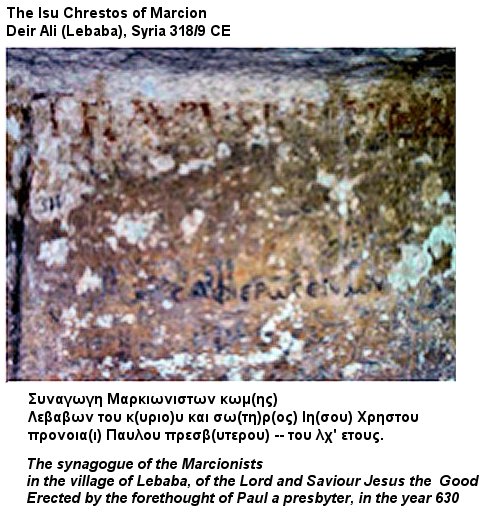
This martyrium of St Paul built outside of the walls might have been a conscious imitation of the martyrium of St Mark which we know existed at least at this time by Clement of Alexandria. Paul would then have been a "code" of some sort for Mark or used interchangeably with that name. It is also worth noting that in the oldest Latin explanations of the name of "Paul" - entirely separate from the narrative of Acts - sees "Paul" as a Hebrew title of some sort, most likely Pele or "Wonder." I think there was a separate Church of Paul remembered in some ways as "Marcionite" or "or Marcion" but in other places as "of Mark" or Marcion.
All of which makes my subsequent visit to Venice on the same trip so important. The last time I had visited Venice in the winter, it was easy to get to a ticket to see the throne (I was flown there by National Geographic as part of an attempt to make a documentary). This time when I visited I couldn't get it. The tickets were sold out (even though it wasn't nearly as busy as Venice gets in the summer). Standing outside the church, unable to see the object which was the subject of my first academic paper, I was struck by the outer murals which depicted the stealing of the body (and the treasures) of St Mark from Africa. This was the paradigm for the presence of the Christian religion in Italy only half a millenium later.
The Romans weren't a particularly original people. They were very good at imitation. Roman literature began as Greek imitation, Roman art drew heavily on Greek precedents. Roman historiography started in Greek, Roman drama and poetry were modeled on Greek genres. The Roman adoption of Greek mythology and gods is well attested.
Maybe the same thing is true about Christianity, our inherited religion, only from the specific African Greek culture of Alexandria.