
The history of Christianity is usually told as a story of faithful transmission. According to the traditional narrative, the teachings of Jesus passed from the apostles to the Church Fathers and then to later generations without major distortion. The Church preserved the gospels, defended them against heresy, and protected the truth of the faith. In this telling, figures like Irenaeus and Tertullian appear as guardians of orthodoxy who fought against corrupt teachers such as Marcion.
But what if that story is incomplete?
This volume begins with a different possibility: that the history of early Christianity is not simply the story of preservation but also the story of appropriation, redirection, and sometimes outright theft. The earliest Christian traditions were not born in Europe. They developed in the eastern Mediterranean and North Africa, in places such as Egypt, Syria, and Palestine. These regions were home to diverse intellectual traditions, vibrant religious communities, and forms of Christianity that later European writers would often reshape or suppress. The process by which Christianity became a European religion involved not only translation and interpretation but also the rewriting of earlier traditions.
One of the most important examples of this process may be found in the relationship between Papias, Irenaeus, and Tertullian. Papias, writing in the early second century, preserved traditions about the origins of the gospels and the sayings of Jesus. His work emphasized the importance of dominical traditions and the proper ordering of gospel material. Papias appears to have valued the connection between the teachings of Jesus and the Jewish scriptures. For him, the gospel was inseparable from the prophetic tradition that preceded it.
Later writers inherited Papias’s ideas but did not always preserve them faithfully. Irenaeus, writing toward the end of the second century, used Papias in support of his own project: the defense of a fourfold gospel and the suppression of competing Christian traditions. In doing so, he appears to have reshaped Papias’s testimony so that it supported a different argument. Instead of simply preserving Papias’s observations about Matthew and Mark, Irenaeus incorporated those ideas into a broader theological campaign against groups he regarded as heretical.
This transformation becomes especially important when we turn to the controversy surrounding Marcion. Marcion was accused by his opponents of mutilating the Gospel of Luke and rejecting parts of the Christian scriptures. According to the Church Fathers, Marcion removed passages from the gospel in order to promote his belief in a God different from the Creator of the Jewish scriptures. The accusation became one of the central claims used by the early Church to discredit Marcion and his followers.
Yet the way this accusation is argued in the surviving texts raises serious questions.
Tertullian’s massive five-book treatise Adversus Marcionem claims to prosecute Marcion for falsifying the Gospel of Luke. But when the work is examined closely, the argument does not proceed in the straightforward way we might expect from a genuine prosecution of textual theft. Instead of beginning with clear textual comparisons between the supposed original and the alleged forgery, Tertullian spends large sections of the work discussing theology, prophecy, and the relationship between the law of Moses and the gospel.
Even more striking is the structure of Book IV. From chapters 9 to 43, the text reads almost like a running commentary on the Gospel of Luke. Tertullian works through passages in sequence and explains their meaning. Yet this commentary is not used primarily to demonstrate where Marcion altered the text. Rather, it is used to argue that the passages Marcion supposedly retained still testify to the Creator and remain consistent with the Jewish scriptures.
This approach reflects a strategy already described by Irenaeus. In Adversus Haereses 3.12.12, Irenaeus states that he intends to refute Marcion not mainly by reconstructing the passages Marcion removed but by arguing from the passages Marcion retained. In other words, the argument would not be based primarily on proving textual mutilation. Instead, it would attempt to show that the surviving material in Marcion’s gospel contradicts Marcion’s theology.
This method explains why Tertullian’s treatise looks so strange if it is read as a legal case about stolen property. A prosecutor trying to prove that a text had been altered would normally present the original and the altered version side by side and demonstrate the differences. Tertullian does not do this. Instead, he proceeds as though he had inherited an earlier theological project whose purpose was not to demonstrate the act of textual theft but to reinterpret the gospel in a way that affirmed the continuity of Christianity with the Jewish scriptures.
The oddities do not end there. At the beginning of Adversus Marcionem, Tertullian makes a remarkable admission about the history of his own text. He explains that the treatise had gone through several versions. An earlier draft had been replaced by a fuller composition. That composition was then copied and circulated in a corrupted form by a man who later became an apostate. Tertullian claims that he has now rewritten the work again and expanded it further.
The irony is striking. The author who accuses Marcion of falsifying scripture begins his own work by acknowledging that the treatise itself exists only after multiple stages of revision, loss, and reconstruction. The book we possess is not the original composition but a later recension assembled after earlier manuscripts had been altered or lost.
These details raise an important possibility. Rather than representing an entirely original work by Tertullian, Adversus Marcionem may preserve material derived from an earlier Greek treatise against Marcion—one that may have been written by Irenaeus himself. Tertullian may have translated, adapted, and expanded that earlier work for a Latin-speaking audience.
If that is correct, then the strange argumentative structure of the treatise becomes easier to understand. Tertullian would not be inventing a flawed method of prosecution. He would be inheriting a project already designed by another writer. The claim that Marcion mutilated Luke would function as the starting point of the argument, while the main body of the work would interpret the passages Marcion supposedly retained in order to show that they still testify to the Creator.
Seen in this light, the relationship between Papias, Irenaeus, and Tertullian takes on new significance. Papias’s ideas about the ordering of gospel traditions may have been repurposed by Irenaeus in his campaign to defend the emerging orthodox canon. That repurposed framework may then have been incorporated into the anti-Marcionite project that Tertullian later adapted in Latin.
The result is a layered text whose structure preserves traces of several earlier debates. Behind Tertullian stands Irenaeus. Behind Irenaeus stands Papias. And behind Papias stand the earliest traditions about the sayings and narratives of Jesus.
Understanding how these layers interact may help us understand not only the origins of Adversus Marcionem but also the larger process by which early Christian texts were reshaped as Christianity moved from its eastern and African contexts into the intellectual world of the Roman Empire.
This study therefore begins with a simple question: why is Adversus Marcionem such a strange book? The answer may reveal much more than the intentions of Tertullian alone. It may illuminate the deeper process by which early Christian traditions were appropriated, reorganized, and ultimately transformed as Christianity became the religion of Europe.
A good way to begin is with Papias. If we can understand how Irenaeus used Papias, reshaped him, and possibly redirected his ideas, then we are in a much better position to understand what may have happened later with the gospels themselves, especially Mark. The issue is not just whether one author quoted another. The issue is whether an earlier set of ideas was taken over, adjusted, and made to serve a new purpose. That matters because once we see that kind of repurposing at work in Irenaeus, it becomes easier to imagine that similar repurposing happened again at another level, not only in anti-heretical writing but also in the way gospel traditions were framed, interpreted, and even rewritten.
This is why Papias matters so much. Papias appears to have cared deeply about order, memory, and the relation between written narratives and dominical sayings. He is known especially for remarks about Mark and Matthew. In the surviving reports about him, Matthew is treated as having a kind of priority in structure or order because it is linked to dominical logia, that is, to the sayings or teachings of the Lord. Mark, by contrast, is often described as accurate but not arranged “in order” in the same way. Whether Papias really meant exactly what later writers say he meant is a separate issue. What matters here is that later Christians took Papias to stand for a certain logic: one gospel could be judged by how it preserved, arranged, and connected the traditions of Jesus.
Now if Irenaeus took over this logic and redirected it, that would be very important. It would mean that he was not only preserving Papias but also reshaping him. Francis Watson and others have argued that Irenaeus does not simply pass Papias on unchanged. He uses him for his own larger project. That larger project is to defend a fourfold gospel, to establish an orthodox line of transmission, and to push back against rival versions of Christian tradition. In that setting, Papias becomes useful evidence. But once Papias becomes useful evidence, he also becomes material that can be reworked.
That possibility matters because it gives us a model. If Irenaeus could take Papias and make him serve a new anti-heretical and pro-canonical purpose, then maybe he could do something similar elsewhere. Maybe he could take arguments first developed in relation to Matthew and Mark and redirect them toward Luke. Maybe he could take a method that once explained why Matthew had a superior order and use it instead to argue that Marcion’s gospel was a mutilated version of Luke. And if that happened, then what we see in Tertullian may not be a fresh invention at all. It may be the Latin afterlife of a Greek project already reshaped by Irenaeus.
This is where Book IV of Adversus Marcionem becomes so important. From chapters 9 to 43, does Book IV read essentially as a commentary on our Gospel of Luke? The answer is yes. That is one undeniable feature of the text. Tertullian moves through material that corresponds closely to Luke and comments on it section by section. He is not just naming Luke. He is working through a Luke-like sequence and interpreting it in detail. That is one of the clearest things about this part of the book.
At the same time, the logic of the argument feels older than Tertullian. The reasoning does not look like the work of a writer simply comparing two texts in a straightforward way. It looks like a writer trying to prove that the surviving material in a disputed gospel still points back to the Creator, still agrees with the Jewish scriptures, and still makes sense only inside an orthodox framework. That is not just commentary. It is commentary used as argument. And the style of the argument, especially its concern for how the gospel is connected to prophecy, law, and previous revelation, feels close to the kind of logic that later Christians linked with Papias.
Someone might answer: that is not a problem. Tertullian may simply have borrowed Papias-like logic and applied it to Marcion’s gospel. Since Marcion’s gospel resembled Luke, Tertullian’s work ended up looking like a commentary on Luke. On that view, there is nothing mysterious here. Tertullian is just using inherited methods to interpret the Marcionite gospel, which he believes was stolen from Luke.
But there is a problem with that answer. In Adversus Marcionem, Tertullian often accuses Marcion not only of falsifying Luke but also of falsifying Matthew. In fact, the charge that Marcion falsified Matthew appears so often that it creates a major tension in the argument. If the center of the case is that Marcion stole Luke, why does Matthew keep returning to the scene? Why is Matthew so important in a work that officially treats Luke as the stolen gospel?
This is not a small detail. It is one of the strangest features of the book. If Tertullian were simply writing a commentary on Marcion’s gospel because it resembled Luke, then one might expect Luke to dominate almost completely. But instead Matthew constantly appears, sometimes almost as though it were the deeper frame behind the argument. That suggests that something more complicated is going on. The argument may have started somewhere else. It may have had an earlier shape before it became a case about Luke.
That brings us to Tertullian’s preface, which is one of the oddest parts of the whole work. Tertullian says that he had earlier written a shorter work against Marcion. Then he says he replaced it with a fuller composition. Then that fuller composition was copied badly and circulated by a “brother” who later became an apostate. After that, Tertullian says, he had to revise the work yet again. He even says that what was once second became third, and what was once third now becomes first in the present form.
This is a very strange thing to say. If Tertullian were simply the original author and master of his own text, why not say something direct and simple? Why not say: “Someone circulated a corrupt copy of my work. Ignore that and read this corrected original.” That would be the natural thing to do. But Tertullian does not speak that way. Instead, he almost sounds like a man working over an already existing manuscript, adopting it, correcting it, adding to it, and reissuing it. He sounds less like a writer guarding a single original and more like an editor inheriting and reworking unstable material.
That editorial voice appears again and again at the beginnings of the books. It is especially noticeable in Book III, where material is reused from Against the Jews. That matters because it shows Tertullian was willing to incorporate earlier written material into a new setting. He was not above reusing texts. In Book III we can watch him doing it in Latin. So when we come to Book IV and sense that he may be hovering over another source, this time Greek, that is not an absurd guess. It fits a pattern already visible in the larger work.
This is where Irenaeus enters the picture in a serious way. Irenaeus tells us in Adversus Haereses 3.12.12 that Marcion and his followers mutilated the scriptures, especially the Gospel according to Luke and the letters of Paul, and that in another work he intends to refute them from the texts they still retain. That statement is extremely important. It lays out a program. First, claim that Marcion mutilated Luke and Paul. Second, promise to refute Marcion not mainly by reconstructing every lost line, but by arguing from what remains.
This is the exact kind of strategy we find in Tertullian. He says Marcion stole and altered a gospel, but then instead of spending all his energy proving the theft by a detailed textual prosecution, he spends much of his energy showing that the surviving passages still testify to the Creator. In other words, the method is: use what Marcion retained against Marcion himself.
That is a very unusual method if the main goal is to prove theft. But it makes perfect sense if Tertullian inherited a project already shaped that way by Irenaeus. Suddenly the irregularity is no longer random. It is inherited.
The larger context of Adversus Haereses 3.12.12 makes this even clearer. Irenaeus says that people like Marcion set the Mosaic law against the gospel because they think the two covenants are dissimilar or contrary. He says they imagine themselves purer and wiser than the apostles. They claim to have found another god and a purer doctrine. That sounds very close to the central issue in Tertullian’s argument. Again and again in Adversus Marcionem, Tertullian’s deepest concern is not merely that Marcion edited a text. His concern is that Marcion teaches a false opposition between the Creator and the gospel, between the law and grace, between the old covenant and the new.
That means the real heart of the argument is theological, not textual. The textual accusation is the doorway. The deeper case is about continuity. Can the gospel be shown to belong to the same God who gave the law and spoke through the prophets? That is what Tertullian keeps trying to prove. And that is exactly what Irenaeus says he intends to prove from the texts Marcion still accepts.
So the strange shape of Tertullian’s Book IV may not be Tertullian’s invention at all. It may reflect the shape of Irenaeus’s lost anti-Marcionite treatise. That would explain why Book IV begins with a strong claim about Marcion’s theft of Luke and then turns into a running interpretation of Luke-like passages designed to show harmony with the Creator and the Jewish scriptures.
At this point we can state the key point clearly. Irenaeus’s planned anti-Marcionite work was probably not, in its main body, a simple demonstration that Marcion falsified Luke. Rather, it was likely a work that accepted the passages Marcion retained and argued from them that the gospel still testified to the Creator and harmonized with the law and prophets. The claim that Marcion mutilated Luke was the rhetorical starting point. The main labor of the work was to show that the surviving gospel material still betrayed its true origin.
This explains why chapters 9 to 43 of Book IV read like commentary. They are commentary. But they are commentary with a purpose. They are trying to prove the “DNA” of the text, so to speak. Tertullian is trying to show that the gospel Marcion uses still carries the marks of its true family. Its patterns, prophecies, and theological assumptions still point back to the Creator. The argument is not mainly, “Here is the stolen object, and here are the cuts.” The argument is, “Even this damaged object still reveals where it came from.”
That is a much stranger way to prosecute a case of theft. And that is exactly why one hesitates to believe this method originated with Tertullian himself as a clean, original design. No prosecutor trying to win a simple case of theft would proceed this way. If the audience already believes that Luke is authentic, the easiest path is obvious: show the places where Marcion’s gospel differs from Luke, then declare those differences to be evidence of mutilation. That would be simple. It would be memorable. It would be effective.
Instead, Tertullian proceeds in a far more indirect way. He gives long arguments about theology, law, prophecy, the Creator, and continuity. He moves through passages the way a commentator does, not the way a prosecutor in a simple forgery case would. That does not mean the work is confused. It means it may belong to a different kind of project than the one it claims on the surface to be.
The preface becomes even more suspicious when read in this light. Tertullian is prosecuting Marcion for tampering with a text. Yet he begins by telling readers that his own work has a tangled history of rewriting, loss, corruption, and republication. The irony is hard to miss. The accuser of falsification opens by admitting that his own text has gone through several unstable stages.
Why would he do that? A reasonable answer is that he had to. The repurposing must have been visible enough that he could not simply hide it. If the work he was adapting was already known, then a story had to be told to explain why the present form differed from earlier circulating forms. The easiest story was one about corrupt copying, apostasy, and restoration.
If that is right, then the “apostate” in the preface becomes more than a random villain. He becomes part of Tertullian’s explanation for why the work in people’s hands is unstable. Tertullian is effectively telling his readers that they may encounter different versions, but they should trust this present recension. That is exactly the sort of thing an editor says when dealing with inherited textual material.
This is one reason Irenaeus fits so well as the likely deeper source. He was a major Greek writer. He was widely read. His anti-heretical material circulated. We already know that Tertullian used Irenaeus in Adversus Valentinianos. There Tertullian clearly preserves the general sense of Irenaeus’s discussion of the Valentinians in a Latin form. If he did that once, why not again? Why could Adversus Marcionem be another Latin repurposing, this time of Irenaeus’s lost treatise against Marcion?
That does not mean Tertullian mechanically translated Irenaeus word for word. He may have translated loosely. He may have shortened, expanded, and reworked. But the larger shape could still be inherited. The beginning of Book IV, the Luke-like commentary in 9 to 43, the repeated argument from what remains, and the concern with proving continuity with the Creator all fit Irenaeus’s announced plan very well.
This also helps explain why the argument in Book V, where Tertullian discusses Paul, feels strongly Irenaean in method. Again and again the argument is based on the material Marcion still accepts. Tertullian takes the letters Marcion retains and tries to prove from within them that they do not support Marcion’s theology. This is exactly the logic Irenaeus had announced: refute them from what they still retain.
So the oddity is not just in Book IV. The whole anti-Marcionite project may already have been shaped by Irenaeus’s plan. Tertullian did not invent the weakness. He inherited it.
And it really is, from a prosecutorial point of view, a weakness. Imagine a prosecutor in a theft case. The prosecutor says the defendant stole a book, cut pieces out, and circulated a damaged version. What should the prosecutor do? He should place the authentic book and the damaged one side by side. He should point to the cuts. He should show the jury the physical evidence. He should make the crime visible.
Tertullian does not do that. He never plainly says, “Here is the Marcionite manuscript in my possession.” He never stages the drama of physical evidence. That absence matters. A prosecutor usually wants the audience to feel the reality of the crime by seeing the object itself. Tertullian does not do that because, very likely, he does not have that kind of direct physical evidence. His source may have had access to something like it, or to reports about it. But Tertullian himself does not present it that way.
This makes better sense if Tertullian is working from Irenaeus rather than from an actual Marcionite codex in front of him. He is inheriting a line of argument, not conducting a fresh forensic investigation.
Now we can return to Papias. Once we see Irenaeus as the likely architect of the underlying anti-Marcionite project, the frequent appearance of Matthew becomes much easier to explain. It may be a trace of an earlier stage of argument. If Irenaeus had already repurposed Papias, then the anti-Marcionite project may have carried over Papian ways of thinking that originally belonged to discussions of Matthew and Mark.
Papias seems to have preferred Matthew’s ordered presentation, especially in relation to dominical sayings. Mark, though respected, could be described as lacking the same kind of ordered arrangement. Suppose Irenaeus took this Matthew-based way of arguing and shifted it toward Luke. In that case, Luke could become the new “ordered” witness against Marcion. The argument would no longer be, “Matthew is better ordered than Mark.” It would become, “The gospel Marcion uses must be judged by an orthodox standard of order, continuity, and relation to prophecy, and that orthodox standard is now represented by Luke.”
That would explain why Matthew remains so visible inside Adversus Marcionem. The work may preserve echoes of an earlier Matthew-centered structure even while officially prosecuting a case about Luke. The system has been redirected, but not perfectly. The seams still show.
This leads to a larger possibility. Maybe what happened to anti-Marcionite writing also happened at the level of gospel formation. If Papias’s scriptural and dominical-logia approach was taken over by Irenaeus and embedded more deeply into gospel argument, then perhaps some of the scriptural appeals now found in Luke are part of that development. In other words, instead of a Church Father standing outside the gospel and saying, “This passage fits that prophecy,” the gospel narrative itself may have been shaped so that Jesus or the narrator builds those scriptural links into the story.
That would be a significant step in the falsification of Mark. If earlier gospel tradition, perhaps closer to Mark, was less explicit in making certain prophetic connections, and if later redactors or authors built those same connections into a new or reshaped narrative, then the gospel itself would begin to do the exegetical work that earlier teachers like Papias once did from outside the text.
Luke is especially interesting here. Right at the start, Luke acknowledges that many have already undertaken to write narratives. That is unusual among the gospels. Luke presents himself as writing in awareness of previous accounts. This gives Luke a special position. Luke becomes not just another gospel but a reflective, self-aware witness to gospel tradition. That makes Luke the ideal tool for someone who wants to present an apostolic but non-apostolic witness to what the earlier gospels “really meant” or “really looked like.”
If so, Luke becomes a kind of corrective lens. Through Luke, one can claim to know the proper order, the proper connection to scripture, and the proper theological meaning of earlier traditions. In that case, Marcion’s gospel can be attacked not just because it differs from Luke, but because it lacks the very scriptural and theological features that Luke now embeds into the story. Then the absence of those features can be treated as evidence that Marcion cut them out.
This would be a powerful move. It would turn Luke into evidence for a previous gospel tradition while also allowing Luke to define that tradition. Luke would be both witness and standard. And once that happens, the charge that Marcion mutilated Luke becomes almost impossible to escape, because Luke itself has been built to display the scriptural logic that the anti-Marcionite writer wants to defend.


Drawing on vellum. From MS CLXV, Biblioteca Capitolare, Vercelli, a compendium of canon law produced in Northern Italy ca. 825




This helps explain why Adversus Marcionem is so weird and yet so coherent at the same time. It is weird if we think of it as a simple prosecution of theft. It is coherent if we think of it as the Latin continuation of an inherited Greek project whose deeper goal is to prove continuity between gospel and Creator by arguing from retained passages and embedded scriptural logic.
That also explains why the preface matters so much. Tertullian’s three versions are not just a side issue. They are a clue. He says there was an earlier, shorter work. Then a fuller work. Then a corrupted circulation. Then a new recension with additions. Even if the earliest “original” is partly a story told to justify later editing, the preface still tells us something real: the text before us is layered.
Once that is admitted, the possibility that Irenaeus stood behind part of it becomes much stronger. The first version may have been Greek. The later Latin version may have incorporated that Greek material. Book III already shows Tertullian reusing earlier text. Book IV may show him doing something similar with a Greek anti-Marcionite source.
Email stephan.h.huller@gmail.com with comments or questions.
And once we grant that, the Matthew problem no longer looks accidental. It may be a fossil from an older stage of the argument, one closer to Papias, closer to debates about order, and closer to the relationship between Matthew and Mark. Irenaeus may have taken that older material and bent it toward Luke. Tertullian may then have taken Irenaeus’s work and bent it again into a Latin five-book structure.
So to come back to the main question: from chapters 9 to 43, is Book IV basically a commentary on our Gospel of Luke? Yes. That is undeniable. But that is not the whole story. The logic of the commentary seems older than Tertullian. It resembles a method already visible in Irenaeus’s announced anti-Marcionite plans and, deeper still, a mode of argument associated with Papias.
That is why knowing how Irenaeus falsified, redirected, or repurposed Papias helps us understand how Mark may have been falsified in the end. If Papias once stood for a Matthew-centered logic of order and dominical tradition, and if Irenaeus could redirect that logic toward Luke in order to create an anti-Marcionite argument, then the final gospel landscape may already reflect those acts of redirection. Luke may not just preserve earlier tradition. It may embody a rewritten interpretation of earlier tradition. And if so, Mark was not simply left behind. Mark was surpassed, reframed, and effectively falsified by the very processes that turned Papias into a witness for a later orthodoxy.
That, in the end, is why one should hesitate before saying that Tertullian merely wrote a strange book with a strange logic. The book is strange, yes. But its strangeness has a history. It looks less like a single author’s odd design and more like the visible surface of several layers of reuse, translation, and theological repurposing. Tertullian’s text is strange because it is carrying the remains of earlier arguments inside it.
The strongest conclusion, then, is not that Tertullian invented a bizarre anti-Marcionite method from scratch. The stronger conclusion is that he inherited an already awkward project from Irenaeus, translated or repurposed it in Latin, and issued it in a revised form while admitting, almost against his will, that the work itself had been reworked. Once that is seen, the oddities of Adversus Marcionem become evidence, not embarrassment. They point backward to Irenaeus. And behind Irenaeus, they point backward again to Papias.

That is the chain: Papias provides a logic about order and dominical tradition. Irenaeus takes that logic and redirects it into an anti-heretical, pro-canonical argument. Tertullian then receives that project in Latin and reissues it as Adversus Marcionem. The result is a text that begins like a prosecution of Luke theft but soon turns into a running theological commentary on Luke-like material. That is not how a simple prosecutor works. It is how a later editor works when he inherits an earlier theological dossier and tries to make it serve his own audience.
And that is why the weirdness matters. It is not a flaw to be ignored. It is the evidence.
Email stephan.h.huller@gmail.com with comments or questions.
The Mystery I've Solved

50 cm Seat /147 cm Tall Throne


Ancient Witness to the Size of the Throne

The Relative Size of the Alexandrian Throne of St Mark
Ancient Confirmation of Mark's "Smallness"

Marcion and the Episcopal Throne

Where was Marcion's Throne?

Burning of Arian Books After Nicaea
Drawing on vellum. From MS CLXV, Biblioteca Capitolare, Vercelli, a compendium of canon law produced in Northern Italy ca. 825

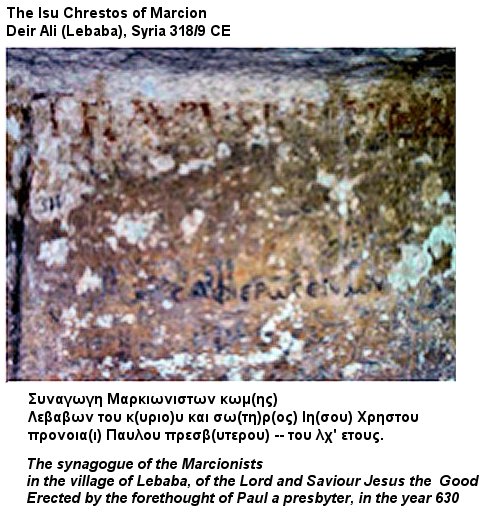
A Fourth Century CE Marcionite Synagogue in Syria
Adversus Marcionem 1.19 and Antoninus Pius's Alexandrian "Zodiac Coins" of 144/145 CE
First Argument for the Alexandrian Origins of Marcion
Second Argument for the Alexandrian Origins of Marcion
Third Argument for the Alexandrian Origins of Marcion
Fourth Argument for the Alexandrian Origins of Marcion
Fifth Argument for the Alexandrian Origins of Marcion
Conclusion
Bonus
First Piece of Evidence
Second Piece of Evidence
Third Piece of Evidence
Preliminary Conclusion
Overriding Point
Bottom Line
In Summa:
Last Word