So why did people live so long in the Old Testament? I began to talk about this in my last post.
I didn’t mean that ALL lifespans are relative to each other as symbols. What I meant was that the lifespan of Joshua is ten years less than that of Moses, and that has a meaning in its context. In the same way, the concept of a Messiah descended from Joseph could be expressed by pointing out the similarity of Joseph’s work and Joshua’s as secondary agents of wellbeing, with Joshua secondary to Moses and Joseph secondary to Jacob. The Jewish concept of a lifespan of 120 years for the Messiah is meant to correspond to Moses’s lifespan, but he is not equal to Moses because he really does die.
You might have heard of a certain Joshua son of Joseph who manages to combine the two figures. He also manages to be son of Levi through his mother, and son of Judah through his father. This made him the Messiah son of Joseph, the Messiah son of Judah, the Messiah son of Levi, and the equivalent of Joshua. He is also said to be the second Adam. This takes care of nearly every eschatological expectation. The obvious question now is, what about Moses? The opening of the Epistle to the Hebrews says he is greater than Moses, but it still addresses the question. Note also the appearance of Moses in a position secondary to Jesus at the Transfiguration.
Wednesday, July 23, 2008
Monday, July 21, 2008
Why Did People Live So Long in the Bible?
Why did people live so long in the Bible? Let's look at the evidence.
Joshua lived to 110 because Moses lived to 120, and the status of Joshua was less than that of Moses. Yes, the Tâ’eb is to live to the age of 120 and then die. This makes him equal in status to Joshua but not Moses. (The Jewish view is that the משיח is to live to 120, like Moses. In Acts III it is implicit that Jesus is equal to Moses, or greater than Moses, because both were resurrected). It also makes him equal to Joseph, but not to Jacob, who lived to 147 (genesis XLVII: 28).The concept must come from a group that maintained that the Tâ’eb was NOT equal to Moses. The argument in the Tîbat Marqe is that if the Prophet to come is to be like Moses (Deuteronomy XVIII: 15 & 18), then Moses is the standard, so “like” does not mean “equal to”. If you think about it, the orthodox interpretation of the title Tâ’eb is artificial. The word naturally means “one that comes back”, being the qal (= pe’al; and don’t confuse Aramaic pe’al = Hebrew qal with Aramaic pa’el = Hebrew pi’el participle n Aramaic). To mean “one that brings something back”, i.e. the Tabernacle and the era of Râ’ûta, it would have to be in the pa’el or af’el (= Hebrew hif’il). This means the term is older than the meaning, and the meaning has been changed artificially, so that it could be denied that the one to come would be equal to Moses and would bring a new Torah. On the other hand, the term Tâ’eb does not occur in the liturgy before the 11th or 12th c., and where it occurs in the Tîbat Marqe it is always in a late addition, never in an original part of the book. This all means that the TERM was taken over from the Dositheans when the two main parties amalgamated in the 11th or 12th c., but the MEANING was artificially changed in a way that was grammatically impossible.
This means that the Marqe known to us as the codifier of Samaritan orthodoxy is not Marcus Agrippa. The choice of name must have had a motive, and as far as I can see that must have been to connect him with Marcus Agrippa, or alternatively to give his NEW theology the status of that of Marcus Agrippa. I favour the second explanation. The insistence on the numerical value of his name being equal to that of Moses shows a concept that is opposed to what he says in the Tîbat Marqe about how no-one can be equal to Moses. I can’t explain this at the moment. Have you got any suggestions? The best I can come up with just now is that he wanted to give himself the same authority as that of Marcus Agrippa, while denying his claim to be the new Moses. The start of the Epistle to the Hebrews has a third position, that Jesus is greater than Moses.
Joshua lived to 110 because Moses lived to 120, and the status of Joshua was less than that of Moses. Yes, the Tâ’eb is to live to the age of 120 and then die. This makes him equal in status to Joshua but not Moses. (The Jewish view is that the משיח is to live to 120, like Moses. In Acts III it is implicit that Jesus is equal to Moses, or greater than Moses, because both were resurrected). It also makes him equal to Joseph, but not to Jacob, who lived to 147 (genesis XLVII: 28).The concept must come from a group that maintained that the Tâ’eb was NOT equal to Moses. The argument in the Tîbat Marqe is that if the Prophet to come is to be like Moses (Deuteronomy XVIII: 15 & 18), then Moses is the standard, so “like” does not mean “equal to”. If you think about it, the orthodox interpretation of the title Tâ’eb is artificial. The word naturally means “one that comes back”, being the qal (= pe’al; and don’t confuse Aramaic pe’al = Hebrew qal with Aramaic pa’el = Hebrew pi’el participle n Aramaic). To mean “one that brings something back”, i.e. the Tabernacle and the era of Râ’ûta, it would have to be in the pa’el or af’el (= Hebrew hif’il). This means the term is older than the meaning, and the meaning has been changed artificially, so that it could be denied that the one to come would be equal to Moses and would bring a new Torah. On the other hand, the term Tâ’eb does not occur in the liturgy before the 11th or 12th c., and where it occurs in the Tîbat Marqe it is always in a late addition, never in an original part of the book. This all means that the TERM was taken over from the Dositheans when the two main parties amalgamated in the 11th or 12th c., but the MEANING was artificially changed in a way that was grammatically impossible.
This means that the Marqe known to us as the codifier of Samaritan orthodoxy is not Marcus Agrippa. The choice of name must have had a motive, and as far as I can see that must have been to connect him with Marcus Agrippa, or alternatively to give his NEW theology the status of that of Marcus Agrippa. I favour the second explanation. The insistence on the numerical value of his name being equal to that of Moses shows a concept that is opposed to what he says in the Tîbat Marqe about how no-one can be equal to Moses. I can’t explain this at the moment. Have you got any suggestions? The best I can come up with just now is that he wanted to give himself the same authority as that of Marcus Agrippa, while denying his claim to be the new Moses. The start of the Epistle to the Hebrews has a third position, that Jesus is greater than Moses.

Saturday, July 19, 2008
Was Mark a Title?
I want to stress again that “marqa” is certainly in origin a personal name, but that an Aramaic-speaker would have FELT it as being a title.
Why is it Called Christianity?
Haven't you ever wondered why it is called 'Christianity'? If the religion was all about 'Jesus' why isn't it just called 'Jesusanity' or some such name?
Let's start at the beginning. If the words of Rashi and Saadya are translated EXACTLY, you can see how each quotes his unacknowledged source, and then adds words of his own to reconcile this with the opinion of his own time. This work of separating components is part of what is called Source Criticism. When this has been done, you will then see that neither of them dared change what his source said, but that each of them was puzzled by it. You then have to show to what extent each one was willing to go against the view of his own time. This gives evidence of the strength of the survival of the older view, and shows that they partially AGREED with it, as you have seen for yourself.This faithfulness in transmitting puzzling statements is evidence of the use of an old document that was regarded with respect. Showing this puzzlement is another part of Source Criticism, since it is evidence of the antiquity of the source. After doing this, you then have to show precisely which bit of the Zadokite document they were alluding to. This is another part of Source Criticism. You will see why an EXACT translation of the Hebrew is needed, and an EXACT reference to the Zadokite Document is needed.
A different question. If Marcion used a Gospel of Luke, what was it like?
Don’t forget that Christianity has de-sanctified Jerusalem. This is a major theological doctrine. It can be connected with your theory very easily.
You may well wonder why I can look at all this with equanimity while remaining a Christian. Well, first, if you’re a Protestant, you have complete confidence that the pursuit of the truth must be beneficial in the end, and that whatever is puzzling will sort itself out. That’s why we don’t need the Pope or any other officials to filter out what might cause difficulties. Second, there is no point in carrying on too much over who was or was not the Anointed One, or Messiah. Many people could have been. The Jewish concept of what the term means is not the Christian one. Jesus wouldn’t accept the term, except from the Samaritan woman in John IV and from Peter right at the end, when Peter had been shown by the Holy Ghost what the CONCEPT was. As for Jesus being an Angel, that concept exists within Christianity, and is well documented. Don’t forget that Jacob was an Angel as well as a human. (I can give you a precise reference for this). If Jesus embodies Israel (which is a name ending in EL, as all names of angels do), then he must have been an Angel, as well as being human. Besides, Jesus predicted the destruction of the Temple, and as this prediction was an essential part of his work, and important for Christian doctrine, then it doesn’t matter that he said it forty years before the event. Both he and Agrippa would have believed that this destruction of the earthly Temple was necessary for the descent of the Heavenly Jerusalem or Heavenly Tabernacle, thus uniting Jews and Samaritans. Note that the Epistle to the Hebrews fuses the two concepts. The Christian order of service for Sunday morning often includes hymns asserting that Christ is High Priest in the Heavenly Tabernacle. One is right to point out that the religion is called Christianity, not Jesusanity. This has profound implications. Anyway, whatever might be in Evangelical hymnbooks, mainstream Christians don’t worship Jesus or Christ, which is why Maimonides declared the religion not to be polytheism, and in this he was following the Talmud.
Let's start at the beginning. If the words of Rashi and Saadya are translated EXACTLY, you can see how each quotes his unacknowledged source, and then adds words of his own to reconcile this with the opinion of his own time. This work of separating components is part of what is called Source Criticism. When this has been done, you will then see that neither of them dared change what his source said, but that each of them was puzzled by it. You then have to show to what extent each one was willing to go against the view of his own time. This gives evidence of the strength of the survival of the older view, and shows that they partially AGREED with it, as you have seen for yourself.This faithfulness in transmitting puzzling statements is evidence of the use of an old document that was regarded with respect. Showing this puzzlement is another part of Source Criticism, since it is evidence of the antiquity of the source. After doing this, you then have to show precisely which bit of the Zadokite document they were alluding to. This is another part of Source Criticism. You will see why an EXACT translation of the Hebrew is needed, and an EXACT reference to the Zadokite Document is needed.
A different question. If Marcion used a Gospel of Luke, what was it like?
Don’t forget that Christianity has de-sanctified Jerusalem. This is a major theological doctrine. It can be connected with your theory very easily.
You may well wonder why I can look at all this with equanimity while remaining a Christian. Well, first, if you’re a Protestant, you have complete confidence that the pursuit of the truth must be beneficial in the end, and that whatever is puzzling will sort itself out. That’s why we don’t need the Pope or any other officials to filter out what might cause difficulties. Second, there is no point in carrying on too much over who was or was not the Anointed One, or Messiah. Many people could have been. The Jewish concept of what the term means is not the Christian one. Jesus wouldn’t accept the term, except from the Samaritan woman in John IV and from Peter right at the end, when Peter had been shown by the Holy Ghost what the CONCEPT was. As for Jesus being an Angel, that concept exists within Christianity, and is well documented. Don’t forget that Jacob was an Angel as well as a human. (I can give you a precise reference for this). If Jesus embodies Israel (which is a name ending in EL, as all names of angels do), then he must have been an Angel, as well as being human. Besides, Jesus predicted the destruction of the Temple, and as this prediction was an essential part of his work, and important for Christian doctrine, then it doesn’t matter that he said it forty years before the event. Both he and Agrippa would have believed that this destruction of the earthly Temple was necessary for the descent of the Heavenly Jerusalem or Heavenly Tabernacle, thus uniting Jews and Samaritans. Note that the Epistle to the Hebrews fuses the two concepts. The Christian order of service for Sunday morning often includes hymns asserting that Christ is High Priest in the Heavenly Tabernacle. One is right to point out that the religion is called Christianity, not Jesusanity. This has profound implications. Anyway, whatever might be in Evangelical hymnbooks, mainstream Christians don’t worship Jesus or Christ, which is why Maimonides declared the religion not to be polytheism, and in this he was following the Talmud.
Agrippa Messiah
Was Agrippa the Messiah? The sources really do bear out the contention that Agrippa was regarded as the Messiah at some time. Now it is time to tidy up. This is what needs to be done now. a) In all cases, the reader needs to be shown to what extent the text has been condensed or paraphrased or both.
b) The first quote, starting, “Titus will make peace etc.” has no source that I could find. The word “strengthen” looks like a mistranslation.
(c) The two refs. to Daniel VII: 25 near the start need to be corrected. Daniel XII: 7 is in Hebrew, not Aramaic.
(d) The translation of Saadya’s note on IX: 24 is a long way off track in understanding the syntax, the condensation and paraphrasing depend on the original misunderstanding of the syntax. He says that prophecy ended with the building of the SECOND Temple, and was then replaced by the Bat Kol. The reference to the Third Temple, however, has been correctly understood.
(e) Correct Metsidat David to Metsudat David.
(f) Make it clear that Metsudat David re-interprets Rash’s words so as to give them a standard orthodox meaning. Saadya gives the same interpretation as Rashi, but although he is much earlier, he is deliberately not so explicit as Rashi, leaving it to the attentive reader to realise the implication.
(g) Near the end of the message, the words “which will be a curse”, are not only wrong, they weaken the clear evidence that Rashi is paraphrasing a document from 68 A.D. Translate “but he (Titus) will come to no good”. Nevertheless, Rashi’s words after that are an attempt at reconciling his source with the standard doctrine of his day.
b) The first quote, starting, “Titus will make peace etc.” has no source that I could find. The word “strengthen” looks like a mistranslation.
(c) The two refs. to Daniel VII: 25 near the start need to be corrected. Daniel XII: 7 is in Hebrew, not Aramaic.
(d) The translation of Saadya’s note on IX: 24 is a long way off track in understanding the syntax, the condensation and paraphrasing depend on the original misunderstanding of the syntax. He says that prophecy ended with the building of the SECOND Temple, and was then replaced by the Bat Kol. The reference to the Third Temple, however, has been correctly understood.
(e) Correct Metsidat David to Metsudat David.
(f) Make it clear that Metsudat David re-interprets Rash’s words so as to give them a standard orthodox meaning. Saadya gives the same interpretation as Rashi, but although he is much earlier, he is deliberately not so explicit as Rashi, leaving it to the attentive reader to realise the implication.
(g) Near the end of the message, the words “which will be a curse”, are not only wrong, they weaken the clear evidence that Rashi is paraphrasing a document from 68 A.D. Translate “but he (Titus) will come to no good”. Nevertheless, Rashi’s words after that are an attempt at reconciling his source with the standard doctrine of his day.
Friday, July 18, 2008
Where Did the Gospel of Luke Come From?
For the moment, it can be said that I think my argument that the Gospel of Luke as we have it is NOT Apostolic is unassailable, because the compiler says so in the first verses. This means that Theophilus is very likely the Bishop of Antioch, and NOT a rhetorical name for the general reader However, what has always struck me as odd is that this Gospel is IN FORM an epistle, and that means it belongs with the pastoral epistles attributed to Paul or to no-one, depending on the mss. The difficulty that remains is that Polycarp couldn’t have devised the wording, because the level of expression and imagination shown in it would have been beyond his abilities. So the CONTENT is Apostolic. But then where did he get it from? The same difficulty applies to the book of Acts. The quality of the first very powerful chapters is much higher than the rest of the book, which ranges from adequate to downright silly, with the absolute low points being the deaths of Ananias and Sapphira, and Paul’s miraculous flying hanky that performed miracles if Paul was too busy to turn up in person. The dividing line is just where what would have been ESSENTIAL knowledge and theological information stops, so presumably there was an OLD appendix to the Gospels that was concerned with the Apostles as a group, and then with Peter more than any other individual, and then the inferior part tacked on is about Paul, while the Twelve fade out. The theory of an original long Gospel having been cut up has a lot to recommend it. How could the Apostles have been so disorganised as not to attend to editing a final satisfactory book?
Thursday, July 17, 2008
On the Name 'Mark'
As to the question on how early a word “marca” could have been borrowed from Germanic into Romance, and specifically whether it could have been borrowed by Latin as early as the 1st c. A. D., I intend to ask someone about this but don't know who to approach. Note carefully: the Shorter Oxford English Dictionary doesn’t say this word was borrowed into English from Frisian: it says it is the COGNATE of the Frisian word. This dictionary uses three separate symbols for “derived from by natural development” (in this case by both Frisian and English from Proto-Germanic), “naturally cognate to” (e.g. the English and Frisian and Dutch and Gothic words are all natural developments from the same Proto-Germanic original), and “derived by lifting from another language” (as the Romance forms from various forms of Germanic). Have a careful look at the table of symbols. Don’t forget either that sometimes the borrowing can be from both Celtic to Germanic and Celtic to Romance, as is the case for “cat” (Latin “cattus”), “beak” (French “bec”), “car”, and “orca”( i.e. the technical term for a killer-whale).
On the Stigmata
What is the stigmata? It essentially means 'mark.' This is a question that is important to me in establishing a line of argument for the dating of the artificial development of the connotation of the Palestinian Aramaic word “marqa”, which originally meant the sealing and legal delivery of a legal document, and specifically when speakers of this language might first have been able, on the analogy of Latin, to invent an artificial scholarly use of it as meaning “stigmata”. The word is Germanic in origin. The question is, when does it first appear in Latin or Romance? Does it first appear as a literary word, or as a colloquial word, or is it impossible to work out the details? We can’t work this out from the dictionaries, and we don’t. know the literature. In short, we haven’t got the necessary Sprachgefühl. Any information would be appreciated.
Wednesday, July 16, 2008
On the Hebrew of Zech 6:9f (the ninth vision)
.jpg)
The Hebrew says THERE WILL BE a Priest on his throne. Read the context. The action is symbolical. In the present, Zerubbavel has already been made secular ruler, but there is no ENTHRONED AND CROWNED High Priest. Because of this, Zerubbavel is not fully King. The High Priest is crowned as a symbolic act for the future. Then it can be said that the Anointed KING called Anatolê WILL COME in the distant future. Then the crown is put away. This Priest is not himself a crowned High Priest, and neither is Zerubbavel a crowned King. The crowns are for the distant future. Then it can be said that the Anointed KING called Anatolê WILL COME in the distant future. The KING not the Priest will rebuild the Temple. Then the King and Priest will rule together, with the presence of God between them or with peace between them. If you are looking for Jesus, he is not the Anatolê or the Priest, but the presence between them who is both King and Priest and is both the full sun and High Priest.
 A sample of what appears in the Real Messiah order it here
Tuesday, July 15, 2008
Mark as a Title in Aramaic
Can I remind you again of my casual remark that it seems to me, on the evidence I have gathered, that although Mark is a personal name in Latin and Greek, an Aramaic-speaker would have taken it as a TITLE if it had been useful to do so. When I said that the Samaritan Targum translates Sh-L-M as maroq or mirroq, this definitely doesn’t mean that the Samaritans would have expected to use either of these two specific forms as a name or a title. These two forms are only the infinitives of the root M-R-Q, and the form marqa would have been felt as the ABSTRACT NOUN from the same root. As for speakers of what is attested in Jewish Palestinian Aramaic, and Jewish and Samaritan speakers of Hebrew, they would have felt the form marqa to be the abstract noun from the root M-R-Q meaning in legal usage “signed, sealed, and delivered”. None of the extant Jewish Targums use this word in this place, but the LXX has a translation that looks like the equivalent, which means there was probably once a Jewish Targum with this form. Besides, how else can you explain why it is that the massively important figure Mårqe is not known to us by his Hebrew or Aramaic personal name? So” John Mark” would be a personal name followed by a title. As for the importance of the name John (Yohanan “the Lord is gracious”) here is a plausible route back to the Torah. Note the words “Grace and Truth” right at the start of John’s Gospel, and note that what is meant is that the insight once limited to Moses will be accessible to everyone, the reference being to Exodus XXXIV: 6 IN ITS CONTEXT. The words “Grace upon Grace”don’t mean, as the Evangelicals think, “lots and lots of grace”. They mean Grace on top of Grace or Grace in addition to Grace, i.e the universal awareness of grace going beyond the awareness once limited to Moses. This is what the Greek preposition plainly means, as Francis Moloney (an Australian now working in the U.S.A.) has pointed out in his commentary on John. This makes me wonder just how much Sprachgefühl for Greek most N.T. scholars have. (You can see why I despair when N.T. scholars show their ignorance of the depths of the Torah, or the fact that the N.T. makes no sense without the Torah). I would guess that when Samaritan tradition stresses the numerical equivalence of Mårqe and Mûshi (Moses) it makes a reference to this interpretation or connotation, but with the original significance forgotten.
The Old Syriac and the Peshitta
The Peshitta of the Gospels is often more satisfactory than the Greek. My impression on reading the Peshitta of the Gospels is that the editors often understood what the original wording behind the Greek must have been. Also, there is often an important difference not explicable by clumsy translation into Greek, as you have noticed. There is an older Syriac version of the Gospels called the Old Greek. I hadn’t realised that a translation of it had been made. Here is the location. Look up Gorgias Press, and look up the edition with TRANSLATION & NOTES by F. C. Burkitt. (And go through their whole catalogue of both reprints & new books. There is some useful stuff there. I’ve met the owner and general editor, who is an accomplished scholar in his own right). This work of Burkitt’s was done nearly a hundred years ago, as I recall, but it’s definitely not outdated. You will find a lot in the Old Syriac that isn’t in the Peshitta, and vice-versa, and the two between them are mutually illuminating. As to the reason for the insight of the editors of both Syriac versions, the answer is NOT that they give the Aramaic original, since the dialect is too late and too Eastern. My guess is that the editors translated from the Greek, but WITH CONSTANT COMPARISON WITH AN OLD ARAMAIC TEXT THAT WAS CLOSE TO THE ORIGINAL, though not quite identical with the original because of some secondary development. Quite often the Old Latin (not the same as the Vulgate) gives the same impression. So does the Ethiopic.
Monday, July 14, 2008
On the Canonization of the Gemara
The canonization of the Gemara must have happened in Palestine in the 300’s. Have a look at the English summary at the end of Rory Boid's article “LÁntiquité des Racines du Karaïsme”, where he mentions the same phenomenon in Babylonia later on. The Karaites were not innovators, but rather a group of theologians that rejected the new heresy. I think you have indirectly shown why the Palestinian Talmud was finished before the Babylonian. The new dogma originated in Palestine and took time to take hold in Babylonia. Once the Gemara, whether Palestinian or Babylonian, was canonised and made the HIGHEST authority, it only needed some final editing, but further work on it was by definition unnecessary or even undesirable. It was the turn of the Savora’im to tidy up and then the Ge’onim to expound the new sacred text and ultimate authority.
Sunday, July 13, 2008
On the Sign of Jonah
What was the sign of Jonah? The sign of Jonah is mentioned a number of times in the gospels (Matt 12:38 - 41). There are a number of possible interpretations but one is that it refers to a dove.
I couldn’t find an exact parallel to Saadya’s interpretation, but I did find the ingredients. If you have access to them, look at the Pirke de-Rabbi Eli‘ezer ch. 28. supplemented by Bereshit Rabba on Gn XV:10 and 11. Here are the ingredients. Remember all these are mixed in with alternatives, so you will have to read carefully. The pigeon is not linked with the gozal. The gozal is taken as being a young dove in this place, even though it can be a young bird of any kind. The three animals in their third year are three empires, and the pigeon is the fourth. The young dove bar-yonah is the Anointed Davidic king. The tsippor is the young dove. The dove was not killed. The ‘ayiṭ is the dove and is the anointed Davidic king. The verse from Isaiah about the ‘ayiṭ tsavua is quoted, but ‘ayiṭ is taken to be a messianic title of the dove. The dove wanted to bring the sacrifices back to life. Implicit here is the identification of all the sacrifices with Israel, contrary to the interpretation of them being empires. Perhaps they are those killed by the empires. Abraham stopped it from doing so because the time had not come. The verb vayyashshév is interpreted as vayyáshev, meaning “made it go back”, in this context meaning to stop doing what it was doing. I think the dove will be able to do this at the end of the fourth empire, but I will have to look again. This meaning of the verb is in the Samaritan sources, though these take the ‘ayiṭ as being a bird of prey. In an alternative explanation, vayyáshev is taken to have two meanings, first “he (Abram) enabled them (future generations) to repent” and second “he brought them (the future generations) back”, that is, back to life.
Saadya agrees that the tsippor and ‘ayiṭ is the gozal are the same, and that they are a young dove. It is unclear whether the dove was killed or not. It is explicit that the sacrifices came back to life. This is somehow connected with the dove being on top of them. The start of verse 11 is not “the ‘ayiṭ came down’, but “he put the ‘ayiṭ on top”. The verb vayyashshév is apparently taken in its literal meaning. “he blew on them” or “blew into them”, but is given a double interpretation. The translation is “he stirred them and they started to move”. This is a double interpretation of the causative sense of the hif‘il. Notice that the implicit subject can equally well be Abram or the dove in its guise of ‘ayiṭ. Implicit is the causative use of shuv, as if the verb is read as vayyáshev, he brought them back. I think the literal intention would be that Abram blew on them and they started breathing, and at the same time the dove brought them back. Reread what is said about bringing Jairus’s daughter back to life, about how Jesus did it. Then note Jesus’s words “She isn’t dead, only sleeping” and compare the statement that when Israel seems to have been killed the merit of Abraham which enables them to repent makes them come back to life. The resurrection of the sacrifices is a sign of future recovery from the empires, caused both by Abram (as explained above) and the dove. This explanation is deduced from a careful reading of Saadya’s translation and my interpretation of the implications of a summary of the mediaeval parallels given by the editor of Saadya’s translation.
I think you will see that an explicit doctrine has been made obscure by being broken up into parts, with some of the parts being modified. The modifications can be picked up by putting similar but contradictory versions of each element together and finding the explicit original version. The doctrine had to be preserved but had to be hidden from the profane reader.
There are two interpretations of the sign of Jonah, one being that he came out of the fish alive and one being that the Ninevites repented. Both are correct, but deliberately superficial. The full meaning comes out when you see the implicit reference. The sign of Jonah is the enactment by both Jonah and the Ninevites of the repentance and resurrection made possible by Abram and the dove, the bar-yonah.
I will try to find more evidence.
I couldn’t find an exact parallel to Saadya’s interpretation, but I did find the ingredients. If you have access to them, look at the Pirke de-Rabbi Eli‘ezer ch. 28. supplemented by Bereshit Rabba on Gn XV:10 and 11. Here are the ingredients. Remember all these are mixed in with alternatives, so you will have to read carefully. The pigeon is not linked with the gozal. The gozal is taken as being a young dove in this place, even though it can be a young bird of any kind. The three animals in their third year are three empires, and the pigeon is the fourth. The young dove bar-yonah is the Anointed Davidic king. The tsippor is the young dove. The dove was not killed. The ‘ayiṭ is the dove and is the anointed Davidic king. The verse from Isaiah about the ‘ayiṭ tsavua is quoted, but ‘ayiṭ is taken to be a messianic title of the dove. The dove wanted to bring the sacrifices back to life. Implicit here is the identification of all the sacrifices with Israel, contrary to the interpretation of them being empires. Perhaps they are those killed by the empires. Abraham stopped it from doing so because the time had not come. The verb vayyashshév is interpreted as vayyáshev, meaning “made it go back”, in this context meaning to stop doing what it was doing. I think the dove will be able to do this at the end of the fourth empire, but I will have to look again. This meaning of the verb is in the Samaritan sources, though these take the ‘ayiṭ as being a bird of prey. In an alternative explanation, vayyáshev is taken to have two meanings, first “he (Abram) enabled them (future generations) to repent” and second “he brought them (the future generations) back”, that is, back to life.
Saadya agrees that the tsippor and ‘ayiṭ is the gozal are the same, and that they are a young dove. It is unclear whether the dove was killed or not. It is explicit that the sacrifices came back to life. This is somehow connected with the dove being on top of them. The start of verse 11 is not “the ‘ayiṭ came down’, but “he put the ‘ayiṭ on top”. The verb vayyashshév is apparently taken in its literal meaning. “he blew on them” or “blew into them”, but is given a double interpretation. The translation is “he stirred them and they started to move”. This is a double interpretation of the causative sense of the hif‘il. Notice that the implicit subject can equally well be Abram or the dove in its guise of ‘ayiṭ. Implicit is the causative use of shuv, as if the verb is read as vayyáshev, he brought them back. I think the literal intention would be that Abram blew on them and they started breathing, and at the same time the dove brought them back. Reread what is said about bringing Jairus’s daughter back to life, about how Jesus did it. Then note Jesus’s words “She isn’t dead, only sleeping” and compare the statement that when Israel seems to have been killed the merit of Abraham which enables them to repent makes them come back to life. The resurrection of the sacrifices is a sign of future recovery from the empires, caused both by Abram (as explained above) and the dove. This explanation is deduced from a careful reading of Saadya’s translation and my interpretation of the implications of a summary of the mediaeval parallels given by the editor of Saadya’s translation.
I think you will see that an explicit doctrine has been made obscure by being broken up into parts, with some of the parts being modified. The modifications can be picked up by putting similar but contradictory versions of each element together and finding the explicit original version. The doctrine had to be preserved but had to be hidden from the profane reader.
There are two interpretations of the sign of Jonah, one being that he came out of the fish alive and one being that the Ninevites repented. Both are correct, but deliberately superficial. The full meaning comes out when you see the implicit reference. The sign of Jonah is the enactment by both Jonah and the Ninevites of the repentance and resurrection made possible by Abram and the dove, the bar-yonah.
I will try to find more evidence.
Saturday, July 12, 2008
Who Were the Nazarenes?
The suggestion of reading the term נוצרים as notsarim (root YOD-tsade-resh, nif‘al participle, deserves serious consideration. Of course there could have been a pair of terms, an exoteric term notsrim from nun-tsade-resh meaning “guardians” and an esoteric term notsarim from yod-tsade-resh meaning “re-formed”. Look at the verse in Isaiah that says God will set notsrim on the walls of Jerusalem. Look in BDB under NUN-tsade-resh, qal, participle. You should also go through the shades of meaning of yetser listed in Jastrow, if the meaning of notsarim is “those with a new yetser”.
Thursday, July 10, 2008
What the Jews Call Christians
On Notsrim and the root NUN-TSADE-RESH. The question is far more complicated than it seems at first sight. Yes, it does mean to be vigilant or to guard, and it is the root of the Hebrew notsrim meaning Christians; but it is also the root of Nasoraean (Mandaean) and the term ans.âr انصار which is a word of uncertain meaning applied to those that supported Muhammad right at the start and which might be older than the term Muslim. It occurs in the OT in important contexts. No-one has ever worked out why it was such an important religious term. Notice that the application to Christians seems to have been later than the origin of its use as a religious term. As to what the term MEANT, no-one knows.
Thursday, July 3, 2008
Why the Fish is the Symbol of Jesus

The term the Year of Favour is found in Isaiah and elsewhere, clearly connected with the Jubilee. One might therefore speculate that the early Christian symbol of a fish originated as a hint at the number fifty. The Aramaic word nun means fish. The letter Nun has the numerical value of fifty. This is not meant to exclude the intention of using the Greek word ichthys as an acronym of Iêsous Christos Theou [sic] Sôtêr. It is not unusual for an important symbol to have two intentional derivations.
Against conventional guesses going back to antiquity, I prefer to read Theou Sôtêr and not Theos Sôtêr. The term could have come from several verses of the NT working together. One of the most obvious is Titus II:13 with the phrase “the appearing of the Glory of the great God and our saviour Jesus the anointed”. (This is how the verse is understood in the Old Syriac and the Peshitta. In my observation and that of others that are comfortable in Aramaic, the feeling of the Syriac translators for the intention of the text is better than that of many modern commentators and translators). It is a useful rule to remember that the explanation of a verse or term in the NT that finds a deliberate echo of the Torah is to be treated as the right explanation. In the present case, Titus II:11, 13, 14 are meant to echo Deuteronomy XXXIII, and specifically verses 2 and 29. If Jesus is Saviour, it is as the agent of God. The Glory of God is the manifestation of God. The creative word or the Son or what has been called the second God is manifest in Jesus, as it says in John I:14 and 18, which echo Deuteronomy XXXIII:2. This passage in Titus also shows the implication of the term “anointed” that was applied to Jesus. If Deuteronomy XXXIII is a blessing, it must refer to the future as well as the past. Verse 5 of Deuteronomy XXXIII in its future meaning refers to one that is King in the sense that Moses was (and not in the sense that David was). As King, he can be called anointed. Moses was made King at Sinai, as verses 2 and 5 say. He also embodies the whole twelve tribes. For both these reasons, Jesus is King by nature. This is not at all the same thing as being descended from David, a very secondary concept, irrelevant or at best peripheral to Christology. Furthermore, Jesus seems to have implicitly applied the term “anointed” to himself in his sermon at Caphernaum (Luke IV:16-30). Jesus seems to agree with the Greek translation of Isaiah LXI:1 in interpreting the tem “anointed” as having the spirit of God upon him; or otherwise, the early Church thought the Greek version was relevant here. What is this spirit? This spirit was in Joshua, the successor of Moses (Numbers XXVII:18; note that whereas the Mt has “a man in whom is spirit”, the Samaritan has “the man”, that is, the only man). Joshua was full of the spirit of wisdom because Moses laid his hands upon him. Wisdom can be taken to mean the creative wisdom. That means Moses must have been full of the creative wisdom and in greater measure than Joshua. He must have been filled with it in this way unique to him at Sinai. We are back to the opening verses of Deuteronomy XXXIII. I go out of my way to say all this about the words I read as Theou Sôtêr because the reading preferred by me removes any objection to a very early date of origin of the Greek acrostic. The straight equation of Jesus with God, justifiably criticised by Moslems as a deliberate corruption of the Gospel by the Church, took time to creep in. Isaiah LXI:2 connects the Jubilee with the eschatological Day of Vengeance and Recompense (Deuteronomy XXXII:35, which it quotes as “To the Day [LYWM] of Vengeance”, in agreement with the Samaritan text and the LXX (against MT “Mine [LY] is vengeance”. This implies a great and final Jubilee, and thus a connection with Deuteronomy XXXIII as being about the future coming of a unique figure as a final and greater salvation. We are back to the Aramaic word nun, the letter Nun, and the number fifty. More could be said, but this is not the occasion.
Wednesday, July 2, 2008
Incest and Judaism
Marcus COULD marry his sister according to some forms of halachah, as the Karaites point out with glee.
Tuesday, July 1, 2008
My friend Rory Boid on my book
I have read a lot of your book. It came out very well. Your presentation has improved over the years. The footnotes and references to published sources are enough to demonstrate that the arguments are based on real data.
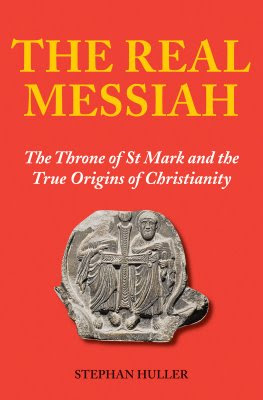 A sample of what appears in the Real Messiah order it here
A sample of what appears in the Real Messiah order it here