Here is what I found when looking at Genesis XV:11. Saadya follows a surprisingly well-attested line of interpretation that reads like this. Abram asks in verse 8 how he can be sure of what he is promised, but he seems to be given no sign till you look at verse 11 properly . Here is what verse 11 literally says. It does NOT say ‘he chased them away”. It says he breathed on them. (Not the same verb as in Gn II:7). I swear this is what the word really does mean. Only refusal to let it mean what it must mean lets you read it any other way. The first words can be read as “He put the bird on the bodies”. (The verb can be read as “it came down” [qal] and as “he put it” [hif‘il]). The meaning is that all the sacrifices came back to life when Abraham breathed on the bird and the other bodies. Saadya translates: “He put the bird [singular] on the bodies and stirred them [by breathing on them], and they started moving”. Notice that in verse 9 gozal meaning a young bird is translated bar-yonah by Onkelos and bar-yon in the Palestinian Targum and the Fragmentary Targum. Something else remarkable. The word meaning “bird” in verse 10 is tsippor. In verse 11 it is ‘ayiṭ, which normally would mean an eagle, but can mean birds of prey collectively. It is highly unexpected here as a reference to a young dove. Have a look at Jeremiah XII:9. The ‘ayiṭ EAGLE is a symbol of Judah. The reason the eagle ‘ayiṭ is said to be tsavua [tsade-bet-vav-‘ayin] is that it is distinguished from vultures by having a middle talon longer than the rest. (Etsba‘ alef-tsade-bet-‘ayin means finger). If you take Gn XV:11 literally it says the bar-yon or bar-yonah became like an eagle, and then Abram blew on it and it came to life. The ‘ayiṭ is the bird specified in Isaiah XLVI:11.
Although very well attested, this line of interpretation is not mentioned in any extant document before Saadya. Here is a very good example of how an ancient tradition can surface after centuries. The tradition covered up resembles some of what is in the Diatessaron and not in the Four Gospels.
I think you can now see some rationale in the bits in the infancy gospels about Jesus doing something similar.
Now, I suppose you know that the scheme of four empires in Daniel comes from verse 12 of this chapter. Dread + darkness + great + fell. This is the standard Rabbinic explanation.
The indication of the four empires comes after the sun had started to set. I suppose this means the end of the fourth empire will be a sunrise.
Now have a look at Isaiah XLVI:11 and 12.
Here are the renderings of ‘ayiṭ in Greek and Aramaic.
Isaiah XLVI:11. LXX peteinos fledgling (young but just old enough to fly). Symmachus orneos bird.
Targum. … like a quick little bird. (Notice it is not a big bird. I have translated qallil twice to try to bring out the basic meaning of being light).
Jeremiah XII:9. MT “Is the long-taloned eagle ….?”. The LXX translates from a Hebrew text with the first word different, or perhaps it just understood it differently. The long-taloned eagle becomes a hyaena’s cave. (Tsavua usually means hyaena but literally means streaked). Iôsêphos [a Greek translation of unknown origin] and ho Hebraios [Greek translation of unknown origin] have “a streaked [or multicoloured] bird”. Jerome says this is the translation in “the others”, that is, Theodotion Symmachus Aquila. It was also in his LXX text, though no extant LXX witness has this.
Targum. Like a frightened bird.
Genesis XV:11. LXX. Verse 10 at end. Tsippor is translated ornea birds [plural]. Verse 11. Again ornea but apparently taken to be birds of prey. No record of any other translation, so the later translators probably agreed.
All Targums. Birds plural both times. Meant to be birds of prey the second time.
CONCLUSIONS
By the time of the translation of the Pentateuch into Greek, nesher in Hebrew had changed its meaning from the tawny vulture Gyps fulvus, the biggest of all birds of prey in Palestine-Syria, to eagle, specifically Aquila chrysaetus, the kind depicted on flags. This might have been under the influence of Aramaic. I don’t know the history of the meaning in Aramaic, but in all the dialects I am familiar with it means eagle. The knowledge of its original meaning had not been lost in the Rabbinic halachic tradition. See my previous message, on Ḥullin 61a and the Palestinian Targum. At the same time ‘ayiṭ had changed its meaning from eagle to any bird of any size. Even in its expanded explanation of Gn XV:11, the Palestinian Targum does not say ‘ayiṭ means birds of prey. It just says they were other birds, but unclean. Interestingly, the Samaritan tradition recognises ‘ayiṭ as meaning a bird of prey, apparently an eagle, in Gn XV:11 [Arabic and Targum ms. A]. It recognises the meaning of nesher as vulture in Lv XI:13 [Arabic nasr “vulture” same as Saadya. Aramaic ambiguous as in the Jewish Targums]. This statement is made only by comparing the Samaritan Targum with the Arabic Version. I haven’t looked at the commentaries yet.
This change of meaning enabled a new interpretation of Genesis XV:10 and 11. The word tsippor in verse 10 is probably meant to be collective, but grammatically it is singular. Either way, the new interpretation takes ‘ayiṭ in verse 11 to be singular not collective and to refer to the young dove. There is a new interpretation of the verb. The verb (vayyashshév vay-yod-shin-bet) is translated plausibly by the LXX as meaning “he sat with them”, that is, the sacrifices. It seems vayyéshev was read [he sat, from yashav yod-shin-bet]. The next word otam “them” might have been read as ittam “with them”, but not necessarily. Taking the verb to mean “he frightened them away”, as is done by the Jewish Targums, is fanciful. The argument is that the verb nun-shin-bet in the pi‘el nishshev means to breathe or blow, so here it must mean he said shoosh at them, and that frightened them away. About as fanciful as much else that is repeated and repeated. This is a guess on the part of the Jewish Targums, repeated by the Peshitta and everyone else since. The Samaritan tradition takes the verb quite plausibly as meaning he sent them back, as if from the hif‘il of shuv shin-vav-bet. Anyway, in the new interpretation the verb is taken as meaning he breathed on them. Then they came to life. I think when you look closer at the interpretation and relate it to the words of the text in both verses, it would make more sense if what was meant was that the dove (the bar-yonah) came to life first.
Here is the hidden meaning of the story of Jesus doing much the same in the infancy gospels. The best way to cover the story up was to take it out of the official version of the gospels but keep it in the infancy gospels, where it sounded silly in isolation. This was more effective than trying to remove all traces of it. This is the same technique as with Jesus at school being taught about Alef and reminding the teacher about Bet. Originally it would have been an utterance. Putting it in an infancy gospel just makes it seem Jesus was insufferable as a child.
The resurrection of Jairus’s daughter was thus meant to be symbolic. It was meant to be connected to Gn XV:10 and 11.


The Mystery I've Solved

50 cm Seat /147 cm Tall Throne


Ancient Witness to the Size of the Throne

The Relative Size of the Alexandrian Throne of St Mark

Ancient Confirmation of Mark's "Smallness"

Marcion and the Episcopal Throne

Where was Marcion's Throne?

Burning of Arian Books After Nicaea

Drawing on vellum. From MS CLXV, Biblioteca Capitolare, Vercelli, a compendium of canon law produced in Northern Italy ca. 825


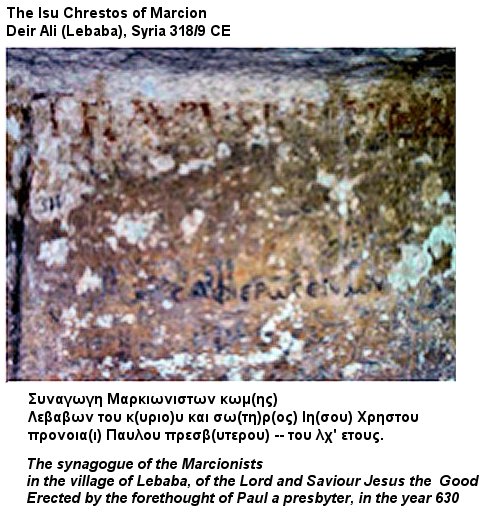
A Fourth Century CE Marcionite Synagogue in Syria

Adversus Marcionem 1.19 and Antoninus Pius's Alexandrian "Zodiac Coins" of 144/145 CE


First Argument for the Alexandrian Origins of Marcion

Second Argument for the Alexandrian Origins of Marcion

Third Argument for the Alexandrian Origins of Marcion

Fourth Argument for the Alexandrian Origins of Marcion

Fifth Argument for the Alexandrian Origins of Marcion

Conclusion

Bonus

First Piece of Evidence

Second Piece of Evidence


Third Piece of Evidence

Preliminary Conclusion

Overriding Point

Bottom Line


In Summa:

Last Word
