John I: 11 reads ΕΙΣ ΤΑ ΙΔΙΑ ΗΛΘΕΝ ΚΑΙ ΟΙ ΙΔΙΟΙ ΑΥΤΟΝ ΟΥ ΠΑΡΕΛΑΒΟΝ. Disregard the prevalent commentaries, which waffle on about the Jews not accepting Jesus, and then Paul trying for the second prize by preaching to everyone except Jews. The translation in the King James Version or Authorised Version renders “ta idia” as “his own ”. This could equally well be rendered as “what was his”. Notice that the noun this time is neuter plural. A neuter plural can refer to what in English would be a singular. Some translations render it as “his own home”, which is certainly a possible use of the term, but I would much prefer the rendering of the Authorised Version because it allows for the whole range of meanings. The same translation has “his own” for “hoi idioi”. This time the Greek word is masculine plural, and is clearly connected with the word “hosoi” meaning “whoever (plural)” at the start of the next verse. In the Peshitta the rendering in both places in v. 11 is simply ܕܝܠܞ . In itself this is neither personal nor impersonal, neither singular nor plural. In the second instance the Peshitta uses a plural verb. The avoidance of a distinction between neuter and personal in the first instance of DYLH in the Peshitta is useful. I think the Greek translators made the right choice, but at the cost of the intended ambiguity AND AT THE COST OF THE REFERENCE TO THE TORAH. Genesis XLIX: 10 says “till he whose it is comes”. The phrase in John is “He came to what was his”. If you put these phrases into Aramaic the phrases “whose it is” and “to what was his” will be DYLH (= Peshitta in Genesis) and LDYLH A reference to Genesis XLIX: 10 would be absolutely unmistakable. (This assumes of course that you accept the etymology of the word Shiloh accepted by all the ancient witnesses except the Vulgate; though even the translation in the Vulgate is compatible). But look what happens if you translate into Hebrew. You could render “to what is his” as לשלו but in poetic style you could leave the lamed out. בא שלו ושלו לא קבלוהו This is not, however, very natural usage, even in poetic style, because the prepositional prefix would normally only be left out before a noun. Suppose the original had been this: בא שילה ושלו לא קבלוהו This means “Shilo came and those that were his didn’t accept him”. Alternatively, with deliberately archaic spelling: בא שילה ושלה לא קבלוהו This could be read in two ways, either as above, or as “Shiloh came, and [shin-lamed-he, numerical value ten less, because no yod] did not receive him”. I have suggested before that the spelling of Shiloh without a yod in Jewish and Samaritan mss. of the Torah originated in the claim that the Prophet like Moses of Deuteronomy XVIII was Joshua, no more than that, thus denying the concept of a future Moses or someone greater than Moses. This is now getting very speculative, but what is certain is that this Hebrew sentence could be read as “Shiloh came, but those that denied the authority of the Torah for the coming of a second and greater Moses didn’t receive him”. The next verse would then fit perfectly. Now we see a possible reason for the Samaritan-sounding term “Power” here. This is a Samaritan Christian Dosithean manifesto. (I have already shown unmistakeable Dosithean Christian passages in the epistles attributed to Paul, but in the epistles that modern scholars have guessed might not be by Paul himself).
This would of course make the logical subject of vv. 11-13 different to the logical subject of vv. 9-10. The second personage would be the bearer of the light, not the light itself. (He would not be the Herald of the light either, but then again, notice how easy it would now be to link John and Jesus as servants of the light. I still don’t think you could use this line of argument to identify John with Jesus). This makes Jesus the bearer of the light, not the light itself. I personally am now much happier with the argument, because the light is supernal (not of the created earth), and Jesus if considered only in himself is human. Nestorius was right. Now re-read what is said about the Power of God just afterwards. The Light and the Power are two names for two functions of the same thing. Now think about what is said about Simon. Simon claims to be the Power called Great. Jesus says “I and the Father are one”. In both cases, Simon and Jesus, a human person is fully in tune with God. But would anyone ever say this? I think not, as a bald statement. It sounds like the title of a modern American Instant Guide to the Secrets of the Ancients in Ten Easy Lessons for the Busy Executive. Someone might well say it in the right context, the context of claiming to be entirely in tune with the Torah, which at the heavenly level is the Divine Wisdom. We know that both Simon and Jesus brought a new earthly manifestation of the heavenly Torah. I think most commentators and theologians read far too much into Jesus’s claim of close identity with the Father. I think they don’t realise that God as the Father is only God as the God of Israel, the vision on the throne seen by the Elders or by Ezekiel. This is God as named in the numerous blessings recited by Ultra-Orthodox Jews and to a lesser extent by normal Jews, the King of the World, named as Adonai even by the Ultra-Orthodox. (Not Ha-Shem, which is a substitute for YHWH).This is the level of manifestation addressed in the Day of Atonement piyyut Avinu Malkenu, Our Father our King. Obviously there is a manifestation of God far beyond that, the glimpse seen by Moses as he was protected by God, what is called “the back” of God, the Creator as seen from the direction of what is created. This is what is represented by the letter bet at the start of the Torah. Beyond that is the totally unknowable, represented by the absence of the first letter of the alphabet in that place. And beyond that is the unthinkable.
I think I have shown that what is said about Jesus, and what Jesus himself said, are the same as what Simon said about himself. Now we can have another look at the name Simon. I have said before that Simon (samech-yod-mem-vav-nun) had become a Hebrew and Aramaic name. I think the person called Simon bore it as a reference to his function as the siman, the indicator. We are now back to the basic statement of Christian theology, that Jesus points to God. I still think Simon and Jesus could have been the same person, but hesitate about being definite, because that would mean everything in the Church Fathers about Simon’s history and activity would be fictitious, leaving only the statements of his theology as true. I would be more inclined to say that what is attributed to Simon is the content of the systematic writings of Philip the Apostle to the Samaritans and perhaps of Foti, the Apostle to the Samaritans appointed even before Philip, the record being in John IV. The name Simon would then be a theological term or a name of Jesus turned into a fictitious person. The biographical details of the parentage and place of origin of the fictitious Simon would be those of Philip. The memory of his conflicts with Peter would then very plausibly be a reminiscence of the insistence of the Christians of Samaria on the Apostolic status of their Church going back to Philip, NOT PETER. This would be exactly the equivalent of the battle of the Coptic Church against attempts to wipe out the chain of authority from Mark and replace it with the authority of Peter.
All this needs tightening up. But look what we have. First, an explanation of why the Church Fathers are so unbelievably ignorant of Samaritan Christianity. It was deliberately re-described so as to ascribe all authority to Peter. Second, we have (indirectly) an explanation of the need to misrepresent Markion. His preaching was uncomfortable, because it was authentic. It was incompatible with the attempts at turning Christianity into something different. Third, we have an explanation of why our Gospel of John declares itself to based on an Apostolic book by John, without explaining why a new edition was needed. The original Gospel of John must have closely resembled the original Gospel in its theology. We can suppose that the revised version made certain points clearer, that is, harder to misrepresent. Right at the start is a coded condemnation of those that had tried to re-cast Christianity.
Monday, June 29, 2009
Sunday, June 28, 2009
Judas and John 4:22
I wonder whether John 4:22 have been used to support the idea that Jesus was Judas (found in gnostic interpretations of Jesus being identified as 'thirty' (Judas has a numerological value of 30 in Hebrew)?
The statement “Jesus was a Jew” would be “Yeshua [or Yeshu] haya Yehudi ישוע היה יהודי or more elegantly “Yeshua Yehudi haya” ישוע יהודי היה or in more correct usage “Yeshua ben Yisra’el haya” ישוע בן ישראל היה You will notice that this correct form could equally well say he was a Samaritan. The statement “Jesus was Judas” would be “Yeshua Yehuda haya” ישוע יהודה היה or much more naturally “Yeshua hu Yehuda” ישוע הוא יהודה or ישוע יהודה הוא with no tense expressed. Note, however, that this last pair of sentences if used in a passage in elevated literary style would become ambiguous, because they could mean “Jesus was from the tribe of Judah”. This means the name “Judas” might be no more than the product of a misunderstanding or perhaps deliberate mistranslation of a statement that Jesus belonged to the tribe of Judah, misunderstood as meaning Jesus was also known as Judah / Judas, then further obscured by making this Judas a separate person. I don’t think this is quite the right solution. I think that Judah / Judas was Thomas’s real name. Thomas is self-evidently Aramaic for “the twin” תומא (my apologies for stating the utterly obvious) and Judas Thomas is simply Judah the twin. Even so, the name Judas could still be a misunderstanding of a statement of the name of the tribe, in which case the question of Judas’s real name is unanswered.
Now we can get to the point of the passage in John. Jesus states the obvious, that the Samaritan Sanctuary was occulted, whereas the Jerusalem temple was visible and SEEMED permanent. Then he says, AS A SEPARATE STATEMENT, that THE salvation is to come from the tribe of Judah (not Levi). Nearly all translations and commentaries misrepresent this verse. Here we go, through the verse bit by bit.. First, remember that the Samaritan woman would not be impressed if Jesus were a prophet, because no Samaritan would accept the need for any of the later prophets, and who were regarded as scurrilous mountebanks by the Samaritans. She has seen that he has more than natural knowledge. All right then, if he knows any facts he needs to know, let’s see him try to find a defence of the indefensible. [No, the alternation of “c”and “s” was not a mistake. Buy a copy of the Shorter Oxford English Dictionary, or the Macquarie Dictionary, named after the patron secular saint of Sydney, Governor Lachlan Macquarie, and published in Sydney]. Jesus states the obvious, that the Samaritans don’t actually venerate a place, but rather the occulted Sanctuary or Tabernacle that ought to be in the place on Mt. Gerizim, and which gives or gave the place a secondary sanctity. This Tabernacle is obviously invisible. Then he says the Jews do seem to venerate a place, but actually venerate the building modelled on the Tabernacle, which gives the place a secondary sanctity. It logically follows that the disagreement over the question of the right place is less important than the veneration of the Sanctuary. Both sides agree that the occulted Samaritan tent or tabernacle and the visible Jewish building are only COPIES AT A LOWER LEVEL OF THE HEAVENLY TABERNACLE (Exodus XXV: 9, where tavnit, meaning plan of a building, means a Neoplatonic Eternal Form. Neoplatonism is Syrian in origin. I will give the evidence for this claim another time). It follows inevitably that the time must come when the question of who used to be right and who used to be wrong won’t matter any more. Both sides, if pressed, would have to admit this. Now to the misread verb in verse 22. The verb means “venerate” not “worship” when followed by a noun or pronoun in the accusative case. In the next verse, the same verb means “worship” because followed by the dative case. Now, as to THE salvation. I have put this word in capitals because that is what is in the Greek. If it is THE salvation, it is a definable salvation already mentioned in the Torah, just as the question “Are you THE prophet?” means “Are you the second Moses?” (Deuteronomy XVIII: 15 & 18). You will find THE salvation at the end of Deuteronomy XXXIII, in the form of a passive participle, “saved” נושע . What is written before this? (as the Talmud always says). A list of all twelve tribes. (I will explain the apparent omission of Simeon another time. The explanation of the apparent omission will tell you why the priest Simeon after seeing Jesus as a baby said he was now ready to die, and the same explanation shows that Simeon the Priest expected the one to come to be from the tribe of Judah. I come back to what we all know, that everything in the New Testament demands a detailed knowledge of the Torah, and that the corruption of Christianity into a man-made pseudo-religion could only be effected by first obscuring the connection with the Torah. See below on Mark VII). Before that, in the first few verses, is a statement of the past and future kingship of Moses, after the appearance of the first Torah in flames and fire. This can be worked out as having happened on the date of Shavu’ot, Pentecost, if the day by day account of the period from the Passover to the giving of the Torah in Exodus is followed carefully. (Be careful here. In the first verses of this chapter words are added in most translations to fit a pre-conceived meaning. Also the tenses of some of the verbs are changed, and even the subject pronouns of the verbs are changed in most translations). We can see the first Torah and the first flames and fire, but how do we know about the second Torah on another Pentecost and the second flames and fire? (You can see I’m deliberately using Talmudic phraseology). Easy (פשיטא) If this passage is a blessing (verse 1) then it must refer to the future. This means there must be a second Torah given like the first with flames and fire. When? When all the tribes are united, as in the case of the first Torah. Obviously this is to be from God and it is a form of salvation = rescue. (go back to the end of the chapter). By the hand of an individual from which tribe? At first sight, apparently not stated, but see below for the answer and its implications. Jesus gives the answer in John IV: 22. It is to be someone from Judah. Jesus says “The salvation is from the Judahites”. The Greek particle hoti connecting the two statements in John IV: 22 DOES NOT MEAN “BECAUSE”. It can mean this, but not in a sentence of this structure. In a sentence of this structure it means “end of point one, now for point two”. What is this salvation or rescue? Look at the end of Deuteronomy XXXIII again. It is victory over enemies. What enemies? Paul answers “and the last enemy to be vanquished is death”. But what could be the need for a second Torah, seeing that the first was perfect? The first Torah, all five books of it, was implicit in the words written by the finger of God on the sapphire tablets given to Moses. (Sapphire is heavenstuff in this and similar contexts. The finger of God is the point of interaction between God and Creation. Creation is both Heaven and Earth).). But Moses smashed these because the people were unable to bear their message, as he realised when he saw their well-meaning and devout but misguided work in making the Golden Calf. The second tablets were on the stone of this level of this world, and the writing was carved by Moses himself. Even so, only Moses was ever able to understand all the implications of the Torah (Numbers XII: 7). Something greater than Moses was needed to help drag the people up to where they could start to take in ALL the meaning intended by the first tablets and the second tablets and the five books of the Torah. They could certainly take in a significant part of it (Deuteronomy XXX: 11-14). But Moses couldn’t drag the people up to his own level. The best he could do was to save them from annihilation by bearing their guilt (= imperfection) and dying with them instead of crossing the Jordan. Thus the need for a second Torah, but by the hand of one greater than Moses. Jesus is “the firstfruits of them that slept” as Paul says. At this pint I have difficulty. Jesus did not resurrect himself, as the Evangelicals seem to imagine. He was very very dead, stone-dead, and was resurrected by God. But why Jesus and not Moses? Moses’s body was uncorrupted (Deuteronomy XXXIV: 7 if the verb is read according to the tense that it actually has and if the syntax is accepted exactly as it is. Also unanimous tradition). Moses was finally resurrected. See below. On the resurrection of Moses, after a long period when his body was incorruptible, see Peter’s sermon in Acts III. I suppose he was then translated. I assume this happened upon the death of Jesus, when Jesus said “it is finished” in the sense of the whole process having been carried through to the very last step ΤΕΤΕΛΗΘΗ. I assume this because Matthew adds that many of the saints of old were resurrected and were seen in the streets of Jerusalem. (This is one of the verses that embarrass N.T. scholars, who generally have nothing to say or show they wish the verse was not there). I take this verse to refer to those that were somehow saved by the willingness of Moses to die with them and protect them by his greater merit or level of existence {זכות) and who, like Moses, had been waiting, with the only difference being that Moses’s body was incorruptible. And what is the connection between resurrection and dragging others to a higher level? I don’t fully know. However, the symbolism of the presence of Moses at the Transfiguration is clear. Jesus is somehow greater, by being THE angel, the Angel of the Presence מלאך הפנים or Metatron, the angel that contains the germ of the created world. I would guess that if the presence of death is the most eloquent sign that creation is not yet as it should be, or is lower than it should be, then if Jesus is resurrected by God then this is the start of the raising of everything. (To remove one objection. When Jesus resurrected Lazarus, Lazarus was just the same as before, and could die. When Jesus was resurrected it was into the spiritual body, which does not mean insubstantial, but on the contrary even more physically present. As he said, “I am not a ghost”. This body belonged to the coming perfected world. To answer the Samaritan theologian writing some time in the late first c. A.D. or early second c. A.D. that objected that Jesus should have stayed on this level of existence and not ascended, because his visible presence would be convincing proof of the reality of the World to Come, there are two answers. The first is that the Resurrection Body or Spiritual Body or More Real Body was by definition a sample of the World to Come, and could not be held accessible to those in the world still striving towards the Coming World longer than forty days. Then how could it be held even for forty days? (Back to Talmudic style of argument. I must have absolutely absorbed the Talmud through my pores, because its style always takes me to the next step, no matter how impenetrable the question seems). Because the World to Come is equally the Coming World which means the world that is actually in the process of coming even now. It is already here a little bit. Or as Jesus said to the Samaritan woman “The hour is coming and indeed is already here” (I took this inspiration originally from the Yalkut Re’uveni ילקוט ראובני quoting a work of the Kabbalah before 1492. It needs no authority because it has the ring of truth. We are back to Paul’s words, that Jesus is the firstfruits of them that slept, and again his words, the whole of creation groaneth and travaileth waiting for the coming of the sons of God). The second answer to the very reasonable objection of the anonymous Samaritan theologian is to quote what Jesus said on the same subject: “Though one were to rise from the dead they would not believe”.
Now, what distresses me is that New Testament scholars have wilfully misread this verse in John. I say wilfully because this is avoidable ignorance. The distinction between the two meanings of the verb, as worship or venerate according to the case of the following pronoun, or the multiple meanings of the particle “hoti” according to the structure of the sentence, are matters that they ought to know to justify holding their job. The misinterpretation of the sentence “Our Fathers worshipped on this mountain” as meaning “some Samaritans in the olden days used to commonly and often worship here” is something that would not be tolerable at undergraduate level or even school level. First, “our Fathers” is a standard way of saying “Abraham, Isaac, and Jacob”. Anyone that doesn’t know this has never read anything in Hebrew or anything translated from Hebrew, not even the daily prayerbook. As for the verb, I find it hard to express myself. In English and German, “worshipped” or “anbeteten” can mean “worshipped once” or “used to worship”. In Greek, as in French, two different tenses are used. The Greek tense here is the aorist, expressing the meaning “did something once or on a few occasions” as opposed to the imperfect, meaning “used to worship now and then / occasionally / often / regularly”. You will see that all the authors of all the pathetic commentaries have either (a) not learnt the Greek tenses at the level expected in a school or (b) read the text in English or German with a glance at the Greek while claiming to follow the Greek or (c) done both of the above. As for commentators writing in French that have used the wrong French past tense, this is even worse. What is meant? Abraham, Isaac, and Jacob each worshipped at least once on Mt. Gerizim, thus recognising its sanctity or at least recognising its potential sanctity, whereas Jerusalem is not mentioned once in the Torah. The mountain has at least some claim to being the intended place for the sanctuary. Leave Melchizedek Priest of Salem out. Salem is not identified with Jerusalem till the Book of Chronicles. This identification is not followed by ancient Jewish sources. Not even the Septuagint or any of the four Targums identifies Salem with Jerusalem. No ancient Jewish document (except the Book of Chronicles, which does not press the point anyway) uses an identification of Salem with Jerusalem as an argument for the status of Jerusalem. Salem still bears the same name and is attested through the centuries as bearing this name, so its present location is not a Samaritan invention. We all know where it is, at the foot of Mount Gerizim but still within the sacred precincts. An identification with Jerusalem won’t fit the geography of the narrative. Am identification with the known place where there is at present a Palestinian refugee camp fits the geography of the narrative perfectly.
Bear in mind that I have not said that others disagree with my exegesis, but rather that the bare words have not been made accessible.
The reason I get so upset is that those that are paid full-time salaries to do an honest job would rather avoid working honestly, or avoid learning Greek properly, or what is worse, wilfully conceal the words of Scripture from other people. Never mind about the implications of the words. I say THE WORDS THEMSELVES (not their implications) ARE HIDDEN, and then replaced by man-made words. By the words themselves, I mean changing the tense of the verbs, ignoring the syntax so as to change the meaning of particles, leaving out or adding words in a way that changes the meaning, and ignoring the natural meaning of terms as used at the time of writing of the sections of Scripture. The worst instance of adding words that are not there, combined with wilful misrepresentation of the range of meaning of a verb, is the second part of Mark VII: 19. Lest the effects of the false addition in Mark be thought trivial, I remind you that it is this verse with the verb wilfully mistranslated, and with counterfeit words added, that is one of the most important vehicles of the deliberate attempt to misrepresent the place of Moses in Christology, to separate the New Testament from the Old Testament, and to misrepresent the work of Jesus. I have seen an instance of a person only half-educated, with definite psychiatric defects controlled by medication, but determined to know what Scripture says, realise for himself, with no knowledge of Greek, that most of the words in the usual translations of the phrase were man-made counterfeits. He asked me the meaning of the verb, and I told him what a Greek dictionary would have said, and no more than that, lest he take my exegesis for the only true meaning of the verse. He asked me to turn the syntax literally into English, which I did. It turned out that with the crude tools accessible to him, he had already worked out what the syntax must be. Then his mind leapt (Yes, this is the past tense, pronounced leppt) to the implications of the words of the verse and then to the nature of the Christological misrepresentation put forth by the misuse of the verse, and then went some distance to seeing how the meaning of the whole pericope had been misrepresented, AND WHY and for what purpose it had been misrepresented.. But how many others have lacked his zeal? And besides, I think he was gifted in a way, but his mind didn’t have the strength to be the vehicle of what he could discern, and this was the cause of his psychiatric condition. I come back to the point that ignorant guides are bad, but a heavy burden of guilt falls on those that set out purposefully to be wrongful guides. (I told you Anna says she doesn’t believe I no longer deliver sermons. She says all I have done is stop standing in a pulpit to deliver them. She is probably right).
You will see why the Greek Church has given the name Foti (modern pronunciation) to the anonymous Samaritan woman, a name meaning “enlightened”, and counts her as an Apostle. Some of the Western Churches such as the Anglican Church do the same, or many of their adherents do. I personally agree. Notice that this woman was the very first, even before Peter, to use the term “Christ” for Jesus, without Jesus rejecting it. Why? Because everyone so far that had used it had missed the meaning. The Samaritan woman obviously didn’t expect an anointed king of the line of David. That would have been intolerable to a Samaritan. The Northern Kingdom had been delighted to dump Rehoboam, and that was the end of it. Besides, David represented Jerusalem and the supreme Jewish heresy, the invention of the sanctity of Jerusalem with the attendant building of a fixed stone structure for the sanctuary. (Stephen got murdered for pointing this fact out).She therefore must have meant an anointed High Priest, but High Priest in the Heavenly Tabernacle, like Moses, as opposed to the High Priest of the earthly sanctuary, Aaron and his descendants. (The concept of Moses ministering in the Heavenly Tabernacle can be found plainly in the Torah if you read carefully what is said about the Tent Of Meeting אהל מועד There was the secondary implication of a king like Moses (start of Deuteronomy XXXIII if the verbs are read in the correct tenses and no words are added). Anyone can see that the kingship of David was only legitimised by that of Moses, and in any case David’s kingship WAS KINGSHIP IN A STATE OF EXISTENCE IMPERFECT BY DEFINITION.
We can now answer the question of why the tribe the anointed one was to come from had to be answered. The first High Priest of the Heavenly Tabernacle was Aaron’s brother, so obviously the second High Priest need not be descended from Aaron. But was he to be of the tribe of Levi, like Moses and Aaron? Or of some other tribe? If Deuteronomy XXXIII is read carefully, the place goes to Judah, but the question remained as to whether the tribe of Judah had lost its claim by the manifest unworthiness of its rulers. Note the verse in the Asâtîr in my translation where it speaks of the heresy of “the second sanctuary”, the Jerusalem temple, and says Judah has forfeited the promise given in the words of Deuteronomy XXXIII “Hear, O Lord, the voice of Judah”.
The Samaritan woman and Jesus managed to get through all this at lightning speed. One wonders what their I.Q. must have been. Actually, I feel jealous. Notice that she won the dispute over the location of the holy place to the extent of forcing Jesus to dodge the question of the rightful PRESENT location. Only three people are recorded as having defeated Jesus in debate, even if only in part, and they were all women. They were his mother, at the wedding at Cana, where she won the dispute about whether Jesus was obliged to act; the Samaritan woman in John IV; and the Syrophoenician (= Lebanese) woman in the second half of John IV.
This has turned out a lot longer than intended, but there seemed to be no other way of stating the seriousness of not translating what Scripture actually says---- I mean the seriousness of not translating the bare words correctly, and thus making it impossible for the earnest reader to find the intention of the words by thought and reflection.
You know I have often wondered if I would have been a Moslem if born in a country where Islam is prominent, and you know how much I prefer the company of Moslems to the company of Christian prelates. I suppose this is an unanswerable question. Anyway, I usually state my religion as “Pagan” if ever admitted to hospital or in any other situation, because I have found that admitting to being a Christian immediately puts me in the company of enthusiasts that bear the label of Christian, but whose religion I manifestly don’t belong to., and in fact can’t bear to hear expounded. Then again, I think of a Moslem friend that does the same. I also think of what she quoted as having been said to her by her father: “When people start accusing you of being an atheist, take it as the first sign that you are starting to become a Moslem”.
Everything said here about the concept of the World to Come, right down to the last detail, could have been stated in the language of Islamic theology. I worked with the tools I was most familiar with.
All of this is eminently material. We are commanded to do our bit in the world in situations that are not always pleasant, working with whatever apparently mundane job of improvement or help or simply maintenance comes our way. The Hebrew word for this process of remedy of the world bit by bit (and sometimes seeming like no more than maintenance to our eyes) is tikkun תקון
An afterthought. If Moses was king upon the giving of the first Torah, then he represented the unity of all twelve tribes, which means Jacob. When Jacob wrestled with the angel, and held his own, wrestling right through the night, the angel gave him the name Yisra’el, which is in form the name of an angel. There is an ancient text called The Ladder of Jacob preserved only in part, from the second c. B.C. that expands on the concept of Jacob as an angel. The same concept is prominent in mediaeval Jewish texts. I take it that Jacob was not quite equal to the angel he wrestled with. As that angel was the Angel of the Presence (read the passage carefully and you will see it) then Jacob-Yisra’el was the angel embodying the world, as opposed to the angel containing the germ of the world, the Angel of the Presence. Otherwise, Jacob-Yisra’el was the earthly reflection of the Angel of the Presence. The two explanations are compatible with each other. The second explanation is the traditional one. It is usually set forth in the observation that it does not say the angels were going up and coming down. It says the angels were going down and coming up. This means they came down , saw Jacob-Yisra’el’s face [the word translated “presence” is literally “face”, recognised it, and went back up to compare it with the original. If Moses represents the essence of Jacob-Yisra’el upon the giving of the first Torah, he is limited, no matter how exalted. He represents the world as it is. If Jesus represents the Angel of the Presence, the Power (technical term of Samaritan theology and the N.T.), then he is Lord of this World and the World to Come. As for Jesus being the Angel of the Presence, there is a lot that is relevant in John’s Gospel. A very clear simple statement is seen by putting together the two sayings “I and my Father are one” but balanced by “I must do the will of my Father”. The point is that the Angel of the Presence embodies the Great Power, but that Power is given to the Angel of the Presence from above. If this distinction is correct, then Moses could never drag others up after him, and Jesus could. Not by his own strength, but by the Great Power flowing through him. Thus he could not resurrect himself into the Spiritual Body, but it was done to him, from above. On the other hand, as the vehicle of the Great Power, he could resurrect Lazarus, but only into a normal body. I take this to imply that the Resurrected and Ascended Christ, the Pantokrator, does resurrect others into the Spiritual Body by the Great Power bestowed on him or flowing through him. There is a Hermetic dictum “Nature unaided always fails”. Although I heard this dictum from a corrupt source, it is a quote of a true saying. It sums up the distinction between Moses and Jesus, but I think it also means that Jesus before the Resurrection and Ascension could not be more than human, even though a vehicle for the Great Power. Jesus the man is not the Pantokrator, AND CHRISTIANITY IS NOT JESUS-WORSHIP EXCEPT IN ITS CORRUPT FORM. All of this is of course clearly stated in Jewish metaphysical texts, which say that Metatron is not quite identical with the Angel of the Presence but ATTAINED THAT STATUS IN SOME WAY.
ADDITIONAL NOTE:
Here is an explanatory translation of vv. 22 to 26, for the sake of clarity. The clause starting with hoti in v. 22 does bring in a new statement, as I said before, but I should have added that this clause is inserted to provide a necessary datum needed not for the logic of the connection between the two verses, but to settle one outstanding question that stands in the way of any present useful discussion. You might well have wondered how I could so confidently assert that the function of hoti here was to bring in a second, new, subject, but I forgot to say that the clause with hoti is at least as strongly connected to v. 23 as to v. 22. When you look at the two verses together, which you are obviously meant to do, and then look at the whole set of verses, as you are meant to do, it becomes transparently clear that hoti IN THIS POSITION introducing a clause STANDING BY ITSELF LIKE A SHAG ON A ROCK between two other clauses has its well-attested meaning of “now in regard to xyz”. It is equally clear that it does not mean “because”, since to take it this way you would have to break any logical connection between v. 22 and v. 23. as well as obscuring the logic of the whole set of verses. “You mob venerate what you don’t see [because there is no visible structure because there was never a stone building, only a protective low stone fence round the site of the tent or tabernacle, this fence having no holiness, but being purely practical], whereas we venerate what we do see [the massive stone temple building]. As for the salvation, it is to come by the hand of someone from Judah. But [to get back to the point] the hour is coming, and in a sense is already here, when the true worshippers [those that know that both sanctuaries are only copies of the Heavenly Tabernacle, as Exodus XXV: 9 plainly says, and therefore have no holiness of their own] will worship the Father in spirit and in truth [Truth = Reality in the Neoplatonic sense. This clarifies the meaning of “spirit”. They will direct their attention to the true original Eternal Form, the Heavenly Tabernacle, [as a vehicle, since God is both knowable and ultimately unknowable] which will be possible as soon as the salvation comes, [which as I, Jesus, just said is to be by the hand of someone from Judah, not Levi, not Ephraim] etc. etc. She said: “Yes, I already know all that. But it still depends on the coming of the anointed High Priest of the Heavenly Tabernacle, the second and greater Moses [Deuteronomy XVII: 15 & 18]. When he comes, he will show us all things [because he will know all that exists, Numbers XII, the first section, specially vv. 7 & 8]. Then we will know as we are known [Deuteronomy XXIV: 10 and see the Targums], directly [Numbers XII: 7, where direct vision is meant], because we will not know indirectly [Numbers XII: 6, the verb of the third clause out of four, “I am made known” in MT, but better “it has (so far) been made known” in the Samaritan text of the Torah], not by hints and not in a mirror [Numbers XII: 6, where the usually translated as image or vision can equally well be read as meaning “mirror”]. Jesus said: [“Quite so. That person must come so as to give you that perception. We both know that]. That person has now come [at last]. It’s me”. [So from now on we can stop being concerned about where the earthly tabernacle ought to be. More to the point, the new era has started, the return of the Time of Favour, the subject of Jesus’s first sermon, in Caphernaum, when he was nearly murdered].
You will see that the Samaritan woman made her mark, since neither Jerusalem nor the site of the former Jerusalem temple have any holiness in Christianity, except as far as connected with Jesus, but that is another matter altogether. There is of course the exception of modern Christian Zionism, the only new heresy ever invented since ancient times, and the most poisonous of all, a true invention of the Devil and the inimical Powers of this world.
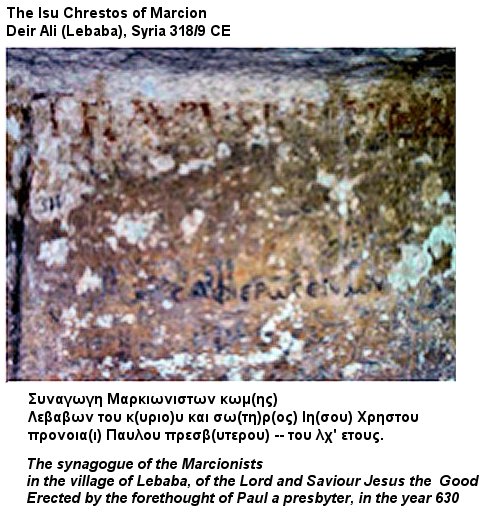
A reminder. The short answer to part of the original question is that the words usually read as meaning “of the Jews” in v. 22 in this discussion between Jesus and the Samaritan woman can only mean “from someone from amongst the members of the tribe of Judah”. This is in fact how the Old Syriac (not the Peshitta) understands it. This text has literally “from Judah”. This is either a correct explanatory translation, or the original reading. Am inclined to take the translation as quite literal, taken from an uncorrupted Greek text. Note these two facts: they are very important. To a great extent the Peshitta shows a startling degree of intuition of what the original Aramaic behind the Greek must have been, and this phenomenon is even more marked in the case of the Old Syriac, so much so that I personally think the translators must have used an Aramaic text to correct their Greek text before translating the Greek into Syriac. The text of the Old Syriac shows marked agreement in important places with the Greek text used by Marcion, which as we all know is consistently better than most extant mss. of the Greek. As you know, I would say with Stephan that Marcion’s text is uncorrupted. Marcion’s text has a remarkable affinity with what is called the Western Text, and also tends to agree with the best mss. whenever the original reading has been obscured in most mss. but survives in a very few witnesses, so Marcion’s text was not made up by Marcion, regardless of the calumnies against him.
The statement “Jesus was a Jew” would be “Yeshua [or Yeshu] haya Yehudi ישוע היה יהודי or more elegantly “Yeshua Yehudi haya” ישוע יהודי היה or in more correct usage “Yeshua ben Yisra’el haya” ישוע בן ישראל היה You will notice that this correct form could equally well say he was a Samaritan. The statement “Jesus was Judas” would be “Yeshua Yehuda haya” ישוע יהודה היה or much more naturally “Yeshua hu Yehuda” ישוע הוא יהודה or ישוע יהודה הוא with no tense expressed. Note, however, that this last pair of sentences if used in a passage in elevated literary style would become ambiguous, because they could mean “Jesus was from the tribe of Judah”. This means the name “Judas” might be no more than the product of a misunderstanding or perhaps deliberate mistranslation of a statement that Jesus belonged to the tribe of Judah, misunderstood as meaning Jesus was also known as Judah / Judas, then further obscured by making this Judas a separate person. I don’t think this is quite the right solution. I think that Judah / Judas was Thomas’s real name. Thomas is self-evidently Aramaic for “the twin” תומא (my apologies for stating the utterly obvious) and Judas Thomas is simply Judah the twin. Even so, the name Judas could still be a misunderstanding of a statement of the name of the tribe, in which case the question of Judas’s real name is unanswered.
Now we can get to the point of the passage in John. Jesus states the obvious, that the Samaritan Sanctuary was occulted, whereas the Jerusalem temple was visible and SEEMED permanent. Then he says, AS A SEPARATE STATEMENT, that THE salvation is to come from the tribe of Judah (not Levi). Nearly all translations and commentaries misrepresent this verse. Here we go, through the verse bit by bit.. First, remember that the Samaritan woman would not be impressed if Jesus were a prophet, because no Samaritan would accept the need for any of the later prophets, and who were regarded as scurrilous mountebanks by the Samaritans. She has seen that he has more than natural knowledge. All right then, if he knows any facts he needs to know, let’s see him try to find a defence of the indefensible. [No, the alternation of “c”and “s” was not a mistake. Buy a copy of the Shorter Oxford English Dictionary, or the Macquarie Dictionary, named after the patron secular saint of Sydney, Governor Lachlan Macquarie, and published in Sydney]. Jesus states the obvious, that the Samaritans don’t actually venerate a place, but rather the occulted Sanctuary or Tabernacle that ought to be in the place on Mt. Gerizim, and which gives or gave the place a secondary sanctity. This Tabernacle is obviously invisible. Then he says the Jews do seem to venerate a place, but actually venerate the building modelled on the Tabernacle, which gives the place a secondary sanctity. It logically follows that the disagreement over the question of the right place is less important than the veneration of the Sanctuary. Both sides agree that the occulted Samaritan tent or tabernacle and the visible Jewish building are only COPIES AT A LOWER LEVEL OF THE HEAVENLY TABERNACLE (Exodus XXV: 9, where tavnit, meaning plan of a building, means a Neoplatonic Eternal Form. Neoplatonism is Syrian in origin. I will give the evidence for this claim another time). It follows inevitably that the time must come when the question of who used to be right and who used to be wrong won’t matter any more. Both sides, if pressed, would have to admit this. Now to the misread verb in verse 22. The verb means “venerate” not “worship” when followed by a noun or pronoun in the accusative case. In the next verse, the same verb means “worship” because followed by the dative case. Now, as to THE salvation. I have put this word in capitals because that is what is in the Greek. If it is THE salvation, it is a definable salvation already mentioned in the Torah, just as the question “Are you THE prophet?” means “Are you the second Moses?” (Deuteronomy XVIII: 15 & 18). You will find THE salvation at the end of Deuteronomy XXXIII, in the form of a passive participle, “saved” נושע . What is written before this? (as the Talmud always says). A list of all twelve tribes. (I will explain the apparent omission of Simeon another time. The explanation of the apparent omission will tell you why the priest Simeon after seeing Jesus as a baby said he was now ready to die, and the same explanation shows that Simeon the Priest expected the one to come to be from the tribe of Judah. I come back to what we all know, that everything in the New Testament demands a detailed knowledge of the Torah, and that the corruption of Christianity into a man-made pseudo-religion could only be effected by first obscuring the connection with the Torah. See below on Mark VII). Before that, in the first few verses, is a statement of the past and future kingship of Moses, after the appearance of the first Torah in flames and fire. This can be worked out as having happened on the date of Shavu’ot, Pentecost, if the day by day account of the period from the Passover to the giving of the Torah in Exodus is followed carefully. (Be careful here. In the first verses of this chapter words are added in most translations to fit a pre-conceived meaning. Also the tenses of some of the verbs are changed, and even the subject pronouns of the verbs are changed in most translations). We can see the first Torah and the first flames and fire, but how do we know about the second Torah on another Pentecost and the second flames and fire? (You can see I’m deliberately using Talmudic phraseology). Easy (פשיטא) If this passage is a blessing (verse 1) then it must refer to the future. This means there must be a second Torah given like the first with flames and fire. When? When all the tribes are united, as in the case of the first Torah. Obviously this is to be from God and it is a form of salvation = rescue. (go back to the end of the chapter). By the hand of an individual from which tribe? At first sight, apparently not stated, but see below for the answer and its implications. Jesus gives the answer in John IV: 22. It is to be someone from Judah. Jesus says “The salvation is from the Judahites”. The Greek particle hoti connecting the two statements in John IV: 22 DOES NOT MEAN “BECAUSE”. It can mean this, but not in a sentence of this structure. In a sentence of this structure it means “end of point one, now for point two”. What is this salvation or rescue? Look at the end of Deuteronomy XXXIII again. It is victory over enemies. What enemies? Paul answers “and the last enemy to be vanquished is death”. But what could be the need for a second Torah, seeing that the first was perfect? The first Torah, all five books of it, was implicit in the words written by the finger of God on the sapphire tablets given to Moses. (Sapphire is heavenstuff in this and similar contexts. The finger of God is the point of interaction between God and Creation. Creation is both Heaven and Earth).). But Moses smashed these because the people were unable to bear their message, as he realised when he saw their well-meaning and devout but misguided work in making the Golden Calf. The second tablets were on the stone of this level of this world, and the writing was carved by Moses himself. Even so, only Moses was ever able to understand all the implications of the Torah (Numbers XII: 7). Something greater than Moses was needed to help drag the people up to where they could start to take in ALL the meaning intended by the first tablets and the second tablets and the five books of the Torah. They could certainly take in a significant part of it (Deuteronomy XXX: 11-14). But Moses couldn’t drag the people up to his own level. The best he could do was to save them from annihilation by bearing their guilt (= imperfection) and dying with them instead of crossing the Jordan. Thus the need for a second Torah, but by the hand of one greater than Moses. Jesus is “the firstfruits of them that slept” as Paul says. At this pint I have difficulty. Jesus did not resurrect himself, as the Evangelicals seem to imagine. He was very very dead, stone-dead, and was resurrected by God. But why Jesus and not Moses? Moses’s body was uncorrupted (Deuteronomy XXXIV: 7 if the verb is read according to the tense that it actually has and if the syntax is accepted exactly as it is. Also unanimous tradition). Moses was finally resurrected. See below. On the resurrection of Moses, after a long period when his body was incorruptible, see Peter’s sermon in Acts III. I suppose he was then translated. I assume this happened upon the death of Jesus, when Jesus said “it is finished” in the sense of the whole process having been carried through to the very last step ΤΕΤΕΛΗΘΗ. I assume this because Matthew adds that many of the saints of old were resurrected and were seen in the streets of Jerusalem. (This is one of the verses that embarrass N.T. scholars, who generally have nothing to say or show they wish the verse was not there). I take this verse to refer to those that were somehow saved by the willingness of Moses to die with them and protect them by his greater merit or level of existence {זכות) and who, like Moses, had been waiting, with the only difference being that Moses’s body was incorruptible. And what is the connection between resurrection and dragging others to a higher level? I don’t fully know. However, the symbolism of the presence of Moses at the Transfiguration is clear. Jesus is somehow greater, by being THE angel, the Angel of the Presence מלאך הפנים or Metatron, the angel that contains the germ of the created world. I would guess that if the presence of death is the most eloquent sign that creation is not yet as it should be, or is lower than it should be, then if Jesus is resurrected by God then this is the start of the raising of everything. (To remove one objection. When Jesus resurrected Lazarus, Lazarus was just the same as before, and could die. When Jesus was resurrected it was into the spiritual body, which does not mean insubstantial, but on the contrary even more physically present. As he said, “I am not a ghost”. This body belonged to the coming perfected world. To answer the Samaritan theologian writing some time in the late first c. A.D. or early second c. A.D. that objected that Jesus should have stayed on this level of existence and not ascended, because his visible presence would be convincing proof of the reality of the World to Come, there are two answers. The first is that the Resurrection Body or Spiritual Body or More Real Body was by definition a sample of the World to Come, and could not be held accessible to those in the world still striving towards the Coming World longer than forty days. Then how could it be held even for forty days? (Back to Talmudic style of argument. I must have absolutely absorbed the Talmud through my pores, because its style always takes me to the next step, no matter how impenetrable the question seems). Because the World to Come is equally the Coming World which means the world that is actually in the process of coming even now. It is already here a little bit. Or as Jesus said to the Samaritan woman “The hour is coming and indeed is already here” (I took this inspiration originally from the Yalkut Re’uveni ילקוט ראובני quoting a work of the Kabbalah before 1492. It needs no authority because it has the ring of truth. We are back to Paul’s words, that Jesus is the firstfruits of them that slept, and again his words, the whole of creation groaneth and travaileth waiting for the coming of the sons of God). The second answer to the very reasonable objection of the anonymous Samaritan theologian is to quote what Jesus said on the same subject: “Though one were to rise from the dead they would not believe”.
Now, what distresses me is that New Testament scholars have wilfully misread this verse in John. I say wilfully because this is avoidable ignorance. The distinction between the two meanings of the verb, as worship or venerate according to the case of the following pronoun, or the multiple meanings of the particle “hoti” according to the structure of the sentence, are matters that they ought to know to justify holding their job. The misinterpretation of the sentence “Our Fathers worshipped on this mountain” as meaning “some Samaritans in the olden days used to commonly and often worship here” is something that would not be tolerable at undergraduate level or even school level. First, “our Fathers” is a standard way of saying “Abraham, Isaac, and Jacob”. Anyone that doesn’t know this has never read anything in Hebrew or anything translated from Hebrew, not even the daily prayerbook. As for the verb, I find it hard to express myself. In English and German, “worshipped” or “anbeteten” can mean “worshipped once” or “used to worship”. In Greek, as in French, two different tenses are used. The Greek tense here is the aorist, expressing the meaning “did something once or on a few occasions” as opposed to the imperfect, meaning “used to worship now and then / occasionally / often / regularly”. You will see that all the authors of all the pathetic commentaries have either (a) not learnt the Greek tenses at the level expected in a school or (b) read the text in English or German with a glance at the Greek while claiming to follow the Greek or (c) done both of the above. As for commentators writing in French that have used the wrong French past tense, this is even worse. What is meant? Abraham, Isaac, and Jacob each worshipped at least once on Mt. Gerizim, thus recognising its sanctity or at least recognising its potential sanctity, whereas Jerusalem is not mentioned once in the Torah. The mountain has at least some claim to being the intended place for the sanctuary. Leave Melchizedek Priest of Salem out. Salem is not identified with Jerusalem till the Book of Chronicles. This identification is not followed by ancient Jewish sources. Not even the Septuagint or any of the four Targums identifies Salem with Jerusalem. No ancient Jewish document (except the Book of Chronicles, which does not press the point anyway) uses an identification of Salem with Jerusalem as an argument for the status of Jerusalem. Salem still bears the same name and is attested through the centuries as bearing this name, so its present location is not a Samaritan invention. We all know where it is, at the foot of Mount Gerizim but still within the sacred precincts. An identification with Jerusalem won’t fit the geography of the narrative. Am identification with the known place where there is at present a Palestinian refugee camp fits the geography of the narrative perfectly.
Bear in mind that I have not said that others disagree with my exegesis, but rather that the bare words have not been made accessible.
The reason I get so upset is that those that are paid full-time salaries to do an honest job would rather avoid working honestly, or avoid learning Greek properly, or what is worse, wilfully conceal the words of Scripture from other people. Never mind about the implications of the words. I say THE WORDS THEMSELVES (not their implications) ARE HIDDEN, and then replaced by man-made words. By the words themselves, I mean changing the tense of the verbs, ignoring the syntax so as to change the meaning of particles, leaving out or adding words in a way that changes the meaning, and ignoring the natural meaning of terms as used at the time of writing of the sections of Scripture. The worst instance of adding words that are not there, combined with wilful misrepresentation of the range of meaning of a verb, is the second part of Mark VII: 19. Lest the effects of the false addition in Mark be thought trivial, I remind you that it is this verse with the verb wilfully mistranslated, and with counterfeit words added, that is one of the most important vehicles of the deliberate attempt to misrepresent the place of Moses in Christology, to separate the New Testament from the Old Testament, and to misrepresent the work of Jesus. I have seen an instance of a person only half-educated, with definite psychiatric defects controlled by medication, but determined to know what Scripture says, realise for himself, with no knowledge of Greek, that most of the words in the usual translations of the phrase were man-made counterfeits. He asked me the meaning of the verb, and I told him what a Greek dictionary would have said, and no more than that, lest he take my exegesis for the only true meaning of the verse. He asked me to turn the syntax literally into English, which I did. It turned out that with the crude tools accessible to him, he had already worked out what the syntax must be. Then his mind leapt (Yes, this is the past tense, pronounced leppt) to the implications of the words of the verse and then to the nature of the Christological misrepresentation put forth by the misuse of the verse, and then went some distance to seeing how the meaning of the whole pericope had been misrepresented, AND WHY and for what purpose it had been misrepresented.. But how many others have lacked his zeal? And besides, I think he was gifted in a way, but his mind didn’t have the strength to be the vehicle of what he could discern, and this was the cause of his psychiatric condition. I come back to the point that ignorant guides are bad, but a heavy burden of guilt falls on those that set out purposefully to be wrongful guides. (I told you Anna says she doesn’t believe I no longer deliver sermons. She says all I have done is stop standing in a pulpit to deliver them. She is probably right).
You will see why the Greek Church has given the name Foti (modern pronunciation) to the anonymous Samaritan woman, a name meaning “enlightened”, and counts her as an Apostle. Some of the Western Churches such as the Anglican Church do the same, or many of their adherents do. I personally agree. Notice that this woman was the very first, even before Peter, to use the term “Christ” for Jesus, without Jesus rejecting it. Why? Because everyone so far that had used it had missed the meaning. The Samaritan woman obviously didn’t expect an anointed king of the line of David. That would have been intolerable to a Samaritan. The Northern Kingdom had been delighted to dump Rehoboam, and that was the end of it. Besides, David represented Jerusalem and the supreme Jewish heresy, the invention of the sanctity of Jerusalem with the attendant building of a fixed stone structure for the sanctuary. (Stephen got murdered for pointing this fact out).She therefore must have meant an anointed High Priest, but High Priest in the Heavenly Tabernacle, like Moses, as opposed to the High Priest of the earthly sanctuary, Aaron and his descendants. (The concept of Moses ministering in the Heavenly Tabernacle can be found plainly in the Torah if you read carefully what is said about the Tent Of Meeting אהל מועד There was the secondary implication of a king like Moses (start of Deuteronomy XXXIII if the verbs are read in the correct tenses and no words are added). Anyone can see that the kingship of David was only legitimised by that of Moses, and in any case David’s kingship WAS KINGSHIP IN A STATE OF EXISTENCE IMPERFECT BY DEFINITION.
We can now answer the question of why the tribe the anointed one was to come from had to be answered. The first High Priest of the Heavenly Tabernacle was Aaron’s brother, so obviously the second High Priest need not be descended from Aaron. But was he to be of the tribe of Levi, like Moses and Aaron? Or of some other tribe? If Deuteronomy XXXIII is read carefully, the place goes to Judah, but the question remained as to whether the tribe of Judah had lost its claim by the manifest unworthiness of its rulers. Note the verse in the Asâtîr in my translation where it speaks of the heresy of “the second sanctuary”, the Jerusalem temple, and says Judah has forfeited the promise given in the words of Deuteronomy XXXIII “Hear, O Lord, the voice of Judah”.
The Samaritan woman and Jesus managed to get through all this at lightning speed. One wonders what their I.Q. must have been. Actually, I feel jealous. Notice that she won the dispute over the location of the holy place to the extent of forcing Jesus to dodge the question of the rightful PRESENT location. Only three people are recorded as having defeated Jesus in debate, even if only in part, and they were all women. They were his mother, at the wedding at Cana, where she won the dispute about whether Jesus was obliged to act; the Samaritan woman in John IV; and the Syrophoenician (= Lebanese) woman in the second half of John IV.
This has turned out a lot longer than intended, but there seemed to be no other way of stating the seriousness of not translating what Scripture actually says---- I mean the seriousness of not translating the bare words correctly, and thus making it impossible for the earnest reader to find the intention of the words by thought and reflection.
You know I have often wondered if I would have been a Moslem if born in a country where Islam is prominent, and you know how much I prefer the company of Moslems to the company of Christian prelates. I suppose this is an unanswerable question. Anyway, I usually state my religion as “Pagan” if ever admitted to hospital or in any other situation, because I have found that admitting to being a Christian immediately puts me in the company of enthusiasts that bear the label of Christian, but whose religion I manifestly don’t belong to., and in fact can’t bear to hear expounded. Then again, I think of a Moslem friend that does the same. I also think of what she quoted as having been said to her by her father: “When people start accusing you of being an atheist, take it as the first sign that you are starting to become a Moslem”.
Everything said here about the concept of the World to Come, right down to the last detail, could have been stated in the language of Islamic theology. I worked with the tools I was most familiar with.
All of this is eminently material. We are commanded to do our bit in the world in situations that are not always pleasant, working with whatever apparently mundane job of improvement or help or simply maintenance comes our way. The Hebrew word for this process of remedy of the world bit by bit (and sometimes seeming like no more than maintenance to our eyes) is tikkun תקון
An afterthought. If Moses was king upon the giving of the first Torah, then he represented the unity of all twelve tribes, which means Jacob. When Jacob wrestled with the angel, and held his own, wrestling right through the night, the angel gave him the name Yisra’el, which is in form the name of an angel. There is an ancient text called The Ladder of Jacob preserved only in part, from the second c. B.C. that expands on the concept of Jacob as an angel. The same concept is prominent in mediaeval Jewish texts. I take it that Jacob was not quite equal to the angel he wrestled with. As that angel was the Angel of the Presence (read the passage carefully and you will see it) then Jacob-Yisra’el was the angel embodying the world, as opposed to the angel containing the germ of the world, the Angel of the Presence. Otherwise, Jacob-Yisra’el was the earthly reflection of the Angel of the Presence. The two explanations are compatible with each other. The second explanation is the traditional one. It is usually set forth in the observation that it does not say the angels were going up and coming down. It says the angels were going down and coming up. This means they came down , saw Jacob-Yisra’el’s face [the word translated “presence” is literally “face”, recognised it, and went back up to compare it with the original. If Moses represents the essence of Jacob-Yisra’el upon the giving of the first Torah, he is limited, no matter how exalted. He represents the world as it is. If Jesus represents the Angel of the Presence, the Power (technical term of Samaritan theology and the N.T.), then he is Lord of this World and the World to Come. As for Jesus being the Angel of the Presence, there is a lot that is relevant in John’s Gospel. A very clear simple statement is seen by putting together the two sayings “I and my Father are one” but balanced by “I must do the will of my Father”. The point is that the Angel of the Presence embodies the Great Power, but that Power is given to the Angel of the Presence from above. If this distinction is correct, then Moses could never drag others up after him, and Jesus could. Not by his own strength, but by the Great Power flowing through him. Thus he could not resurrect himself into the Spiritual Body, but it was done to him, from above. On the other hand, as the vehicle of the Great Power, he could resurrect Lazarus, but only into a normal body. I take this to imply that the Resurrected and Ascended Christ, the Pantokrator, does resurrect others into the Spiritual Body by the Great Power bestowed on him or flowing through him. There is a Hermetic dictum “Nature unaided always fails”. Although I heard this dictum from a corrupt source, it is a quote of a true saying. It sums up the distinction between Moses and Jesus, but I think it also means that Jesus before the Resurrection and Ascension could not be more than human, even though a vehicle for the Great Power. Jesus the man is not the Pantokrator, AND CHRISTIANITY IS NOT JESUS-WORSHIP EXCEPT IN ITS CORRUPT FORM. All of this is of course clearly stated in Jewish metaphysical texts, which say that Metatron is not quite identical with the Angel of the Presence but ATTAINED THAT STATUS IN SOME WAY.
ADDITIONAL NOTE:
Here is an explanatory translation of vv. 22 to 26, for the sake of clarity. The clause starting with hoti in v. 22 does bring in a new statement, as I said before, but I should have added that this clause is inserted to provide a necessary datum needed not for the logic of the connection between the two verses, but to settle one outstanding question that stands in the way of any present useful discussion. You might well have wondered how I could so confidently assert that the function of hoti here was to bring in a second, new, subject, but I forgot to say that the clause with hoti is at least as strongly connected to v. 23 as to v. 22. When you look at the two verses together, which you are obviously meant to do, and then look at the whole set of verses, as you are meant to do, it becomes transparently clear that hoti IN THIS POSITION introducing a clause STANDING BY ITSELF LIKE A SHAG ON A ROCK between two other clauses has its well-attested meaning of “now in regard to xyz”. It is equally clear that it does not mean “because”, since to take it this way you would have to break any logical connection between v. 22 and v. 23. as well as obscuring the logic of the whole set of verses. “You mob venerate what you don’t see [because there is no visible structure because there was never a stone building, only a protective low stone fence round the site of the tent or tabernacle, this fence having no holiness, but being purely practical], whereas we venerate what we do see [the massive stone temple building]. As for the salvation, it is to come by the hand of someone from Judah. But [to get back to the point] the hour is coming, and in a sense is already here, when the true worshippers [those that know that both sanctuaries are only copies of the Heavenly Tabernacle, as Exodus XXV: 9 plainly says, and therefore have no holiness of their own] will worship the Father in spirit and in truth [Truth = Reality in the Neoplatonic sense. This clarifies the meaning of “spirit”. They will direct their attention to the true original Eternal Form, the Heavenly Tabernacle, [as a vehicle, since God is both knowable and ultimately unknowable] which will be possible as soon as the salvation comes, [which as I, Jesus, just said is to be by the hand of someone from Judah, not Levi, not Ephraim] etc. etc. She said: “Yes, I already know all that. But it still depends on the coming of the anointed High Priest of the Heavenly Tabernacle, the second and greater Moses [Deuteronomy XVII: 15 & 18]. When he comes, he will show us all things [because he will know all that exists, Numbers XII, the first section, specially vv. 7 & 8]. Then we will know as we are known [Deuteronomy XXIV: 10 and see the Targums], directly [Numbers XII: 7, where direct vision is meant], because we will not know indirectly [Numbers XII: 6, the verb of the third clause out of four, “I am made known” in MT, but better “it has (so far) been made known” in the Samaritan text of the Torah], not by hints and not in a mirror [Numbers XII: 6, where the usually translated as image or vision can equally well be read as meaning “mirror”]. Jesus said: [“Quite so. That person must come so as to give you that perception. We both know that]. That person has now come [at last]. It’s me”. [So from now on we can stop being concerned about where the earthly tabernacle ought to be. More to the point, the new era has started, the return of the Time of Favour, the subject of Jesus’s first sermon, in Caphernaum, when he was nearly murdered].
You will see that the Samaritan woman made her mark, since neither Jerusalem nor the site of the former Jerusalem temple have any holiness in Christianity, except as far as connected with Jesus, but that is another matter altogether. There is of course the exception of modern Christian Zionism, the only new heresy ever invented since ancient times, and the most poisonous of all, a true invention of the Devil and the inimical Powers of this world.
A reminder. The short answer to part of the original question is that the words usually read as meaning “of the Jews” in v. 22 in this discussion between Jesus and the Samaritan woman can only mean “from someone from amongst the members of the tribe of Judah”. This is in fact how the Old Syriac (not the Peshitta) understands it. This text has literally “from Judah”. This is either a correct explanatory translation, or the original reading. Am inclined to take the translation as quite literal, taken from an uncorrupted Greek text. Note these two facts: they are very important. To a great extent the Peshitta shows a startling degree of intuition of what the original Aramaic behind the Greek must have been, and this phenomenon is even more marked in the case of the Old Syriac, so much so that I personally think the translators must have used an Aramaic text to correct their Greek text before translating the Greek into Syriac. The text of the Old Syriac shows marked agreement in important places with the Greek text used by Marcion, which as we all know is consistently better than most extant mss. of the Greek. As you know, I would say with Stephan that Marcion’s text is uncorrupted. Marcion’s text has a remarkable affinity with what is called the Western Text, and also tends to agree with the best mss. whenever the original reading has been obscured in most mss. but survives in a very few witnesses, so Marcion’s text was not made up by Marcion, regardless of the calumnies against him.

On the Etymology of the Name Judas
Judas does not come from the root YOD-DALET-HE either. Historically, the root is HE-VAV-DALET. I admit that popular etymology could have connected it with the root YOD-DALET-HE, and I admit that a speaker of Hebrew in the first c. A.D. would have FELT it as having a connection with this root. The verb IS NEVER USED IN THE QAL. It is always in the Hif’il when it means to thank or acknowledge. These forms are NOT similar enough to Yehudah to make a Hebrew-speaker feel a COMPELLING connection even if historical considerations are left out. That means past tense hodah, future tense yodeh, and participle modeh. The name Yehudah is too far from the hif’il participle for the feeling of connection to be strong. The hitpa’el is used to express the concept of admitting or acknowledging something outside but of personal concern This means past tense hitvaddah, future tense yitvaddeh, participle mitvaddeh, but these forms aren’t strongly enough connected either. No forms other than the Hif’il and Hitpa’el are used.
Disregard what Jastrow says about the root YOD-MEM-NUN. No, it would be better to say take notice of what he says the way he meant it. Jastrow’s root entries are not always real words. They are the root, which can’t stand in isolation. Even when he gives what looks like the past tense of the Qal, it is often just an abstraction. Quite often the meaning assigned to the root is NOT ANY ATTESTED MEANING, only a reasonable assumption about the history of the meaning before its use in written records. So his root YOD-MEM-NUN certainly exists, but what looks like an actual form, the first word of the second column of p. 580, with the vowels of the past tense Qal, IS NOT A REAL VERB. What is really used is the pi’el, cited straight after this. Look at the examples. You will see that even of the pi’el, only THE PASSIVE PARTICIPLE (i.e. the pu’al participle) is actually used, and even that bears a meaning NOT THE SAME AS JASTROW’S ASSUMED ORIGINAL MEANING. The meaning “skilful” is dubious. The meaning “the one actually meant if some other is not actually specified” or “the one naturally thought of, because the most eminent holder of the title” fits every cited instance. If the verb is to mean “to go to the right” it must be in the hif’il. That means past tense hemin, future tense yemin, participle memin (MEM-YOD-MEM-YOD-NUN). The corresponding Aramaic word must be in the Af’el. [[There is an alternative set of forms in Biblical Hebrew, but still in the hif’il, from a variant derived root ALEF-MEM-NUN, but this is not the same as the root ALEF-MEM-NUN In the Qal stative participle amen means certain (but said of a concept, not a person, and used as a single word meaning “it is certain”). The nif’al participle ne’eman means faithful (said of a person). This word is applied to Moses in Numbers XII. The hif’il means to believe. None of these are connected with the Biblical Hebrew hif’il forms meaning to go to the right. It is true that the forms are the same: past tense he’emin (HE-ALEF-MEM-YOD-NUN), future tense ya’amin (YOD-ALEF-MEM-YOD-NUN), participle ma’amin (MEM-ALEF-MEM-YOD-MEM).]].
So I come back to the point that there is no past tense yaman with three letters in any meaning at all, and no participle yamen with three letters in any meaning at all at all. {That was not a typing mistake. It is a literal translation from Gaelic commonly used in countries where proper English is spoken] To find the intended word with the numerical value of a hundred you will have to think about the theory a bit more and look for an important technical or symbolic term. Can it really be thought that the term would have been hidden so inadequately as to be guessed in a few minutes? No, only deep knowledge of the SYSTEM OF THOUGHT will give the answer. The answer will turn out to be impossible to guess if you don’t think in terms of the symbolic structure, and easy to see if you do think in that way. More work is needed.
Disregard what Jastrow says about the root YOD-MEM-NUN. No, it would be better to say take notice of what he says the way he meant it. Jastrow’s root entries are not always real words. They are the root, which can’t stand in isolation. Even when he gives what looks like the past tense of the Qal, it is often just an abstraction. Quite often the meaning assigned to the root is NOT ANY ATTESTED MEANING, only a reasonable assumption about the history of the meaning before its use in written records. So his root YOD-MEM-NUN certainly exists, but what looks like an actual form, the first word of the second column of p. 580, with the vowels of the past tense Qal, IS NOT A REAL VERB. What is really used is the pi’el, cited straight after this. Look at the examples. You will see that even of the pi’el, only THE PASSIVE PARTICIPLE (i.e. the pu’al participle) is actually used, and even that bears a meaning NOT THE SAME AS JASTROW’S ASSUMED ORIGINAL MEANING. The meaning “skilful” is dubious. The meaning “the one actually meant if some other is not actually specified” or “the one naturally thought of, because the most eminent holder of the title” fits every cited instance. If the verb is to mean “to go to the right” it must be in the hif’il. That means past tense hemin, future tense yemin, participle memin (MEM-YOD-MEM-YOD-NUN). The corresponding Aramaic word must be in the Af’el. [[There is an alternative set of forms in Biblical Hebrew, but still in the hif’il, from a variant derived root ALEF-MEM-NUN, but this is not the same as the root ALEF-MEM-NUN In the Qal stative participle amen means certain (but said of a concept, not a person, and used as a single word meaning “it is certain”). The nif’al participle ne’eman means faithful (said of a person). This word is applied to Moses in Numbers XII. The hif’il means to believe. None of these are connected with the Biblical Hebrew hif’il forms meaning to go to the right. It is true that the forms are the same: past tense he’emin (HE-ALEF-MEM-YOD-NUN), future tense ya’amin (YOD-ALEF-MEM-YOD-NUN), participle ma’amin (MEM-ALEF-MEM-YOD-MEM).]].
So I come back to the point that there is no past tense yaman with three letters in any meaning at all, and no participle yamen with three letters in any meaning at all at all. {That was not a typing mistake. It is a literal translation from Gaelic commonly used in countries where proper English is spoken] To find the intended word with the numerical value of a hundred you will have to think about the theory a bit more and look for an important technical or symbolic term. Can it really be thought that the term would have been hidden so inadequately as to be guessed in a few minutes? No, only deep knowledge of the SYSTEM OF THOUGHT will give the answer. The answer will turn out to be impossible to guess if you don’t think in terms of the symbolic structure, and easy to see if you do think in that way. More work is needed.
Saturday, June 27, 2009
I'm on Vacation
I will be away from 'the office' for the next week or so. With my luck Michael Jackson will resurrect from the dead and the Ark of the Covenant in Ethiopia will be revealed to be a bust of Pat Robertson sitting on a throne.
Oh well ...
Oh well ...
More On Judas the Power of God
I don't know if I am way off base but I have noticed that many of the
kyl translations in Greek are rendered ischuroi as opposed to dunatoi.
The idea I am beginning to see is that "Judas Iscariotes" may well have
been related to some of the forms of ischuroi which I will get into
later. For the moment let's notice that:
Paul identifies the ideal Christian condition as being "dunatoi". Most
translations render this word as "strong," but that does not, I believe
carry its full intended meaning. The word that refers to strength is
"iskuroi" as is found in Hebrews 11:34d. We see that word used
differently and contrasting to the dunatoi used in the previous phrase
of Hebrews (11:34c) . (See also the interplay of iskuo and
endunamounti in Philippians 1:13: "For all things I am strong (iskuo)
in the endunamounti-me-One."
I could go on and on. I know this is the strangest argument yet but it
all comes down to - could Judas Iscariot have been a general or an
officer i.e. Judas the Galilean?
The interpretation of the verse seems right to me. Perfected human power can
only be something different to divine Power, even though it is the second
that brings about the first.
kyl translations in Greek are rendered ischuroi as opposed to dunatoi.
The idea I am beginning to see is that "Judas Iscariotes" may well have
been related to some of the forms of ischuroi which I will get into
later. For the moment let's notice that:
Paul identifies the ideal Christian condition as being "dunatoi". Most
translations render this word as "strong," but that does not, I believe
carry its full intended meaning. The word that refers to strength is
"iskuroi" as is found in Hebrews 11:34d. We see that word used
differently and contrasting to the dunatoi used in the previous phrase
of Hebrews (11:34c) . (See also the interplay of iskuo and
endunamounti in Philippians 1:13: "For all things I am strong (iskuo)
in the endunamounti-me-One."
I could go on and on. I know this is the strangest argument yet but it
all comes down to - could Judas Iscariot have been a general or an
officer i.e. Judas the Galilean?
The interpretation of the verse seems right to me. Perfected human power can
only be something different to divine Power, even though it is the second
that brings about the first.
Is there is Judas Code in the Gospel?
April DeConnick has done some pioneering work with regards to Judas in the gospel. However there is a great deal more work to do. First and foremost we have to find a way of reconciling the Islamic pseudepigryphal tradition about Jesus transforming into Judas before the crucifixion. This tradition might well go back to a number of statements about the Marcionites in Tertulian.
Most significant however is Irenaeus' statement about a kabbalistic interest in the name of Judas. I should say for those that do not speak Hebrew that Judas = 30. However we are all familiar with the intimation in the Church Fathers that the gnostics revered a combination of three powers within the pleroma of "thirty" i.e. the ogdoad, the decad and the duodecad - i.e. 8, 10, 12. Most people just take the Church Fathers at face value that a complex system of sub-powers continued
from this even though it is apparent that Marcus for instance valued letters over such things.
The question of course is whether Jesus was understood to simply 'change places' with Judas at the end of the gospel or indeed was Jesus ALWAYS Judas throughout the text i.e. Jesus = 30 = Judas.
Indeed why is Judas entirely absent throughout the first two thirds of the text only to 'materialize' as the Passion approaches? It is very strange. The fact that the Marcionites and related traditions thought Jesus was a 'spirit' (and not a real person) must figure somewhere in this understanding.
I started wondering what would Marcus take the powers 8. 10, 12 if
expressed as letters? We would get Cheth (8), Yod (10) and Lamed (12).
The odd thing here is that this makes one of the most common words in
the Peshitta scriptures - chyl which means strength or power among other
meanings. It also appears throughout Ephraim's Against Marcion where
chyl appears to have a special meaning.
Whatever the case I wondered as "Mark" was well aware of gematria
whether or not it was possible if Ch-Y-L was a codeword for Judas.
There are some strange statements in the gospels which we have taken
for granted such as:
Luqa — 1:17, 4:36 All the people were amazed and said to each other,
"What is this teaching? With ... chyl he gives orders to evil spirits
and they come out!"
† Romans — 15:19 through the chyl ... I have fully proclaimed the
gospel of Christ
Luqa — 24:19 He was a prophet, chyl in word and deed before God and all
the people
Marqus — 9:1 And he said to them, "I tell you the truth, some who are
standing here will not taste death before they see the kingdom of God
come with chyl
† Marqus — 5:30 At once Jesus realized that chyl had gone out from him.
He turned around in the crowd and asked, "Who touched my clothes?"
5:33, 6:2 What's this wisdom that has been given him, that he even
does chyl
† Luqa — 8:46, But Jesus said, "Someone touched me; I know that chyl has
gone out from me."
† Romans — 1:16 I am not ashamed of the gospel, because it is the chyl
of God for the salvation of everyone who believes: first for the Jew,
then for the Syrian.
Mattai — 13:54 Where did this man get this wisdom and these miraculous
chyl?"
24:29 and the heavenly powers will be shaken
† Luqa — 5:17 And the chyl of the Lord was present for him to heal the
sick.
† Luqa — 6:19, the people all tried to touch him, because chyl was
coming from him and healing them all
9:1, he gave them power and authority to drive out all demons and to
cure diseases,
22:4, nd Judas went to the chief priests and the officers of the temple
guard and discussed with them how he might betray Jesus.
22:52, Then Jesus said to the chief priests, the officers of the temple
guard, and the elders, who had come for him,
24:49I am going to send you what my Father has promised; but stay in
the city until you have been clothed with chyl from on high."
† 1Corinthians — 1:18, For the message of the cross is foolishness to
those who are perishing, but to us who are being saved it is the chyl of
God.
1:24, we preach Christ crucified: a stumbling block to Jews and
foolishness to Gentiles, but to those whom God has called, both Jews
and Greeks, Christ the power (chyl) of God
THEN THERE IS THE WEAKNESS AND KYL CONTRAST WHICH HAS A CONSISTENT
PATTERNING:
2Corinthians — 12:10, For when I am weak, then I am chyl
ibid 13:3 since you are demanding proof that Christ is speaking through
me. He is not weak in dealing with you, but is chyl among you.
1Corinthians — 12:6 There are different kinds of working, but the same
God works all of them in all men
Romans — 15:1 We who are chyl ought to bear with the failings of the
weak and not to please ourselves.
1Corinthians — 1:25 the weakness of God is stronger than man's chyl
ibid 1:26 - God chose the weak things of the world to shame the chyl
ibid 4:10 - We are weak, but you are chyl
2Corinthians — 13:9 We are glad whenever we are weak but you are chyl
Luqa — 22:43 An angel from heaven appeared to him and strengthened him.
Romans — 8:3
Philippians — 4:13 I can do everything through him who gives me chyl
Colossians — 1:11 being strengthened with all power according to his
glorious might
2Thessalonians — 2:9 The coming of the lawless one will be in
accordance with the work of Satan displayed in all kinds of counterfeit
miracles, signs and wonders,
Romans — 4:20 Yet he did not waver through unbelief regarding the
promise of God, but was chyl-ed in his faith and gave glory to God
Ephesians — 6:10 Finally, be strong in the Lord and in his mighty chyl
† Romans — 15:13, so that you may overflow with hope by the power of
the Holy Spirit.
† 1Corinthians — 2:5, so that your faith might not rest on men's
wisdom, but on God's chyl
4:20, For the kingdom of God is not a matter of talk but of chyl
15:43it is sown in weakness, it is raised in chyl
† 2Corinthians — 6:7in truthful speech and in the chyl of God; with
weapons of righteousness in the right hand and in the left;
, 13:4 he was crucified in weakness, yet he lives by God's chyl.
Likewise, we are weak in him, yet by God's chyl we will live with him to
serve you.
† Ephesians — 3:20 Now to him who is able to do immeasurably more than
all we ask or imagine, according to his chyl that is at work within us
† Colossians — 2:12 having been buried with him in baptism and raised
with him through your faith in the chyl of God, who raised him from the
dead.
† 1Thessalonians — 1:5 because our gospel came to you not simply with
words, but also with power, with the Holy Spirit and with deep
conviction. You know how we lived among you for your sake
† 2Thessalonians — 1:11 With this in mind, we constantly pray for you,
that our God may count you worthy of his calling, and that by his power
he may fulfill every good purpose of yours and every act prompted by
your faith.
1Corinthians — 6:14 By his chyl God raised the Lord from the dead, and
he will raise us also.
Ephesians — 3:16 I pray that out of his glorious riches he may
strengthen you with chyl through his Spirit in your inner being,
AS WELL AS MANY OTHERS:
2Corinthians — 4:7, But we have this treasure in jars of clay to show
that this all-surpassing chyl is from God
10:4 The weapons we fight with are not the weapons of the world. On the
contrary, they have divine chyl to demolish strongholds.
† Colossians — 1:29 To this end I labor, struggling with all his
energy, which so powerfully works in me
Ephesians — 1:19 and his incomparably great power for us who believe.
That power is like the working of his mighty strength,
3:7, I became a servant of this gospel by the gift of God's grace given
me through the working of his chyl
1Corinthians — 2:4 My message and my preaching were not with wise and
persuasive words, but with a demonstration of the Spirit's chyl
† 1Corinthians — 15:56 The sting of death is sin, and the power of sin
is the law.
Philippians — 3:10 I want to know Christ and the power of his
resurrection and the fellowship of sharing in his sufferings, becoming
like him in his death
Mattai — 11:21, Woe to you, Korazin! Woe to you, Bethsaida! If the
kyl that were performed in you had been performed in Tyre and Sidon,
they would have repented long ago in sackcloth and ashes ... If the chyl
that were performed in you had been performed in Sodom, it would have
remained to this day.
13:58, And he did not do many miracles there because of their lack of
faith
14:2,and he said to his attendants, "This is John the Baptist; he has
risen from the dead! That is why miraculous powers are at work in him."
† Marqus — 6:5 He could not do chyl there,
9:39, No one who does chyl in my name can in the next moment say
anything bad about me,
† Galatians — 3:5 Does God give you his Spirit and work miracles among
you because you observe the law, or because you believe what you heard?
† Philippians — 4:13I can do everything through him who gives me chyl
Mattai — 22:29, Jesus replied, "You are in error because you do not
know the Scriptures or the power of God.
25:15 To one he gave five talents[a] of money, to another two talents,
and to another one talent, each according to his ability.
† Romans — 9:22 What if God, choosing to show his wrath and make his
power known, bore with great patience the objects of his wrath—prepared
for destruction?
† 1Corinthians — 5:4, When you are assembled in the name of our Lord
Jesus and I am with you in spirit, and the power of our Lord Jesus is
present,
14:11
† Philippians — 3:21 who, by the power that enables him to bring
everything under his control, will transform our lowly bodies so that
they will be like his glorious body.
† 2Corinthians — 12:9 My grace is sufficient for you, for my power is
made perfect in weakness
2Corinthians — 3:5 Not that we are competent in ourselves to claim
anything for ourselves, but our competence comes from God
Romans — 1:4 and who through the Spirit[a] of holiness was declared
with power to be the Son of God[b] by his resurrection from the dead:
Jesus Christ our Lord.
† 2Corinthians — 12:12 The things that mark an apostle—signs, wonders
and miracles—were done among you with great perseverance.
On the word חיל ܚܝܠ
What I said about the addition of 8+10+12 has plausibility. The only difficulty would be that a lamed would normally represent 30 in the extant Samaritan and Jewish texts. This is not a serious difficulty, since the extant system is only a choice out of at least two. The rest is very sound.
This is the meaning of the key noun and adjective in the N.T. is indeed the meaning intended. Add to these the doxology “For thine is the Kingdom, the Power, and the Glory, for ever and ever, amen”. The combination of the terms Kingdom, Power, and Glory occurs in Chronicles. Have a look at the context! You will see something. The Kingdom is the lowest level or our level or the present level, or Earth as opposed to Heaven. Compare the Kabbalistic meaning. The Power is much the same as what you have seen. The result of the meeting of the two is the Glory, which is a MANIFESTATION in the sense of the Hebrew Kavod and Greek Epiphania (Epiphany). At the Transfiguration the Kingdom and the Power met, and the Kavod was seen, even if only briefly, mutedly, and by only two people. But consider the DOUBLE meaning Sons of Thunder and Sons of Perception. The reason it says “forever and ever” in the doxology will now be clear to you. As for why the mss. are divided between “forever and ever” and just “forever”, it has to do with a theological controversy seen in Judaism and in Samaritanism as well. We are told that the Pharisees say there is only one world. Forget the stupid guesses about them having no metaphysical sense or being crude materialists in Josephus and then repeated ever afterwards and elaborated on with more guesses using the first guesses as if they were data. Just look at what is recorded, that the first Tanna’im (I think) changed “forever” to “forever and ever” because the Minim said there is only one world. Compare the datum in A. F. on the Dositheans, that they abolished the recitation of the doxoloxy with just “forever”. As for the debate between Jesus and the Sadducees on the Resurrection, the question is NOT why the Sadducees rejected the concept, but rather why they rejected the specifically Pharisaic interpretation of it. They probably believed in the possibility of a PRESENT union of Heaven and Earth, to be completed at the end of days. EXACTLY THIS IS IN THE LAST PHRASES OF CH> XI OF THE ASATIR. As this is the only place where Jesus rejects a theological position, I take it that he is reminding the Sadducees of the meaning of their rejection of the Pharisaic doctrine. This reason was that the Pharisees were misrepresenting the working of the Power of God. He reminds the Sadducees that they had fallen into the trap of logical debate with the Pharisees and thus lost sight of what was represented or hinted at in their formula of rejection of the Pharisaic doctrine. “Ye know not (have lost sight of the Power of God”. I will have to look at the form of the Greek verb.
Here is the Samaritan Aramaic pronunciation. Noun il adjective ayyol (accented on the first syllable). Jewish Palestinian Aramaic. Noun h.ayil ( one syllable!) adjective h.ayyal
Most significant however is Irenaeus' statement about a kabbalistic interest in the name of Judas. I should say for those that do not speak Hebrew that Judas = 30. However we are all familiar with the intimation in the Church Fathers that the gnostics revered a combination of three powers within the pleroma of "thirty" i.e. the ogdoad, the decad and the duodecad - i.e. 8, 10, 12. Most people just take the Church Fathers at face value that a complex system of sub-powers continued
from this even though it is apparent that Marcus for instance valued letters over such things.
The question of course is whether Jesus was understood to simply 'change places' with Judas at the end of the gospel or indeed was Jesus ALWAYS Judas throughout the text i.e. Jesus = 30 = Judas.
Indeed why is Judas entirely absent throughout the first two thirds of the text only to 'materialize' as the Passion approaches? It is very strange. The fact that the Marcionites and related traditions thought Jesus was a 'spirit' (and not a real person) must figure somewhere in this understanding.
I started wondering what would Marcus take the powers 8. 10, 12 if
expressed as letters? We would get Cheth (8), Yod (10) and Lamed (12).
The odd thing here is that this makes one of the most common words in
the Peshitta scriptures - chyl which means strength or power among other
meanings. It also appears throughout Ephraim's Against Marcion where
chyl appears to have a special meaning.
Whatever the case I wondered as "Mark" was well aware of gematria
whether or not it was possible if Ch-Y-L was a codeword for Judas.
There are some strange statements in the gospels which we have taken
for granted such as:
Luqa — 1:17, 4:36 All the people were amazed and said to each other,
"What is this teaching? With ... chyl he gives orders to evil spirits
and they come out!"
† Romans — 15:19 through the chyl ... I have fully proclaimed the
gospel of Christ
Luqa — 24:19 He was a prophet, chyl in word and deed before God and all
the people
Marqus — 9:1 And he said to them, "I tell you the truth, some who are
standing here will not taste death before they see the kingdom of God
come with chyl
† Marqus — 5:30 At once Jesus realized that chyl had gone out from him.
He turned around in the crowd and asked, "Who touched my clothes?"
5:33, 6:2 What's this wisdom that has been given him, that he even
does chyl
† Luqa — 8:46, But Jesus said, "Someone touched me; I know that chyl has
gone out from me."
† Romans — 1:16 I am not ashamed of the gospel, because it is the chyl
of God for the salvation of everyone who believes: first for the Jew,
then for the Syrian.
Mattai — 13:54 Where did this man get this wisdom and these miraculous
chyl?"
24:29 and the heavenly powers will be shaken
† Luqa — 5:17 And the chyl of the Lord was present for him to heal the
sick.
† Luqa — 6:19, the people all tried to touch him, because chyl was
coming from him and healing them all
9:1, he gave them power and authority to drive out all demons and to
cure diseases,
22:4, nd Judas went to the chief priests and the officers of the temple
guard and discussed with them how he might betray Jesus.
22:52, Then Jesus said to the chief priests, the officers of the temple
guard, and the elders, who had come for him,
24:49I am going to send you what my Father has promised; but stay in
the city until you have been clothed with chyl from on high."
† 1Corinthians — 1:18, For the message of the cross is foolishness to
those who are perishing, but to us who are being saved it is the chyl of
God.
1:24, we preach Christ crucified: a stumbling block to Jews and
foolishness to Gentiles, but to those whom God has called, both Jews
and Greeks, Christ the power (chyl) of God
THEN THERE IS THE WEAKNESS AND KYL CONTRAST WHICH HAS A CONSISTENT
PATTERNING:
2Corinthians — 12:10, For when I am weak, then I am chyl
ibid 13:3 since you are demanding proof that Christ is speaking through
me. He is not weak in dealing with you, but is chyl among you.
1Corinthians — 12:6 There are different kinds of working, but the same
God works all of them in all men
Romans — 15:1 We who are chyl ought to bear with the failings of the
weak and not to please ourselves.
1Corinthians — 1:25 the weakness of God is stronger than man's chyl
ibid 1:26 - God chose the weak things of the world to shame the chyl
ibid 4:10 - We are weak, but you are chyl
2Corinthians — 13:9 We are glad whenever we are weak but you are chyl
Luqa — 22:43 An angel from heaven appeared to him and strengthened him.
Romans — 8:3
Philippians — 4:13 I can do everything through him who gives me chyl
Colossians — 1:11 being strengthened with all power according to his
glorious might
2Thessalonians — 2:9 The coming of the lawless one will be in
accordance with the work of Satan displayed in all kinds of counterfeit
miracles, signs and wonders,
Romans — 4:20 Yet he did not waver through unbelief regarding the
promise of God, but was chyl-ed in his faith and gave glory to God
Ephesians — 6:10 Finally, be strong in the Lord and in his mighty chyl
† Romans — 15:13, so that you may overflow with hope by the power of
the Holy Spirit.
† 1Corinthians — 2:5, so that your faith might not rest on men's
wisdom, but on God's chyl
4:20, For the kingdom of God is not a matter of talk but of chyl
15:43it is sown in weakness, it is raised in chyl
† 2Corinthians — 6:7in truthful speech and in the chyl of God; with
weapons of righteousness in the right hand and in the left;
, 13:4 he was crucified in weakness, yet he lives by God's chyl.
Likewise, we are weak in him, yet by God's chyl we will live with him to
serve you.
† Ephesians — 3:20 Now to him who is able to do immeasurably more than
all we ask or imagine, according to his chyl that is at work within us
† Colossians — 2:12 having been buried with him in baptism and raised
with him through your faith in the chyl of God, who raised him from the
dead.
† 1Thessalonians — 1:5 because our gospel came to you not simply with
words, but also with power, with the Holy Spirit and with deep
conviction. You know how we lived among you for your sake
† 2Thessalonians — 1:11 With this in mind, we constantly pray for you,
that our God may count you worthy of his calling, and that by his power
he may fulfill every good purpose of yours and every act prompted by
your faith.
1Corinthians — 6:14 By his chyl God raised the Lord from the dead, and
he will raise us also.
Ephesians — 3:16 I pray that out of his glorious riches he may
strengthen you with chyl through his Spirit in your inner being,
AS WELL AS MANY OTHERS:
2Corinthians — 4:7, But we have this treasure in jars of clay to show
that this all-surpassing chyl is from God
10:4 The weapons we fight with are not the weapons of the world. On the
contrary, they have divine chyl to demolish strongholds.
† Colossians — 1:29 To this end I labor, struggling with all his
energy, which so powerfully works in me
Ephesians — 1:19 and his incomparably great power for us who believe.
That power is like the working of his mighty strength,
3:7, I became a servant of this gospel by the gift of God's grace given
me through the working of his chyl
1Corinthians — 2:4 My message and my preaching were not with wise and
persuasive words, but with a demonstration of the Spirit's chyl
† 1Corinthians — 15:56 The sting of death is sin, and the power of sin
is the law.
Philippians — 3:10 I want to know Christ and the power of his
resurrection and the fellowship of sharing in his sufferings, becoming
like him in his death
Mattai — 11:21, Woe to you, Korazin! Woe to you, Bethsaida! If the
kyl that were performed in you had been performed in Tyre and Sidon,
they would have repented long ago in sackcloth and ashes ... If the chyl
that were performed in you had been performed in Sodom, it would have
remained to this day.
13:58, And he did not do many miracles there because of their lack of
faith
14:2,and he said to his attendants, "This is John the Baptist; he has
risen from the dead! That is why miraculous powers are at work in him."
† Marqus — 6:5 He could not do chyl there,
9:39, No one who does chyl in my name can in the next moment say
anything bad about me,
† Galatians — 3:5 Does God give you his Spirit and work miracles among
you because you observe the law, or because you believe what you heard?
† Philippians — 4:13I can do everything through him who gives me chyl
Mattai — 22:29, Jesus replied, "You are in error because you do not
know the Scriptures or the power of God.
25:15 To one he gave five talents[a] of money, to another two talents,
and to another one talent, each according to his ability.
† Romans — 9:22 What if God, choosing to show his wrath and make his
power known, bore with great patience the objects of his wrath—prepared
for destruction?
† 1Corinthians — 5:4, When you are assembled in the name of our Lord
Jesus and I am with you in spirit, and the power of our Lord Jesus is
present,
14:11
† Philippians — 3:21 who, by the power that enables him to bring
everything under his control, will transform our lowly bodies so that
they will be like his glorious body.
† 2Corinthians — 12:9 My grace is sufficient for you, for my power is
made perfect in weakness
2Corinthians — 3:5 Not that we are competent in ourselves to claim
anything for ourselves, but our competence comes from God
Romans — 1:4 and who through the Spirit[a] of holiness was declared
with power to be the Son of God[b] by his resurrection from the dead:
Jesus Christ our Lord.
† 2Corinthians — 12:12 The things that mark an apostle—signs, wonders
and miracles—were done among you with great perseverance.
On the word חיל ܚܝܠ
What I said about the addition of 8+10+12 has plausibility. The only difficulty would be that a lamed would normally represent 30 in the extant Samaritan and Jewish texts. This is not a serious difficulty, since the extant system is only a choice out of at least two. The rest is very sound.
This is the meaning of the key noun and adjective in the N.T. is indeed the meaning intended. Add to these the doxology “For thine is the Kingdom, the Power, and the Glory, for ever and ever, amen”. The combination of the terms Kingdom, Power, and Glory occurs in Chronicles. Have a look at the context! You will see something. The Kingdom is the lowest level or our level or the present level, or Earth as opposed to Heaven. Compare the Kabbalistic meaning. The Power is much the same as what you have seen. The result of the meeting of the two is the Glory, which is a MANIFESTATION in the sense of the Hebrew Kavod and Greek Epiphania (Epiphany). At the Transfiguration the Kingdom and the Power met, and the Kavod was seen, even if only briefly, mutedly, and by only two people. But consider the DOUBLE meaning Sons of Thunder and Sons of Perception. The reason it says “forever and ever” in the doxology will now be clear to you. As for why the mss. are divided between “forever and ever” and just “forever”, it has to do with a theological controversy seen in Judaism and in Samaritanism as well. We are told that the Pharisees say there is only one world. Forget the stupid guesses about them having no metaphysical sense or being crude materialists in Josephus and then repeated ever afterwards and elaborated on with more guesses using the first guesses as if they were data. Just look at what is recorded, that the first Tanna’im (I think) changed “forever” to “forever and ever” because the Minim said there is only one world. Compare the datum in A. F. on the Dositheans, that they abolished the recitation of the doxoloxy with just “forever”. As for the debate between Jesus and the Sadducees on the Resurrection, the question is NOT why the Sadducees rejected the concept, but rather why they rejected the specifically Pharisaic interpretation of it. They probably believed in the possibility of a PRESENT union of Heaven and Earth, to be completed at the end of days. EXACTLY THIS IS IN THE LAST PHRASES OF CH> XI OF THE ASATIR. As this is the only place where Jesus rejects a theological position, I take it that he is reminding the Sadducees of the meaning of their rejection of the Pharisaic doctrine. This reason was that the Pharisees were misrepresenting the working of the Power of God. He reminds the Sadducees that they had fallen into the trap of logical debate with the Pharisees and thus lost sight of what was represented or hinted at in their formula of rejection of the Pharisaic doctrine. “Ye know not (have lost sight of the Power of God”. I will have to look at the form of the Greek verb.
Here is the Samaritan Aramaic pronunciation. Noun il adjective ayyol (accented on the first syllable). Jewish Palestinian Aramaic. Noun h.ayil ( one syllable!) adjective h.ayyal
Friday, June 26, 2009
On the reading of the Peshitta in Dt. XXXIII: 2
In Deuteronomy XXXIII: 2, the LXX renders אשדת למו as “angels being with him”. In that case מימינו must have been taken as meaning “on his right” or “to his right”, which would be normal usage. This probably has something to do with what Paul says about the giving of the first Torah by angels. The Peshitta has a different explanatory translation, which I will look at when I have time. The word Rabbinic interpretation of אשדת is אש דת “a fire of religion” or better “the fire of revelation”. [The word dat in Hebrew is borrowed from Persian. It is a past participle meaning given. In Daniel it means religion. Compare the Latin datum, plural data. Note also that the name of Baghdad is Persian and means God-given]. I take this as not being intended as expressing the real etymology of the word, but a way of expressing a concept.
One overall concept of these verses is that the Torah having been brought down to Sinai radiates out from Sinai without any limit by space or time. The second Torah only seems to be second from our viewpoint within time. The blessing can thus speak of both the first and second Torah at once, though the focus is most definitely on the second. The second Moses is said to be sent from Sinai because he bears the Torah radiating from Sinai in a timeless present. The traditional Rabbinic interpretation preserves the concept of timeless radiation while deliberately obscuring the implications.
The Peshitta had a Hebrew text without the two words אשדת למו, or otherwise the translators deliberately left them out. The Samaritan text has ואתו meaning “and with him” instead of “and he came / comes” ואתה of the MT. The LXX, Peshitta, both Targums, and the Vulgate have either had the same reading as the SAMARITAN before them, or have read the letters ואתה as an archaic spelling of ואתו .
The separation of אשדת into two words is weakly attested in the MT and is a well attested minority reading in the Samaritan. The word is understood as a fiery Torah by Symmachus, and as the fire of the Torah by the Samaritan exegetical tradition, both Targums, Aquila, and the Vulgate. Only the LXX has a different interpretation.
Muhammad understood all this, but the Islamic way of expressing it is to say that all revealed Scripture is a manifestation of the Heavenly Book. Jesus said “I come not to destroy the Torah, but to make it complete”.
One overall concept of these verses is that the Torah having been brought down to Sinai radiates out from Sinai without any limit by space or time. The second Torah only seems to be second from our viewpoint within time. The blessing can thus speak of both the first and second Torah at once, though the focus is most definitely on the second. The second Moses is said to be sent from Sinai because he bears the Torah radiating from Sinai in a timeless present. The traditional Rabbinic interpretation preserves the concept of timeless radiation while deliberately obscuring the implications.
The Peshitta had a Hebrew text without the two words אשדת למו, or otherwise the translators deliberately left them out. The Samaritan text has ואתו meaning “and with him” instead of “and he came / comes” ואתה of the MT. The LXX, Peshitta, both Targums, and the Vulgate have either had the same reading as the SAMARITAN before them, or have read the letters ואתה as an archaic spelling of ואתו .
The separation of אשדת into two words is weakly attested in the MT and is a well attested minority reading in the Samaritan. The word is understood as a fiery Torah by Symmachus, and as the fire of the Torah by the Samaritan exegetical tradition, both Targums, Aquila, and the Vulgate. Only the LXX has a different interpretation.
Muhammad understood all this, but the Islamic way of expressing it is to say that all revealed Scripture is a manifestation of the Heavenly Book. Jesus said “I come not to destroy the Torah, but to make it complete”.
On Whether 'Christianos' is from Greek or Latin
The form of the word is Latin but at the time words like this could be
formed in Greek. I have to think carefully about this, so what follows is
provisional. I will have to look up a historical grammar before being sure,
but I think Jimmy Carter could be right. Actually, the form is AMBIGUOUS in that
it can be a gentilic (indication of nationality or sect) but it can also be
a diminutive. This makes me wonder whether it had an obvious meaning to
outsides and another meaning for insiders.
formed in Greek. I have to think carefully about this, so what follows is
provisional. I will have to look up a historical grammar before being sure,
but I think Jimmy Carter could be right. Actually, the form is AMBIGUOUS in that
it can be a gentilic (indication of nationality or sect) but it can also be
a diminutive. This makes me wonder whether it had an obvious meaning to
outsides and another meaning for insiders.
The Original TV Interview with the Patriarch of Ethiopia
Here is he is saying that he would show the world this thing
No Revelation of the Ark of the Covenant Today or Ever It Seems ...
Here is what the Patriarch meant to say apparently ... from http://barthsnotes.wordpress.com/2009/06/26/ethiopian-ark-of-the-covenant-not-to-be-revealed-after-all/
I am not here to give proofs that the Ark is in Ethiopia, but I am here to say what I saw, what I know and I can attest to. I didn’t say that the Ark would be revealed to the world. It is a mystery, an object of veneration
That's the problem with living in a bubble.
I am not here to give proofs that the Ark is in Ethiopia, but I am here to say what I saw, what I know and I can attest to. I didn’t say that the Ark would be revealed to the world. It is a mystery, an object of veneration
That's the problem with living in a bubble.
Thursday, June 25, 2009
The Original Ark of the Covenant Story (Italian)
http://www.adnkronos.com/IGN/Altro/?id=3.0.3437754525
atriarca d'Etiopia: "Il mondo conoscerà l'Arca dell'Alleanza"
Nella foto Adnkronos, il Patriarca della Chiesa ortodossa d'Etiopia Abuna Pauolos
ultimo aggiornamento: 18 giugno, ore 11:08
Il Patriarca ortodosso, Abuna Pauolos vuole svelare il millenario segreto e in un'intervista esclusiva all'ADNKRONOS spiega: ''Sono maturi i tempi per dire la verità". Ad Axum sorgerà un museo per il simbolo sacro

Roma, 17 giu. (Adnkronos) - Presto il mondo potrà ammirare l'Arca dell'Alleanza descritta nella Bibbia come il contenitore delle Tavole della Legge che Dio consegnò a Mosè e al centro, nei secoli, di ricerche e studi.
Lo ha detto in un'intervista video esclusiva all'ADNKRONOS, visibile sul sito Ign, testata on line del sito Adnkronos (www.adnkronos.com), il Patriarca della Chiesa ortodossa d'Etiopia Abuna Pauolos, in questi giorni in Italia per il 'G8 delle Religioni', e che domani incontrerà il Papa Benedetto XVI per la prima volta e al quale, "se lo chiederà - ha proseguito il Patriarca - racconterò tutta la situazione attuale dell'Arca dell'Alleanza".
"L'Arca dell'Alleanza - ribadisce Pauolos - si trova in Etiopia da molti secoli. Come patriarca l'ho vista con i miei occhi e soltanto poche persone molto qualificate hanno potuto fare altrettanto, finora". Secondo il patriarca è custodita in una chiesa, ma per difendere quella autentica, una copia del simbolo religioso e' stata collocata in ogni chiesa del Paese.
L'annuncio ufficiale che l'Etopia consegnerà al mondo le chiavi del segreto millenario dell'Arca, verrà dato venerdì prossimo nel corso di una conferenza stampa alle 14 all'Hotel Aldrovandi a Roma dallo stesso Patriarca ortodosso d'Etiopia, insieme al principe Aklile Berhan Makonnen Haile Selassie, e al duca Amedeo D'Aosta, che sarà a Roma già domani mattina.
Secondo alcuni studi l'Arca venne trafugata da Gerusalemme dal figlio di re Salomone e portata ad Axum, considerata la Gerusalemme d'Etiopia. E proprio ad Axum sorgerà il Museo chiamato a ospitare l'Arca, il cui progetto è stato finanziato dalla Fondazione del principe, erede designato al trono da Haile Selassie poco prima di morire, Crhijecllu, acronimo delle iniziali dei nomi dei figli del principe: Christian, Jessica, Clarissa, Lucrezia.
Qualche settimana fa aveva fatto il giro del mondo la notizia secondo la quale sarebbe stata vista da un giornalista l'Arca autentica in una chiesa etiope. E' stato allora che il Patriarca Pauolos ha maturato la decisione di "dire una volta per tutte al mondo la verita'" sulla cassa di legno e oro con le Tavole della Legge di Dio. Il Patriarca ha giudicato maturi i tempi per chiudere definitivamente il capitolo sul quale fino ad ora nessuno storico, nessun ricercatore, nessun 'Indiana Jones', era riuscito a scrivere la parola fine.
Il Patriarca dell'antichissima Chiesa ortodossa d'Etiopia ha voluto accanto a sé in questa avventura il nipote dell'ultimo Negus, capo di una famiglia importane, il cui ruolo è riconosciuto sia in Etiopia che all'estero. Il principe erede che due anni fa riuscì a rappacificare le fazioni musulmana e cristiana al centro in Etiopia di un duro contrasto.
E' iniziato così il conto alla rovescia per svelare finalmente il mistero della sacra Arca dell'Alleanza, capace, secondo la leggenda, di sprigionare lampi di luce divini e folgori in grado di incenerire chiunque ne fosse colpito, come del resto efficacemente descritto nel cult movie 'I predatori dell'Arca perduta'. Dalla finzione cinematografica si passerà ora alla realtà.
Venerdì prossimo la conferenza stampa con l'annuncio ufficiale, un evento che è stato possibile anche grazie alla collaborazione di Paolo Salerno, collaboratore del principe e del giornalista Antonio Parisi, che da qualche anno segue le vicende storiche delle famiglie reali e di quella Etiope in particolare, e naturalmente dell'Arca dell'Alleanza.
Ma cos'è l'Arca dell'Alleanza , uno dei più grandi misteri dell'antichità sul quale fantasia, leggenda e storia hanno continuato a intrecciarsi per secoli? L'Arca, nella tradizione ebraica, contiene le Tavole della legge, cioè i Dieci comandamenti; il manufatto, in legno d'acacia, fu costruita da Mosè. All'esterno aveva decorazioni in oro ed è stata a lungo conservata dal popolo ebraico: ha accompagnato le sue vicissitudini, le battaglie e le sconfitte, le peregrinazioni e le lotte contro i filistei ed è stata conservata in diversi luoghi finché il Re Davide non l'ha collocata nella Rocca di Gerusalemme.
Ma è Salomone, figlio e successore di Davide, a far sistemare l'Arca nel Tempio di Gerusalemme da lui stesso fatto costruire. Questa narrazione s'intreccia poi con eventi storici e altre tradizioni religiose e nazionali. Di fatto l'Arca dell'Alleanza scompare nel 586 a.C. con la conquista di Gerusalemme da parte dei Babilonesi e la conseguente distruzione del tempio di Gerusalemme.
Tuttavia della sua effettiva rovina non c'è testimonianza scritta; da allora l'Arca diventa simbolo eternamente cercato dagli uomini e rintracciato in varie parti del mondo, dall'Africa al Medio Oriente. La tradizione etiope colloca l'Arca nel regno di Axum, dopo che Salomone l'aveva donata al figlio della Regina di Saba, Menelik I. Qui, sarebbe rimasta nel corso dei secoli protetta dai monaci ortodossi nella citta' santa di Lalibela nei pressi di Axum, dove si troverebbe tuttora.
L'Arca, che non è visibile a nessuno tranne un monaco che la custodisce, viene preservata nel complesso della cattedrale di Santa Maria di Sion, e' dunque nascosta a tutti e viene portata in processione una volta all'anno ma avvolta in un panno.
L'Arca ha accesso la fantasia di archeologi, scrittori, gruppi religiosi, sette di ogni tipo. Nella tradizione infatti si afferma che emana un potere particolare ma anche che chi la tocca veniva fulminato. Un oggetto che data anche la sua collocazione - Il Tempio di Gerusalemme - è stato di volta in volta al centro di storie legate alla Massoneria o ai Templari. Tuttavia va ricordato che sono molte in Etiopia le chiese nelle quali e' conservata un'''arca'', così come diversi studiosi -muovendosi spesso al limite del mistero e della leggenda - la collocano in varie parti del mondo.
atriarca d'Etiopia: "Il mondo conoscerà l'Arca dell'Alleanza"
Nella foto Adnkronos, il Patriarca della Chiesa ortodossa d'Etiopia Abuna Pauolos
ultimo aggiornamento: 18 giugno, ore 11:08
Il Patriarca ortodosso, Abuna Pauolos vuole svelare il millenario segreto e in un'intervista esclusiva all'ADNKRONOS spiega: ''Sono maturi i tempi per dire la verità". Ad Axum sorgerà un museo per il simbolo sacro

Roma, 17 giu. (Adnkronos) - Presto il mondo potrà ammirare l'Arca dell'Alleanza descritta nella Bibbia come il contenitore delle Tavole della Legge che Dio consegnò a Mosè e al centro, nei secoli, di ricerche e studi.
Lo ha detto in un'intervista video esclusiva all'ADNKRONOS, visibile sul sito Ign, testata on line del sito Adnkronos (www.adnkronos.com), il Patriarca della Chiesa ortodossa d'Etiopia Abuna Pauolos, in questi giorni in Italia per il 'G8 delle Religioni', e che domani incontrerà il Papa Benedetto XVI per la prima volta e al quale, "se lo chiederà - ha proseguito il Patriarca - racconterò tutta la situazione attuale dell'Arca dell'Alleanza".
"L'Arca dell'Alleanza - ribadisce Pauolos - si trova in Etiopia da molti secoli. Come patriarca l'ho vista con i miei occhi e soltanto poche persone molto qualificate hanno potuto fare altrettanto, finora". Secondo il patriarca è custodita in una chiesa, ma per difendere quella autentica, una copia del simbolo religioso e' stata collocata in ogni chiesa del Paese.
L'annuncio ufficiale che l'Etopia consegnerà al mondo le chiavi del segreto millenario dell'Arca, verrà dato venerdì prossimo nel corso di una conferenza stampa alle 14 all'Hotel Aldrovandi a Roma dallo stesso Patriarca ortodosso d'Etiopia, insieme al principe Aklile Berhan Makonnen Haile Selassie, e al duca Amedeo D'Aosta, che sarà a Roma già domani mattina.
Secondo alcuni studi l'Arca venne trafugata da Gerusalemme dal figlio di re Salomone e portata ad Axum, considerata la Gerusalemme d'Etiopia. E proprio ad Axum sorgerà il Museo chiamato a ospitare l'Arca, il cui progetto è stato finanziato dalla Fondazione del principe, erede designato al trono da Haile Selassie poco prima di morire, Crhijecllu, acronimo delle iniziali dei nomi dei figli del principe: Christian, Jessica, Clarissa, Lucrezia.
Qualche settimana fa aveva fatto il giro del mondo la notizia secondo la quale sarebbe stata vista da un giornalista l'Arca autentica in una chiesa etiope. E' stato allora che il Patriarca Pauolos ha maturato la decisione di "dire una volta per tutte al mondo la verita'" sulla cassa di legno e oro con le Tavole della Legge di Dio. Il Patriarca ha giudicato maturi i tempi per chiudere definitivamente il capitolo sul quale fino ad ora nessuno storico, nessun ricercatore, nessun 'Indiana Jones', era riuscito a scrivere la parola fine.
Il Patriarca dell'antichissima Chiesa ortodossa d'Etiopia ha voluto accanto a sé in questa avventura il nipote dell'ultimo Negus, capo di una famiglia importane, il cui ruolo è riconosciuto sia in Etiopia che all'estero. Il principe erede che due anni fa riuscì a rappacificare le fazioni musulmana e cristiana al centro in Etiopia di un duro contrasto.
E' iniziato così il conto alla rovescia per svelare finalmente il mistero della sacra Arca dell'Alleanza, capace, secondo la leggenda, di sprigionare lampi di luce divini e folgori in grado di incenerire chiunque ne fosse colpito, come del resto efficacemente descritto nel cult movie 'I predatori dell'Arca perduta'. Dalla finzione cinematografica si passerà ora alla realtà.
Venerdì prossimo la conferenza stampa con l'annuncio ufficiale, un evento che è stato possibile anche grazie alla collaborazione di Paolo Salerno, collaboratore del principe e del giornalista Antonio Parisi, che da qualche anno segue le vicende storiche delle famiglie reali e di quella Etiope in particolare, e naturalmente dell'Arca dell'Alleanza.
Ma cos'è l'Arca dell'Alleanza , uno dei più grandi misteri dell'antichità sul quale fantasia, leggenda e storia hanno continuato a intrecciarsi per secoli? L'Arca, nella tradizione ebraica, contiene le Tavole della legge, cioè i Dieci comandamenti; il manufatto, in legno d'acacia, fu costruita da Mosè. All'esterno aveva decorazioni in oro ed è stata a lungo conservata dal popolo ebraico: ha accompagnato le sue vicissitudini, le battaglie e le sconfitte, le peregrinazioni e le lotte contro i filistei ed è stata conservata in diversi luoghi finché il Re Davide non l'ha collocata nella Rocca di Gerusalemme.
Ma è Salomone, figlio e successore di Davide, a far sistemare l'Arca nel Tempio di Gerusalemme da lui stesso fatto costruire. Questa narrazione s'intreccia poi con eventi storici e altre tradizioni religiose e nazionali. Di fatto l'Arca dell'Alleanza scompare nel 586 a.C. con la conquista di Gerusalemme da parte dei Babilonesi e la conseguente distruzione del tempio di Gerusalemme.
Tuttavia della sua effettiva rovina non c'è testimonianza scritta; da allora l'Arca diventa simbolo eternamente cercato dagli uomini e rintracciato in varie parti del mondo, dall'Africa al Medio Oriente. La tradizione etiope colloca l'Arca nel regno di Axum, dopo che Salomone l'aveva donata al figlio della Regina di Saba, Menelik I. Qui, sarebbe rimasta nel corso dei secoli protetta dai monaci ortodossi nella citta' santa di Lalibela nei pressi di Axum, dove si troverebbe tuttora.
L'Arca, che non è visibile a nessuno tranne un monaco che la custodisce, viene preservata nel complesso della cattedrale di Santa Maria di Sion, e' dunque nascosta a tutti e viene portata in processione una volta all'anno ma avvolta in un panno.
L'Arca ha accesso la fantasia di archeologi, scrittori, gruppi religiosi, sette di ogni tipo. Nella tradizione infatti si afferma che emana un potere particolare ma anche che chi la tocca veniva fulminato. Un oggetto che data anche la sua collocazione - Il Tempio di Gerusalemme - è stato di volta in volta al centro di storie legate alla Massoneria o ai Templari. Tuttavia va ricordato che sono molte in Etiopia le chiese nelle quali e' conservata un'''arca'', così come diversi studiosi -muovendosi spesso al limite del mistero e della leggenda - la collocano in varie parti del mondo.
Ark of the Covenant Announcement Friday

The INN (Israeli News Network) is reporting that the Ethiopian Orthodox Church is going to finally show the world the Ark of the Covenant:
Ethiopian church leader says Friday, June 26, marks the right time to unveil the Biblical Ark of the Covenant, which he says has been hidden in his church for centuries.
Abuna Pauolos, Patriarch of the Ethiopian Orthodox Church, was in Rome this week to meet with Pope Benedict XVI. While there, he told reporters that the time had come to reveal before the world the Holy Ark. He said that the holy container has been in the custody of his church for hundreds of years.
Paulous said he would make the full announcement this Friday, June 26, 2 PM local time (3 PM Israel time, 8 AM New York time) at a press conference in Rome.

The claim that the Biblical Holy Ark has been kept at the Church, in the city of Axum, is an old one, but this is the first time that the Church plans to actually reveal the actual container, or news of it. It is not known whether the Church claims that the actual Tablets of the Law are inside it.
Copies of the alleged Ark are kept in many other churches in Ethiopia.
The news of the impending announcement was first reported by the Italian news agency Adnkronos. Pauolos told the news outlet, “Soon the world will be able to admire the Ark of the Covenant described in the Bible as the container of the tablets of the law that G-d delivered to Moses, and the center of searches and studies for centuries.”
Pauolos said “The Ark of the Covenant has been in Ethiopia for many centuries. As Patriarch, I have seen it with my own eyes, and only a few, highly-qualified persons could do the same – until now.”

2,000-yr-old underground chamber in Israel may have been early Christian refuge
Washington, June 25 (ANI): New findings inside a 2,000-year-old underground chamber discovered in Israel’s Jordan Valley suggest that it may have served as a monastery, hideout for persecuted Christians, or Roman army base.
According to a report in National Geographic News, the largest human-made cave in Israel, the 1-acre (0.4-hectare) space is thought to have begun as a quarry.
Archaeologists working in the valley found the cave this past March when they came across a hole in a rock face.
The archaeologists peered into a huge hall lined with 22 thick pillars-giving the “impression of a palace,” said team leader Adam Zertal, of the University of Haifa in Israel.
“We didn’t have much light-it was complete darkness. But even with the torches, we saw how glorious it looks,” he added.
Etched into those columns were 31 Christian crosses, Roman letters, a Zodiac sign, and what looks like the Roman army’s pennant, all of which surprised the researchers.
“It surely was not just a quarry,” Zertal said.
The newfound site is about 3.1 miles (5 kilometers) from Jericho, even then a metropolis, so a quarry “makes sense in the Jordan Valley, which was then a center of activity, agriculture, and building,” he said.
The researchers found recesses in the columns where people placed oil lamps to provide light, as well as holes through which leashes for work animals could have been tied.
But the chamber’s run as a quarry likely lasted only about 400 to 500 years. What came next is a bigger mystery.
“The engraved crosses, dated to no later than A.D. 600, suggest that the artificial cave could have become a monastery,” Zertal said.
He also suggested that the quarry may have been used as a hiding place for the persecuted.
For example, before Roman Emperor Constantine I legalized Christianity in 313, Christians had often been shunned in the empire.
Zertal added that the Roman army symbol also means it’s possible that Roman Empire soldiers hid here.
“It’s a perfect place to hold an army-a place nobody can see,” he said. (ANI)
According to a report in National Geographic News, the largest human-made cave in Israel, the 1-acre (0.4-hectare) space is thought to have begun as a quarry.
Archaeologists working in the valley found the cave this past March when they came across a hole in a rock face.
The archaeologists peered into a huge hall lined with 22 thick pillars-giving the “impression of a palace,” said team leader Adam Zertal, of the University of Haifa in Israel.
“We didn’t have much light-it was complete darkness. But even with the torches, we saw how glorious it looks,” he added.
Etched into those columns were 31 Christian crosses, Roman letters, a Zodiac sign, and what looks like the Roman army’s pennant, all of which surprised the researchers.
“It surely was not just a quarry,” Zertal said.
The newfound site is about 3.1 miles (5 kilometers) from Jericho, even then a metropolis, so a quarry “makes sense in the Jordan Valley, which was then a center of activity, agriculture, and building,” he said.
The researchers found recesses in the columns where people placed oil lamps to provide light, as well as holes through which leashes for work animals could have been tied.
But the chamber’s run as a quarry likely lasted only about 400 to 500 years. What came next is a bigger mystery.
“The engraved crosses, dated to no later than A.D. 600, suggest that the artificial cave could have become a monastery,” Zertal said.
He also suggested that the quarry may have been used as a hiding place for the persecuted.
For example, before Roman Emperor Constantine I legalized Christianity in 313, Christians had often been shunned in the empire.
Zertal added that the Roman army symbol also means it’s possible that Roman Empire soldiers hid here.
“It’s a perfect place to hold an army-a place nobody can see,” he said. (ANI)
On Deuteronomy 33
I can at last say something about the word yamin, though it is still only a bare reference. Have a look at the use of the word מימינו meaning “from his right arm” in Deuteronomy XXXIII: 2. Remember the right arm or just the arm are used by Scripture to speak of startling direct saving action by God, though there can be a human agent, notably Moses.
Some more information relating to the earlier message.
(a) The word בא in v. 2 if on its own could equally naturally and easily be read as the past tense or as a participle. A participle refers to the present or future or both. (Jesus alludes to this possibility of both a present and future reference when he says in John Iv “the hour is coming and indeed is already here”. What he refers to is that the World to Come העולם הבא is literally “the World Coming”, which if you think about it means the world that will come and the world currently in the process of coming). The rest of the verbs in v. 2 are tenseless or without time distinction between present and future, but they would not naturally refer to the past. Don’t worry if you can’t see this. A proper grammatical explanation would be long and for the moment I’m too tired to formulate and type one. Let me just say it partly has to do with the opening participle בא. On the other hand, the verb forms וזרח and ואתה are not in the consecutive past tense, but in a form the same as the consecutive future tense. But the verb וזרח can’t be a consecutive future because if בא has a future reference it must be a participle, whereas a consecutive future can’t follow a participle. So the verb וזרח is ambiguously either the present result of a past event, or a future event. In case of such ambiguity, both meanings are always intended unless something to the contrary is specified. In short, the verb fuses the past, present, and future. (This is not quite exact but will do for now). This makes הופיע equally ambiguous, in spite of its form. Then ואתה has the same form and function as וזרח. Then the last clause has no verb. The verse is not naturally a statement about the past, but about the eternal present and the future. Something similar could be said about the following verse. I used the argument before that a blessing must refer at least in part to the future, but the tenses confirm that. Even if you take בא as a past tense, nothing much changes, because then every other clause in the verse becomes a straight prediction of the future. There is no getting away from a reference to the future in this verse. The only ambiguity is whether or not there is an echo of the past.
(b) The words אף חבב עמים in v. 3 are echoed by the words ולו יקהת עמים in Genesis XLIX: 10, said of Judah. This means Judah is the embodiment of the purpose of God towards the whole of mankind. This is part of what the Samaritan woman in John IV meant when she spoke of “the Saviour of the World”. Judah is also the embodiment of all twelve tribes. This is part of the implication of the words “Thou bringest him to his people” in v. 7. (This needs more work).
(c) The standard Rabbinic interpretation of Deuteronomy XXXIII: 1-3 diverts attention DELIBERATELY from the full meaning by saying that Torah was offered to the whole world, but only Israel accepted the offer. This is in fact a connotation of what is said, but only a tiny part of the whole meaning. It takes attention away from the unavoidable future reference. It SEEMS neutral by taking seriously the word “from” in v. 2, but by ignoring the future reference the full implications of the word “from” are hidden. Even so, there are, as I recall, Rabbinic passages that do speak of the implication of an eternal present of the emanation from Sinai.
(d) Who is addressed in v. 3? Not God. Then it is both Moses and Shilo, with the emphasis on Shilo.
(e) What is the time reference of vv. 27-29? In v. 28, the first verb is unambiguously a consecutive past. But this had not happened when the blessing was uttered. The rest of the verbs in these verses refer to both an eternal present and the future. This means the Israel of v. 29 is equally Israel in the time of Moses and the Israel consisting of the whole world of the future.
(f) Note very carefully that I don’t mean the Church is to replace Israel. I mean the Church is Israel, which many Christian hymns assume as something so obvious as not needing proof. The verse from the Torah stating this is Deuteronomy XXXIII: 29. This is entirely different to the crude misrepresentations of Christianity that speaks of replacement of Jews by Gentiles, or otherwise of Christianity being a religion with easier rules manageable by Gentiles, with Jews keeping up the difficult observance of the whole Mosaic Law. Even on historical grounds this is impossible, since Jews and Samaritans were the overwhelming majority of the Church in the time of Paul, and before that there was hardly anyone at all in the Church not originally a Jew or Samaritan. That is why Paul succeeded in Anatolia and Syria and some parts of Greece, and failed in Athens. Why did he normally speak in synagogues, not in the town square? So when exactly did the Jews get rejected? Besides, what is hard about keeping the mitsvot? What is hard about ordinary traditional Jewish Orthodoxy, best represented where you are by the Conservative movement, and very different from the man-made structure falsely called Orthodoxy where you are, but actually Ultra-Orthodox? You will see that I have proven from the Torah not only that Christian Zionism is a Christian heresy, but also that Jewish Zionism (as opposed to the meritorious decision to live in Palestine so as to have more mitsvot to observe) is a dead end and against the intention of the Torah. A corollary is that it is utterly stupid to even ask which bits of the New Testament are more Jewish than others. (If we leave out the question of whether some parts might contain a deliberate slightly later obscuring of what Christianity is). I have equally well proven that the New Testament is meaningless or even nonsensical without the Torah (I mean the one currently read in synagogues). Obviously the practice of traditional Judaism as seen in synagogues now is valid and leads to salvation, to use traditional Christian terms. (Not the Evangelical salvation, with no connection with the Torah) The verse from the Torah proving this is Deuteronomy XXXIII: 29. Note the word נושע.The distinction between what is called Judaism and what is called Christianity, though real, is not great, and mainly due to deliberate obscuring of the nature of both, some time I think near the end of the first c. A.D. I think you will see why I am not kosher in the eyes of the Lubavitch faction or the Evangelicals or those that want to convert the Jews. Mind you, this is no loss, since all three of these are unbearable.
(g) See if you can work out the code by which שילה becomes מרקה. There is a clue in the fact that the last letter of each s the same, so MRQH must have the letters of Shilo in reverse order.
(h) I was not entirely clear when I said the dropping of the yod in Shilo had as its purpose the obscuring of the equivalence to Moshe, and mentioned the resemblance to the symbolism of the life-span of Joshua being ten less than the life-span of Moses. The two sets of symbolism are connected, since we know that the favourite bit of polemic against the concept of a second Moses was to assert that the prophet like Moses was Joshua. This is best known from recorded disputes against the Dositheans, but you can see it less prominently in modern Samaritanism. In a disguised form it has produced the misrepresentation of Christianity seen so commonly, in which the Torah becomes just another book of the Old Testament. It was not Marcion that did this, it was his opponents. They bear heavy guilt for this misrepresentation of the words of Scripture itself at the end of Deuteronomy, in Numbers XII, and elsewhere.
(i) The saving role of Judah is first seen when he saves Joseph, who later saves all the others including Judah. Without Judah the tribes would have been incomplete in number or non-existent. This is why Judah has the right to represent the twelve or all Israel in this chapter. I am convinced Jesus is meant to be presented as re-enacting the roles and functions of both Judah and Moses though on another level , but for the life of me I can’t find the appropriate verses for the link with Judah, except for the statements of his belonging to the tribe of Judah, which are not compelling for this purpose.
Some more information relating to the earlier message.
(a) The word בא in v. 2 if on its own could equally naturally and easily be read as the past tense or as a participle. A participle refers to the present or future or both. (Jesus alludes to this possibility of both a present and future reference when he says in John Iv “the hour is coming and indeed is already here”. What he refers to is that the World to Come העולם הבא is literally “the World Coming”, which if you think about it means the world that will come and the world currently in the process of coming). The rest of the verbs in v. 2 are tenseless or without time distinction between present and future, but they would not naturally refer to the past. Don’t worry if you can’t see this. A proper grammatical explanation would be long and for the moment I’m too tired to formulate and type one. Let me just say it partly has to do with the opening participle בא. On the other hand, the verb forms וזרח and ואתה are not in the consecutive past tense, but in a form the same as the consecutive future tense. But the verb וזרח can’t be a consecutive future because if בא has a future reference it must be a participle, whereas a consecutive future can’t follow a participle. So the verb וזרח is ambiguously either the present result of a past event, or a future event. In case of such ambiguity, both meanings are always intended unless something to the contrary is specified. In short, the verb fuses the past, present, and future. (This is not quite exact but will do for now). This makes הופיע equally ambiguous, in spite of its form. Then ואתה has the same form and function as וזרח. Then the last clause has no verb. The verse is not naturally a statement about the past, but about the eternal present and the future. Something similar could be said about the following verse. I used the argument before that a blessing must refer at least in part to the future, but the tenses confirm that. Even if you take בא as a past tense, nothing much changes, because then every other clause in the verse becomes a straight prediction of the future. There is no getting away from a reference to the future in this verse. The only ambiguity is whether or not there is an echo of the past.
(b) The words אף חבב עמים in v. 3 are echoed by the words ולו יקהת עמים in Genesis XLIX: 10, said of Judah. This means Judah is the embodiment of the purpose of God towards the whole of mankind. This is part of what the Samaritan woman in John IV meant when she spoke of “the Saviour of the World”. Judah is also the embodiment of all twelve tribes. This is part of the implication of the words “Thou bringest him to his people” in v. 7. (This needs more work).
(c) The standard Rabbinic interpretation of Deuteronomy XXXIII: 1-3 diverts attention DELIBERATELY from the full meaning by saying that Torah was offered to the whole world, but only Israel accepted the offer. This is in fact a connotation of what is said, but only a tiny part of the whole meaning. It takes attention away from the unavoidable future reference. It SEEMS neutral by taking seriously the word “from” in v. 2, but by ignoring the future reference the full implications of the word “from” are hidden. Even so, there are, as I recall, Rabbinic passages that do speak of the implication of an eternal present of the emanation from Sinai.
(d) Who is addressed in v. 3? Not God. Then it is both Moses and Shilo, with the emphasis on Shilo.
(e) What is the time reference of vv. 27-29? In v. 28, the first verb is unambiguously a consecutive past. But this had not happened when the blessing was uttered. The rest of the verbs in these verses refer to both an eternal present and the future. This means the Israel of v. 29 is equally Israel in the time of Moses and the Israel consisting of the whole world of the future.
(f) Note very carefully that I don’t mean the Church is to replace Israel. I mean the Church is Israel, which many Christian hymns assume as something so obvious as not needing proof. The verse from the Torah stating this is Deuteronomy XXXIII: 29. This is entirely different to the crude misrepresentations of Christianity that speaks of replacement of Jews by Gentiles, or otherwise of Christianity being a religion with easier rules manageable by Gentiles, with Jews keeping up the difficult observance of the whole Mosaic Law. Even on historical grounds this is impossible, since Jews and Samaritans were the overwhelming majority of the Church in the time of Paul, and before that there was hardly anyone at all in the Church not originally a Jew or Samaritan. That is why Paul succeeded in Anatolia and Syria and some parts of Greece, and failed in Athens. Why did he normally speak in synagogues, not in the town square? So when exactly did the Jews get rejected? Besides, what is hard about keeping the mitsvot? What is hard about ordinary traditional Jewish Orthodoxy, best represented where you are by the Conservative movement, and very different from the man-made structure falsely called Orthodoxy where you are, but actually Ultra-Orthodox? You will see that I have proven from the Torah not only that Christian Zionism is a Christian heresy, but also that Jewish Zionism (as opposed to the meritorious decision to live in Palestine so as to have more mitsvot to observe) is a dead end and against the intention of the Torah. A corollary is that it is utterly stupid to even ask which bits of the New Testament are more Jewish than others. (If we leave out the question of whether some parts might contain a deliberate slightly later obscuring of what Christianity is). I have equally well proven that the New Testament is meaningless or even nonsensical without the Torah (I mean the one currently read in synagogues). Obviously the practice of traditional Judaism as seen in synagogues now is valid and leads to salvation, to use traditional Christian terms. (Not the Evangelical salvation, with no connection with the Torah) The verse from the Torah proving this is Deuteronomy XXXIII: 29. Note the word נושע.The distinction between what is called Judaism and what is called Christianity, though real, is not great, and mainly due to deliberate obscuring of the nature of both, some time I think near the end of the first c. A.D. I think you will see why I am not kosher in the eyes of the Lubavitch faction or the Evangelicals or those that want to convert the Jews. Mind you, this is no loss, since all three of these are unbearable.
(g) See if you can work out the code by which שילה becomes מרקה. There is a clue in the fact that the last letter of each s the same, so MRQH must have the letters of Shilo in reverse order.
(h) I was not entirely clear when I said the dropping of the yod in Shilo had as its purpose the obscuring of the equivalence to Moshe, and mentioned the resemblance to the symbolism of the life-span of Joshua being ten less than the life-span of Moses. The two sets of symbolism are connected, since we know that the favourite bit of polemic against the concept of a second Moses was to assert that the prophet like Moses was Joshua. This is best known from recorded disputes against the Dositheans, but you can see it less prominently in modern Samaritanism. In a disguised form it has produced the misrepresentation of Christianity seen so commonly, in which the Torah becomes just another book of the Old Testament. It was not Marcion that did this, it was his opponents. They bear heavy guilt for this misrepresentation of the words of Scripture itself at the end of Deuteronomy, in Numbers XII, and elsewhere.
(i) The saving role of Judah is first seen when he saves Joseph, who later saves all the others including Judah. Without Judah the tribes would have been incomplete in number or non-existent. This is why Judah has the right to represent the twelve or all Israel in this chapter. I am convinced Jesus is meant to be presented as re-enacting the roles and functions of both Judah and Moses though on another level , but for the life of me I can’t find the appropriate verses for the link with Judah, except for the statements of his belonging to the tribe of Judah, which are not compelling for this purpose.
On the Naassens
You might like to look at this book if you get hold of it. Maria Grazia. Lancellotti, The Naassenes: A Gnostic Identity among Judaism, Christianity, Classical and Ancient Near Eastern Traditions. Ugarit-Verlag, Münster, 2000. I mention it for three reasons. First, I see that Abu ‘l-Fath. has a sect near the end of his categories that seems to be this one. Second, the author has shown that the sect represents an OLD tradition of Syrian-Palestinian religion which continued in Christian guise, and which, although strange (loony, in my judgment) is not Gnosticism when examined (which is loony in a completely different way). Third, because she makes the point in chapter II: 7 that denial of reproduction by castration or perhaps merely vasectomy is not denial of sexual activity.
 A sample of what appears in the Real Messiah order it here
 A sample of what appears in the Real Messiah order it here
On Jesus the Samaritan
This is just an observation; it is not a definitive statement of my belief.
My original suggestion that Jesus might have BECOME a Samaritan has really set me to thinking. What follows is just exploratory at this stage.
(a) What VARIETY of Samaritan? You can see how the Dosithean doctrine that the Mountain is not holy without the Tabernacle could be reconciled with the Christian doctrine that the earthly Tabernacle is now unnecessary and that only the Heavenly Tabernacle matters.
(b) This leads to an answer to the question of why some Dositheans sound so Christian.
(c) You can see why Jerusalem is a fitting place for Jesus to DIE. It is the place of what is ended.
(d) Was Dositheos an innovator? Or did he actually represent an old variety of Samaritan thought replaced by what later became dominant? Is he, in fact, the equivalent of Markion in historical position? Would it be too much to wonder whether he is the same person? Would this mean that what we have as the writings of Marqeh are a SELECTION, with the inconvenient bits left out?
(e) It is natural that Christian theology should regard the destruction of the Jerusalem Temple in 70 A.D. as convenient. Can we suppose that the puzzling references to profanation of the Mountain before and after both Jewish Wars were convenient for some Samaritans?
(f) Have you read Traktat vom Samaritanermessias: Studien zur Frage der Existenz und Abstammung Jesu (Bonn, 1919) This booklet didn’t convince anyone at the time, because Jesus was not ethnically Samaritan. On the other hand, it can’t be ignored. My solution makes sense of Hammer’s mass of evidence. To be a Samaritan is not an ethnic matter. It is a matter of renouncing a heresy. Any Jew can do it with ease. Any non-Jew can do it with a bit more work. (The modern situation of favouring Jewish women over Jewish men is no more than a tikkun [to use Rabbinic terminology], i.e. a restriction not in the Torah whether the text or the tradition, but a decree by religious authorities solely to address particular historical circumstances, and therefore by definition not intended to be permanent).
My original suggestion that Jesus might have BECOME a Samaritan has really set me to thinking. What follows is just exploratory at this stage.
(a) What VARIETY of Samaritan? You can see how the Dosithean doctrine that the Mountain is not holy without the Tabernacle could be reconciled with the Christian doctrine that the earthly Tabernacle is now unnecessary and that only the Heavenly Tabernacle matters.
(b) This leads to an answer to the question of why some Dositheans sound so Christian.
(c) You can see why Jerusalem is a fitting place for Jesus to DIE. It is the place of what is ended.
(d) Was Dositheos an innovator? Or did he actually represent an old variety of Samaritan thought replaced by what later became dominant? Is he, in fact, the equivalent of Markion in historical position? Would it be too much to wonder whether he is the same person? Would this mean that what we have as the writings of Marqeh are a SELECTION, with the inconvenient bits left out?
(e) It is natural that Christian theology should regard the destruction of the Jerusalem Temple in 70 A.D. as convenient. Can we suppose that the puzzling references to profanation of the Mountain before and after both Jewish Wars were convenient for some Samaritans?
(f) Have you read Traktat vom Samaritanermessias: Studien zur Frage der Existenz und Abstammung Jesu (Bonn, 1919) This booklet didn’t convince anyone at the time, because Jesus was not ethnically Samaritan. On the other hand, it can’t be ignored. My solution makes sense of Hammer’s mass of evidence. To be a Samaritan is not an ethnic matter. It is a matter of renouncing a heresy. Any Jew can do it with ease. Any non-Jew can do it with a bit more work. (The modern situation of favouring Jewish women over Jewish men is no more than a tikkun [to use Rabbinic terminology], i.e. a restriction not in the Torah whether the text or the tradition, but a decree by religious authorities solely to address particular historical circumstances, and therefore by definition not intended to be permanent).
On Gethsemane
I have realised that Gethsemani can’t mean what it is usually though to mean. (I have spelt it this way because that’s how it actually is in the Greek. I haven’t looked at the Latin translation yet). Jerome interprets it as VALLEY of olive oil, i.e. reading it as GE D etc. as you guessed. Yet it might also be the combination of the words 'Gad' and 'Siman.' The Peshitta writes the second part with SAMECH, not SHIN; and besides, even though there is a word gath in Syriac meaning olive press or grape press, the Peshitta writes gedh, not gath. The Peshitta seems to find the words Gad and siman meaning a sign. The full form in the Peshitta is gedhsiman. I haven’t looked at the Old Syriac yet.
A sample of what appears in the Real Messiah order it here
A sample of what appears in the Real Messiah order it here
Wednesday, June 24, 2009
Largest Underground Man–made Cave Discovered in Israel
Discovered in the Jordan Valley, Israel, as part of an ongoing archaeological survey since 1978, excavators from the University of Haifa have uncovered the largest artificial underground cave ever built in Israel.
Prof. Adam Zertal, lead excavator told The Epoch Times, “We came across an opening in the ground, then came two Bedouins, a father and son, who warned us not to go down, saying there was some kind of curse on the cave and some predators [wolves and hyenas] below.
When entering, they found no wolves or hyenas but a grand expansive underground structure supported by 22 pillars, each decorated with various symbols.
“Anyway, we went down, it was about ten metres deep below the surface and that was the beginning. First we saw the magnificent size of the place.
A wheel-shaped engraving, assumed to be a Zodiac symbol (University of Haifa)
“There are plenty of crosses, little ones, big ones, mostly late Roman, Byzantine, which mean something, but we have to go on with the research. Then we had some letters, some Roman, some Greek; we had a kind that looked like flags of Roman Legion and then another thing like a zodiac or a sun, very odd, very strange. I can’t decipher exactly what it means but there are other things as well.”
Prof. Zertal believes the three-metre high cave was originally a large quarry during the Roman and Byzantine era and was unique for its times. It was originally four metres high, but earthquake damage since has lowered the ceiling. The floor has been covered by fallen rocks and is yet to be excavated.
“First it was a quarry, a deep quarry. It is the biggest underground cave known so far in Israel; it’s nearly 100 metres long and 40 metres wide. It is supported by very big columns left by the people who quarried it. We need to do more research, but we believe it was used first as a quarry but afterward for many different purposes, very probably as a monastery or as a hiding place for persecuted Christians, but also a place of Roman military; you could hide a 1,000 people easily, it’s a huge place underground.” Prof. Zertal explained.
Recesses in the pillars for oil lamps and holes for tying animals that would have been used for hauling quarried stones out of the cave were also found. Ceramics that were found and the engravings on the pillars date the cave to around 1–600 AD, according to Prof. Zertal.
\
What baffles archaeologists now is why it was built underground. “All of the quarries that we know are above ground. Digging down under the surface requires extreme efforts in hauling the heavy rocks up to the surface, and in this case, the quarrying was immense. The question is, why?”
Prof. Adam Zertal, lead excavator told The Epoch Times, “We came across an opening in the ground, then came two Bedouins, a father and son, who warned us not to go down, saying there was some kind of curse on the cave and some predators [wolves and hyenas] below.
When entering, they found no wolves or hyenas but a grand expansive underground structure supported by 22 pillars, each decorated with various symbols.
“Anyway, we went down, it was about ten metres deep below the surface and that was the beginning. First we saw the magnificent size of the place.
A wheel-shaped engraving, assumed to be a Zodiac symbol (University of Haifa)
“There are plenty of crosses, little ones, big ones, mostly late Roman, Byzantine, which mean something, but we have to go on with the research. Then we had some letters, some Roman, some Greek; we had a kind that looked like flags of Roman Legion and then another thing like a zodiac or a sun, very odd, very strange. I can’t decipher exactly what it means but there are other things as well.”
Prof. Zertal believes the three-metre high cave was originally a large quarry during the Roman and Byzantine era and was unique for its times. It was originally four metres high, but earthquake damage since has lowered the ceiling. The floor has been covered by fallen rocks and is yet to be excavated.
“First it was a quarry, a deep quarry. It is the biggest underground cave known so far in Israel; it’s nearly 100 metres long and 40 metres wide. It is supported by very big columns left by the people who quarried it. We need to do more research, but we believe it was used first as a quarry but afterward for many different purposes, very probably as a monastery or as a hiding place for persecuted Christians, but also a place of Roman military; you could hide a 1,000 people easily, it’s a huge place underground.” Prof. Zertal explained.
Recesses in the pillars for oil lamps and holes for tying animals that would have been used for hauling quarried stones out of the cave were also found. Ceramics that were found and the engravings on the pillars date the cave to around 1–600 AD, according to Prof. Zertal.
\
What baffles archaeologists now is why it was built underground. “All of the quarries that we know are above ground. Digging down under the surface requires extreme efforts in hauling the heavy rocks up to the surface, and in this case, the quarrying was immense. The question is, why?”
Huge Underground Chamber Found--Early Christian Refuge?
A 2,000-year-old underground chamber has been discovered in Israel's Jordan Valley.
The largest human-made cave in Israel, the 1-acre (0.4-hectare) space is thought to have begun as a quarry. In subsequent centuries it may have served as a monastery, hideout for persecuted Christians, or Roman army base, experts say.
Archaeologists working in the valley found the cave this past March when they came across a hole in a rock face.
As they were about to enter, two fearful-looking Bedouins appeared and warned the team that hyenas and wolves inhabited the cave.
But science prevailed, said team leader Adam Zertal, and once underground, "our eyes opened to see something unimaginable."
The archaeologists peered into a huge hall lined with 22 thick pillars—giving the "impression of a palace," added Zertal, of the University of Haifa in Israel.
"We didn't have much light—it was complete darkness," he said. But "even with the torches, we saw how glorious it looks."
Etched into those columns were 31 Christian crosses, Roman letters, a Zodiac sign, and what looks like the Roman army's pennant—all of which surprised the researchers.
"It surely was not just a quarry," Zertal said.
Center of Activity
Just before A.D. 1, when the chamber's creation likely began, the Roman-appointed King Herod the Great, who ruled the region from 37 to 4 B.C., had returned from Rome with plans to develop the Jordan Valley
The newfound site is about 3.1 miles (5 kilometers) from Jericho, even then a metropolis, so a quarry "makes sense in the Jordan Valley, which was then a center of activity, agriculture, and building," Zertal said.
The researchers found recesses in the columns where people placed oil lamps to provide light, as well as holes through which leashes for work animals could have been tied.
But the chamber's run as a quarry likely lasted only about 400 to 500 years. What came next is a bigger mystery.
Underground Monastery?
The engraved crosses, dated to no later than A.D. 600, suggest that the artifical cave could have become a monastery, Zertal said.
Jodi Magness, an expert in early Judaism, said the crosses alone don't point to the existence of a church, since random pilgrims may have entered and made the carvings—a common phenomenon.
Churches at that time would have also had an altar, apse, and other "liturgical furniture," she explained, though it could be that such evidence has not yet been found in the cave.
But "it's certainly not far-fetched that Christian presence in the cave is associated with monastic activity, because the area is a hotbed of monastic activity," said Magness, a senior chair in the department of religious studies at the University of North Carolina, who was not involved with the cave's excavation.
Hideout for Persecuted Christians?
Team leader Zertal also suggested that the quarry may have been used as a hiding place for the persecuted.
For example, before Roman Emperor Constantine I legalized Christianity in 313, Christians had often been shunned in the empire.
But UNC's Magness said the uncertainty of the carvings' dates makes it difficult to say whether Christians took refuge there.
"I would want to see some hard evidence that you can date that Christian presence to the date before Constantine," Magness said. "How do we know crosses [were] put on walls before 313?"
Zertal added that the Roman army symbol also means it's possible that Roman Empire soldiers hid here. "It's a perfect place to hold an army—a place nobody can see."
$64,000 Question
The "$64,000 question" now is why the unusual quarry was 32 feet (10 meters) underground, Zertal said. Most quarries are aboveground, so workers don't have to lift heavy rocks quite as far.
Yet UNC's Magness said underground quarries are not that unusual in the region.
She described a similar quarry near Jerusalem that had been used to make stone vessels, such as plates, mugs, and bowls, sometime between 538 B.C. to A.D. 70.
It's also not unusual, she added, that a quarry would be recycled for other purposes later.
The largest human-made cave in Israel, the 1-acre (0.4-hectare) space is thought to have begun as a quarry. In subsequent centuries it may have served as a monastery, hideout for persecuted Christians, or Roman army base, experts say.
Archaeologists working in the valley found the cave this past March when they came across a hole in a rock face.
As they were about to enter, two fearful-looking Bedouins appeared and warned the team that hyenas and wolves inhabited the cave.
But science prevailed, said team leader Adam Zertal, and once underground, "our eyes opened to see something unimaginable."
The archaeologists peered into a huge hall lined with 22 thick pillars—giving the "impression of a palace," added Zertal, of the University of Haifa in Israel.
"We didn't have much light—it was complete darkness," he said. But "even with the torches, we saw how glorious it looks."
Etched into those columns were 31 Christian crosses, Roman letters, a Zodiac sign, and what looks like the Roman army's pennant—all of which surprised the researchers.
"It surely was not just a quarry," Zertal said.
Center of Activity
Just before A.D. 1, when the chamber's creation likely began, the Roman-appointed King Herod the Great, who ruled the region from 37 to 4 B.C., had returned from Rome with plans to develop the Jordan Valley
The newfound site is about 3.1 miles (5 kilometers) from Jericho, even then a metropolis, so a quarry "makes sense in the Jordan Valley, which was then a center of activity, agriculture, and building," Zertal said.
The researchers found recesses in the columns where people placed oil lamps to provide light, as well as holes through which leashes for work animals could have been tied.
But the chamber's run as a quarry likely lasted only about 400 to 500 years. What came next is a bigger mystery.
Underground Monastery?
The engraved crosses, dated to no later than A.D. 600, suggest that the artifical cave could have become a monastery, Zertal said.
Jodi Magness, an expert in early Judaism, said the crosses alone don't point to the existence of a church, since random pilgrims may have entered and made the carvings—a common phenomenon.
Churches at that time would have also had an altar, apse, and other "liturgical furniture," she explained, though it could be that such evidence has not yet been found in the cave.
But "it's certainly not far-fetched that Christian presence in the cave is associated with monastic activity, because the area is a hotbed of monastic activity," said Magness, a senior chair in the department of religious studies at the University of North Carolina, who was not involved with the cave's excavation.
Hideout for Persecuted Christians?
Team leader Zertal also suggested that the quarry may have been used as a hiding place for the persecuted.
For example, before Roman Emperor Constantine I legalized Christianity in 313, Christians had often been shunned in the empire.
But UNC's Magness said the uncertainty of the carvings' dates makes it difficult to say whether Christians took refuge there.
"I would want to see some hard evidence that you can date that Christian presence to the date before Constantine," Magness said. "How do we know crosses [were] put on walls before 313?"
Zertal added that the Roman army symbol also means it's possible that Roman Empire soldiers hid here. "It's a perfect place to hold an army—a place nobody can see."
$64,000 Question
The "$64,000 question" now is why the unusual quarry was 32 feet (10 meters) underground, Zertal said. Most quarries are aboveground, so workers don't have to lift heavy rocks quite as far.
Yet UNC's Magness said underground quarries are not that unusual in the region.
She described a similar quarry near Jerusalem that had been used to make stone vessels, such as plates, mugs, and bowls, sometime between 538 B.C. to A.D. 70.
It's also not unusual, she added, that a quarry would be recycled for other purposes later.