Although many, or at least some, have argued for the likelihood that the Letter to Theodore is authentic, there remain concerns about certain assumptions that underlie portions of that argument. If one were to evaluate these positions critically, it is important to distinguish between critique of ideas and personal attack. This discussion is an opportunity to examine how many debates about early Christian texts can become unproductive when key issues are not articulated clearly.
In the present forum the objective is to explore what is possible, what is likely, and what is unlikely in early Christian textual history. One argument that has been advanced is that the use of the phrase “because he was rich” in the added passage of the so-called “Mystic Mark” (a term preferred here to “Secret Mark”) argues against identifying this figure with the rich youth elsewhere in the canonical Gospel of Mark.
If the Letter to Theodore is authentic, and if Clement of Alexandria is to be taken at face value when he states that Mark introduced new material to an already established Roman gospel tradition prior to his time in Alexandria, then this raises the question of why such “new” details would not appear in the Roman gospel itself. Any answer to this will be necessarily speculative, but speculation grounded in historical context and source analysis is an essential part of scholarly inquiry.
Clement’s own description suggests that Mark was “going in a different direction” with his gospel. In Eusebius’s account of Peter’s lukewarm reaction to the Roman gospel, there appears an implication of incompleteness, similar in some respects to Papias’s remarks about taxis, regardless of how one interprets them. Why Mark produced a gospel that could be judged incomplete, yet was nonetheless accepted as holy, remains an important question in Markan studies. Compared with Matthew, Luke, and John, the canonical Mark appears on the surface to be largely derivative and less theologically developed. This has led some to view it primarily as a hypomnema, an outline rather than a fully developed narrative. Yet it was included alongside the other three gospels in the canon, despite the traditional patristic sequence that placed Matthew first.
The inclusion of Mark in the fourfold gospel canon cannot be understood solely in terms of modern critical reconstructions of textual development. Patristic sources present evolving traditions in which Mark’s gospel was accorded authority, even if it was understood as more concise. Papias’s references, for instance, have been read as implying that Matthew expanded upon Mark, something that raises further questions about how early Christians reconciled textual priority, expansion, and theological worthiness.
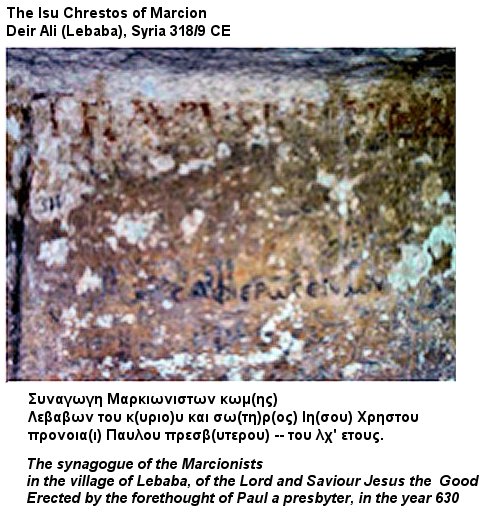
Discussion of Marcionite practices illustrates the challenges of reconstructing early canonical attitudes. Our knowledge of Marcion comes from later patristic critics who accused him of curtailing Luke, but it is unclear whether Marcion presented his gospel alongside others within some form of canon. The absence of explicit evidence for this practice should caution scholars against assuming too much on scant testimony.
The tendency to piece together isolated statements from early sources to construct comprehensive historical narratives is widespread, but it must be handled with care. In the case of Papias, one might expect that if he viewed Mark unfavorably, his account would reflect contempt. Instead, the evidence suggests that Mark’s gospel was accepted, albeit in a theological framework that allowed for subsequent development and expansion.
This context helps illuminate why the repetition of a characteristic such as “being rich” in different narrative settings does not necessarily preclude continuity of reference within Markan literature. On Clement’s reading, elements such as the rich youth in Mark 10:17-31 are integrated into broader interpretive traditions, even extending into other gospel traditions noted by early commentators.
If Mark composed a second, more mystical gospel characterized by deliberate obscurity, then the interpretive conventions of that genre must be considered when evaluating narrative overlaps and symbolic tropes. Such considerations do not resolve all questions, but they underscore the complexity of early gospel traditions and the necessity of careful, contextually informed analysis.